
How To Set Up Your Gouging Machine
Posted by Clair Cangialosi, DMA on Sep 14th 2026
So you’ve just purchased a bassoon gouging machine- congratulations! This post will cover how to set up your new machine so you can get to work making reeds.
Before You Start:
You will need a few pieces of tube cane that have been split, pregouged, and soaked for several hours. Our bassoon specialist also recommends using a diameter gauge to sort the cane by size. Check out our posts on splitting tubes and pregouging (coming soon!) for details on how to complete this step. You will also need a dial indicator for this process.
Setting The Thickness:
It is important to set the thickness of the gouge, so you know that your machine will produce the results you are looking for. Note that the size of the gouger bed will vary depending on which brand of machine that you choose. The gouger bed sizes for the three brands of gouging machines that we carry are listed below.
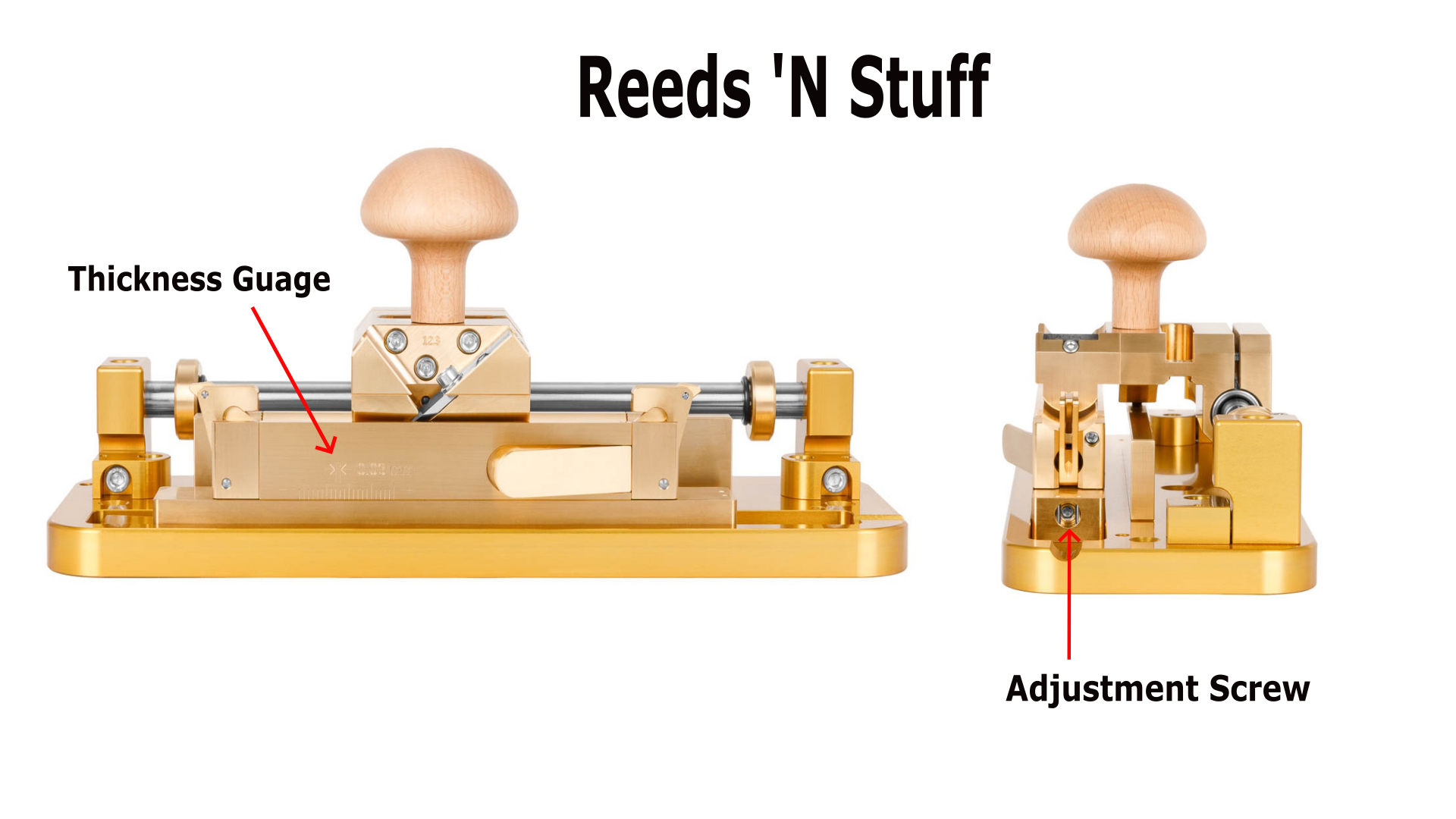
Reeds ‘N Stuff: 25mm
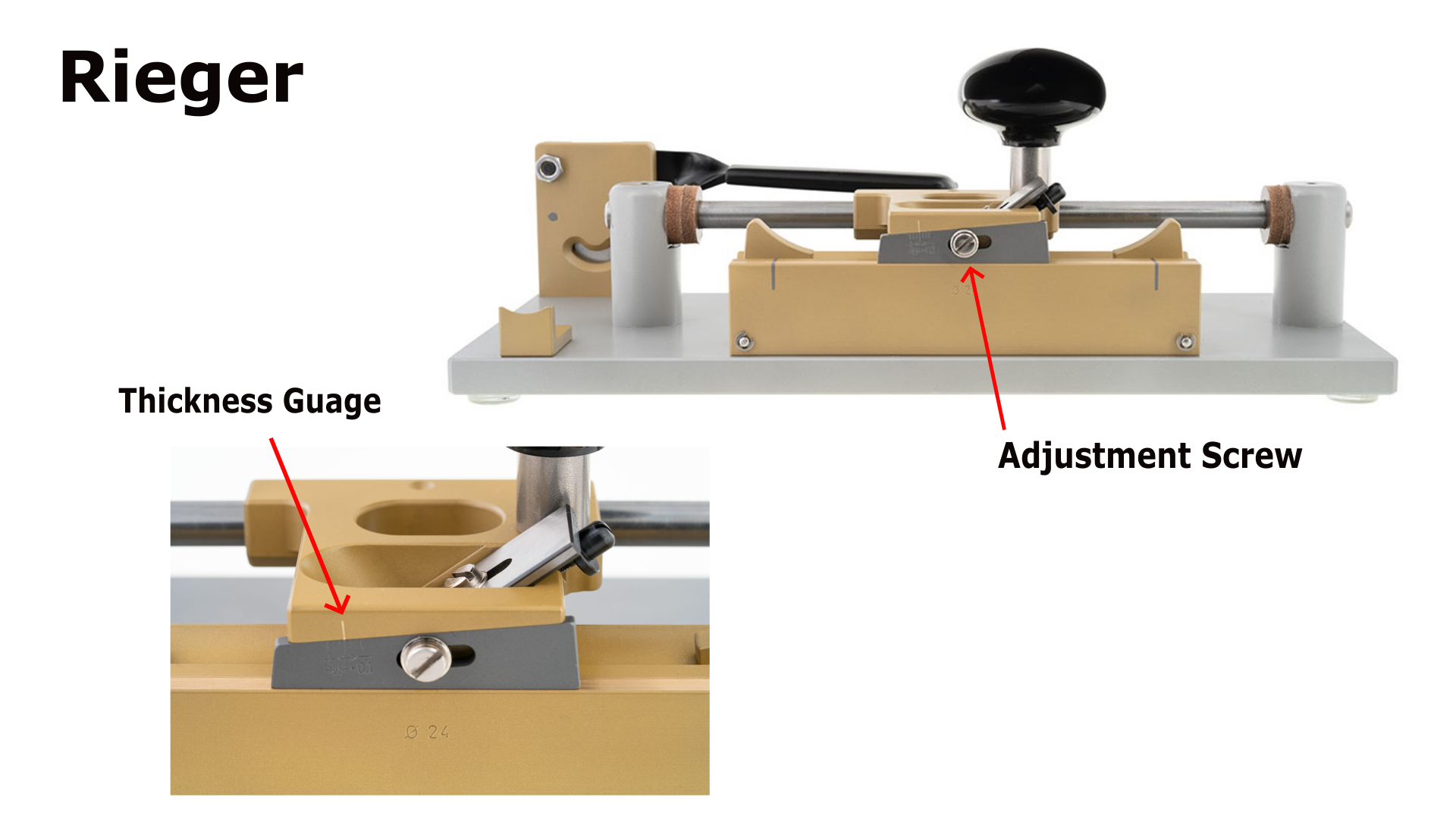
Rieger: 24mm
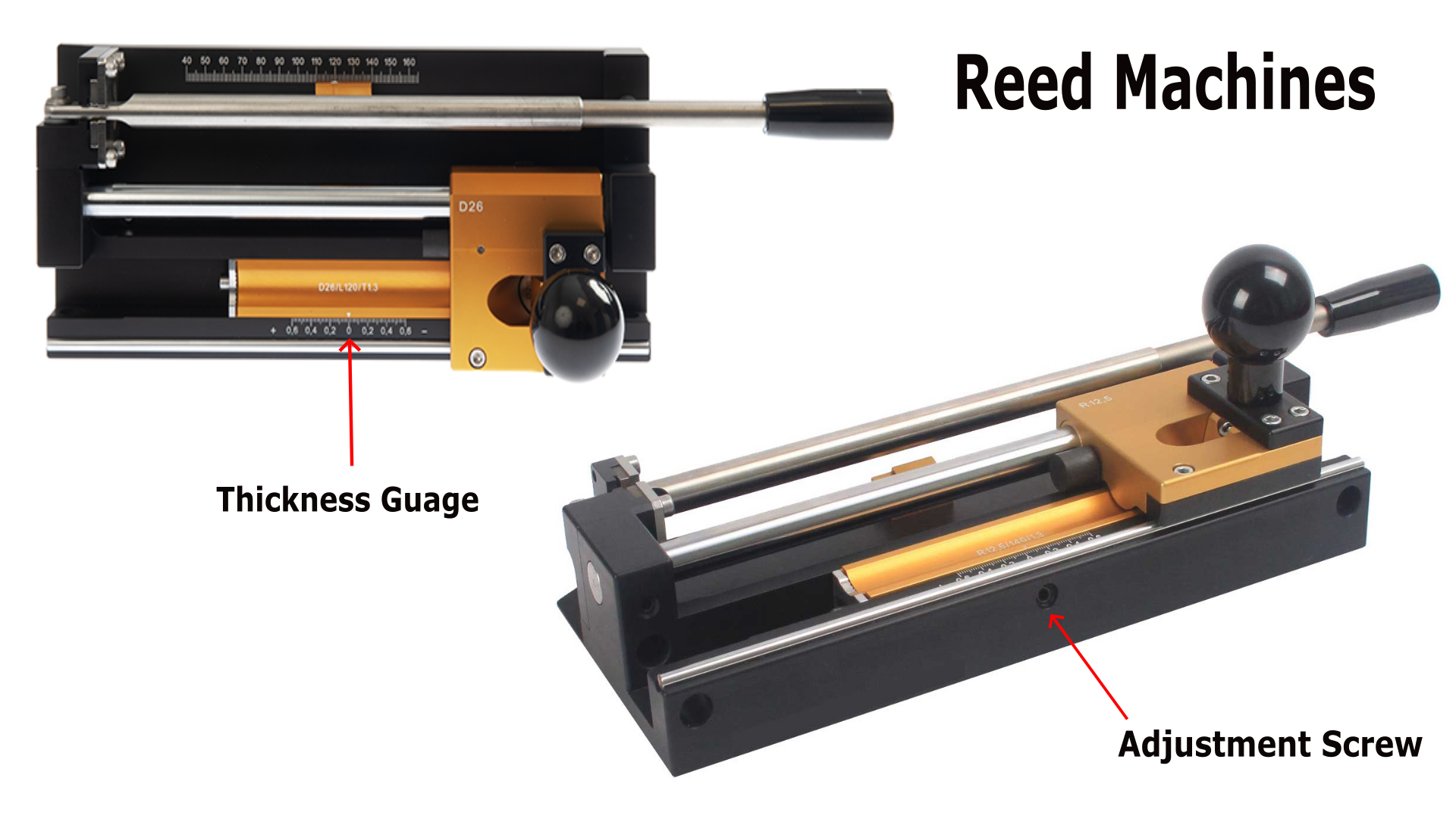
Reed Machines: 24, 25, or 26mm
We will use cane that is the same size as the gouger bed as a baseline for setting the thickness of the gouge. For example, if the bed of your gouger is 25mm, start with several pieces of cane that are also 25mm. Note that the first few pieces of cane may need to be sacrificed as you work out the correct settings for your machine.
1. Choose Your Target Thickness
Eric Arbiter recommends .050” or 1.27mm as a good starting point. (1) If you have previous experience gouging cane and prefer a different thickness, go ahead and use that number as your target instead.
2. Locate The Adjustment Mechanism
Each gouger has a screw used to make the adjustment and a thickness gauge which shows the measurement. These are shown by red arrows in the diagrams below. If your gouger came with any tools (allen keys or screw drivers), locate those now as well.
3. Find The Current Thickness Setting
Before attempting to make any adjustments, gouge a piece of cane as a reference. Using your dial indicator, measure the thickness at the center of the cane. Make a note of this number- either directly on the cane or on paper. It may also be helpful to label each piece of cane in the order that you gouge them (#1, #2, #3, etc.) to help you keep track.
4. Make Adjustments As Needed
If the thickness of your first piece of cane matches your target number, you’re all set to start making reeds! Otherwise, adjust the thickness as needed to achieve the desired result.
If your first piece of cane came out too thick:
- Reduce the gouge thickness slightly, and re-gouge the same piece of cane.
- Measure again, noting the new measurement.
- Repeat as necessary until you reach your target thickness.
If your first piece of cane came out too thin:
- Set it aside.
- Adjust the gouger to increase the thickness, then gouge another piece of cane.
- Check the thickness again, and adjust as needed.
- Stop once you reach your target thickness.
 Tip: To reduce wasted cane, estimate a thickness setting that will be thicker than your target so you can reduce the thickness gradually using the same piece of cane. You can always take more cane off, but you can’t put it back on!
Conclusion
At this point, it might be helpful to gouge a few pieces of cane that are different diameters (without changing the thickness). Most gougers are set up to produce accurate results using cane that is one millimeter smaller or larger in diameter than the size of the gouger bed. (2)
Proceed with your reed making procedure as usual. Take note of what you like or don't like about this set up. This process can be repeated as needed to further adjust the gouge to suit your needs. For more information about cane diameter, see our post, The Geometry Of Tube Cane.
Questions? Contact us through our website or email our bassoon specialist, Dr. Clair Cangialosi at clair@hodgeproductsinc.com.
Works Cited
Arbiter, Eric. Way of Cane. New York City, NY: Oxford University Press, 2020. 81.
Arbiter, Eric. Way of Cane. New York City, NY: Oxford University Press, 2020. 50-51