
The Geometry Of Tube Cane
Posted by Clair Cangialosi, DMA on Jul 27th 2026
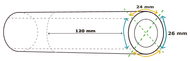
As many bassoonists can attest, working with tube cane enables a much greater level of control over cane selection, but also requires a careful attention to detail to produce usable results. In addition to eliminating pieces that are severely warped or discolored (as discussed in Tips For Selecting Bassoon Cane), it is also important to consider the geometry of a piece of tube cane. This post will explore how this can impact the entire reed making process, from gouging to the finished reed.
Table of Contents
- Tube Cane Geometry
- How to Measure Diameter
- Typical Dimensions
- Impact Of Diameter On The Gouge
- Conclusion
- Works Cited
Tube Cane Geometry
A key concept in sorting tube cane is measuring the diameter. A diameter is defined as “the length of a straight line through the center of an object or space.” (1) The diameter of a piece of tube cane can be found by measuring across either end of a piece of tube cane, as shown in figure 1.
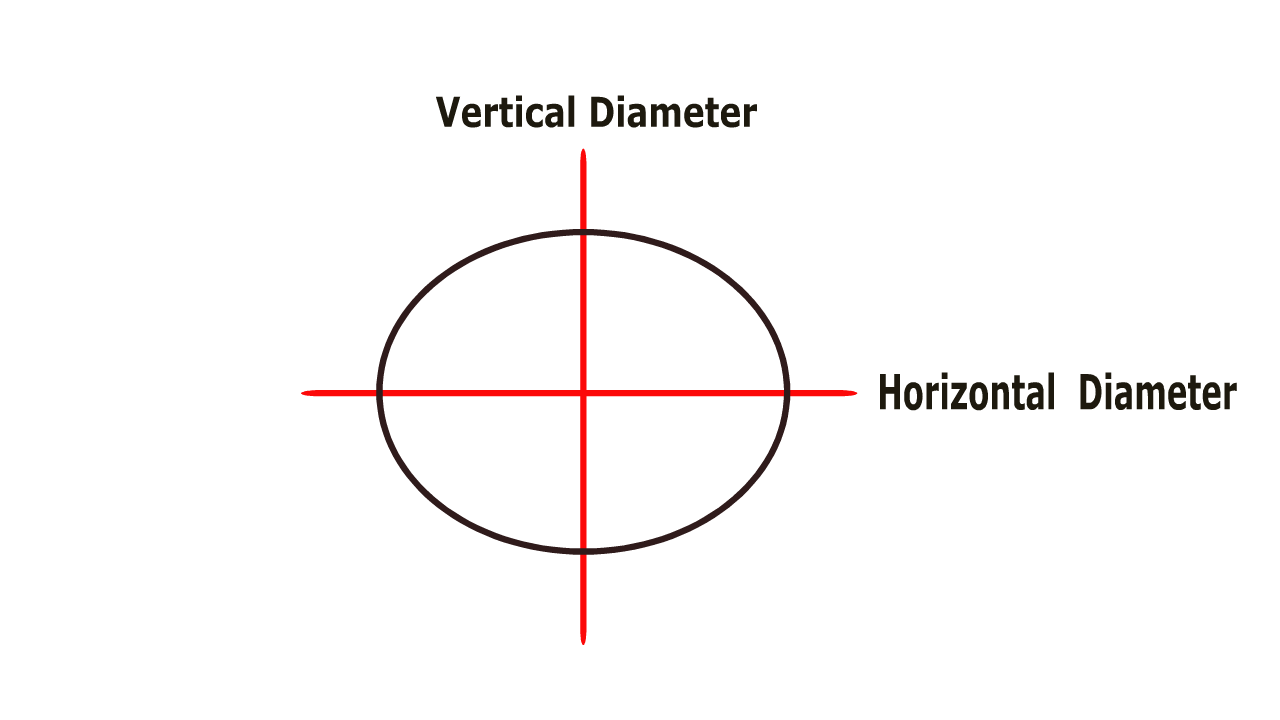
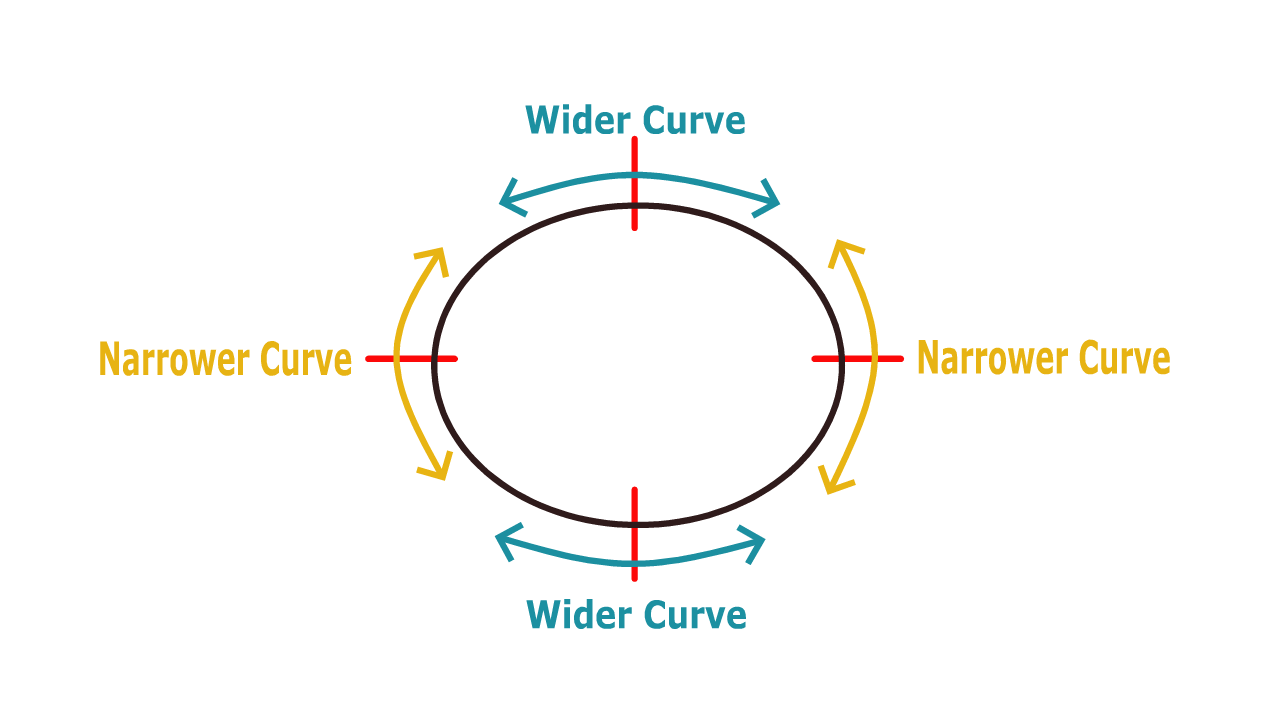
It is important to note that tube cane is most often an oval or elliptical shape, rather than a perfect circle. When the tube is split lengthwise into four pieces, the elliptical shape results in two curves which are wider and two which are narrower, as shown in figure 2.
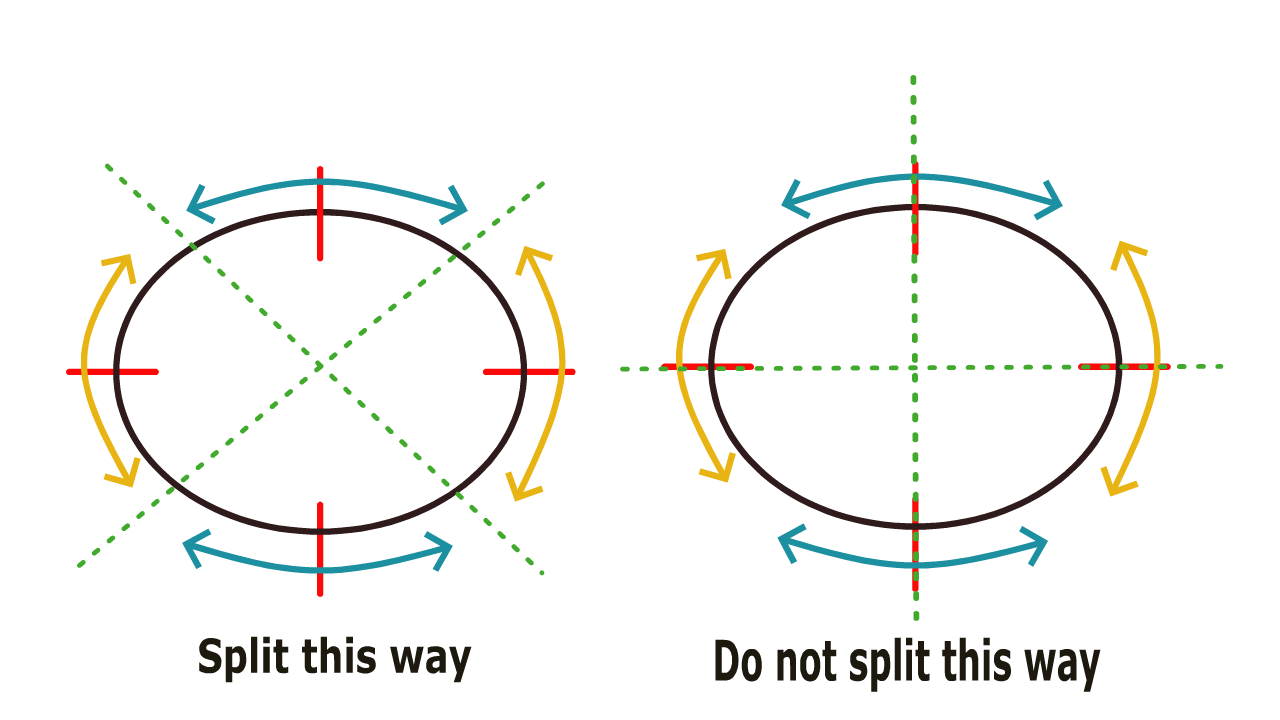
The dimensions of these curves will translate into the curve of the reed’s tip opening. As Eric Arbiter notes in his book, The Way of Cane, it is important to split the tube so that the resulting pieces are comprised of either the narrow curve or the wide curve- not a bit of both. (2) An example of this concept is shown in figure 3.
How To Measure The Diameter
The diameter of tube cane can be measured using one of several diameter gauges (sometimes called a radius gauge). The gauges have several arch-shaped notches ranging between 21-32mm, which are used to determine the size of a piece of cane. The diameter gauge can be used to measure cane either before or after splitting.

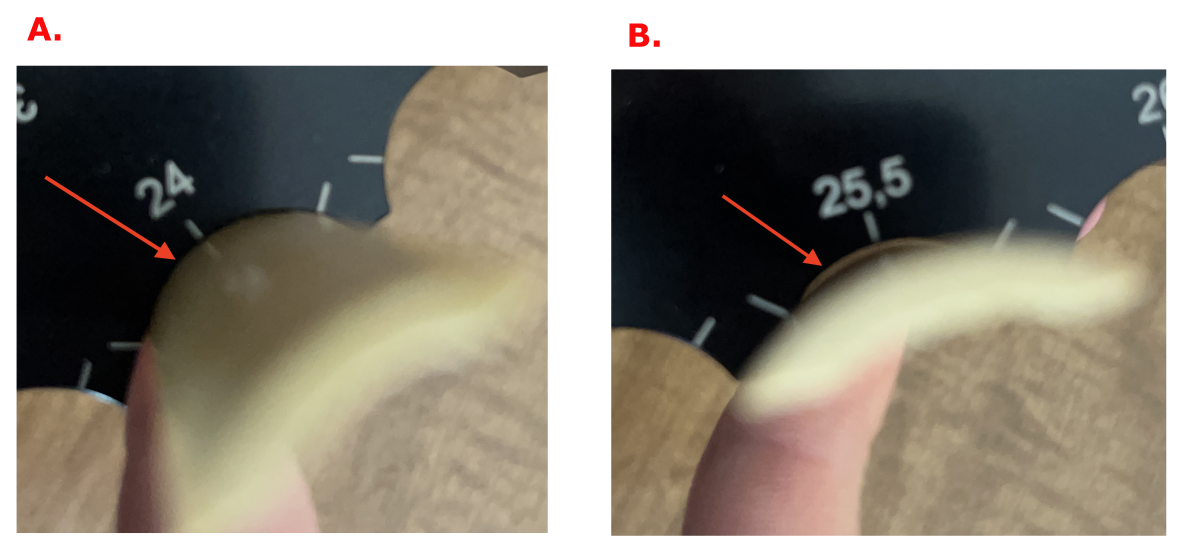
Figure 4 below shows that a 24mm piece of cane sits flush in the 24mm slot of the gauge, compared to the gap created by a piece of cane that is too large.
Typical Dimensions
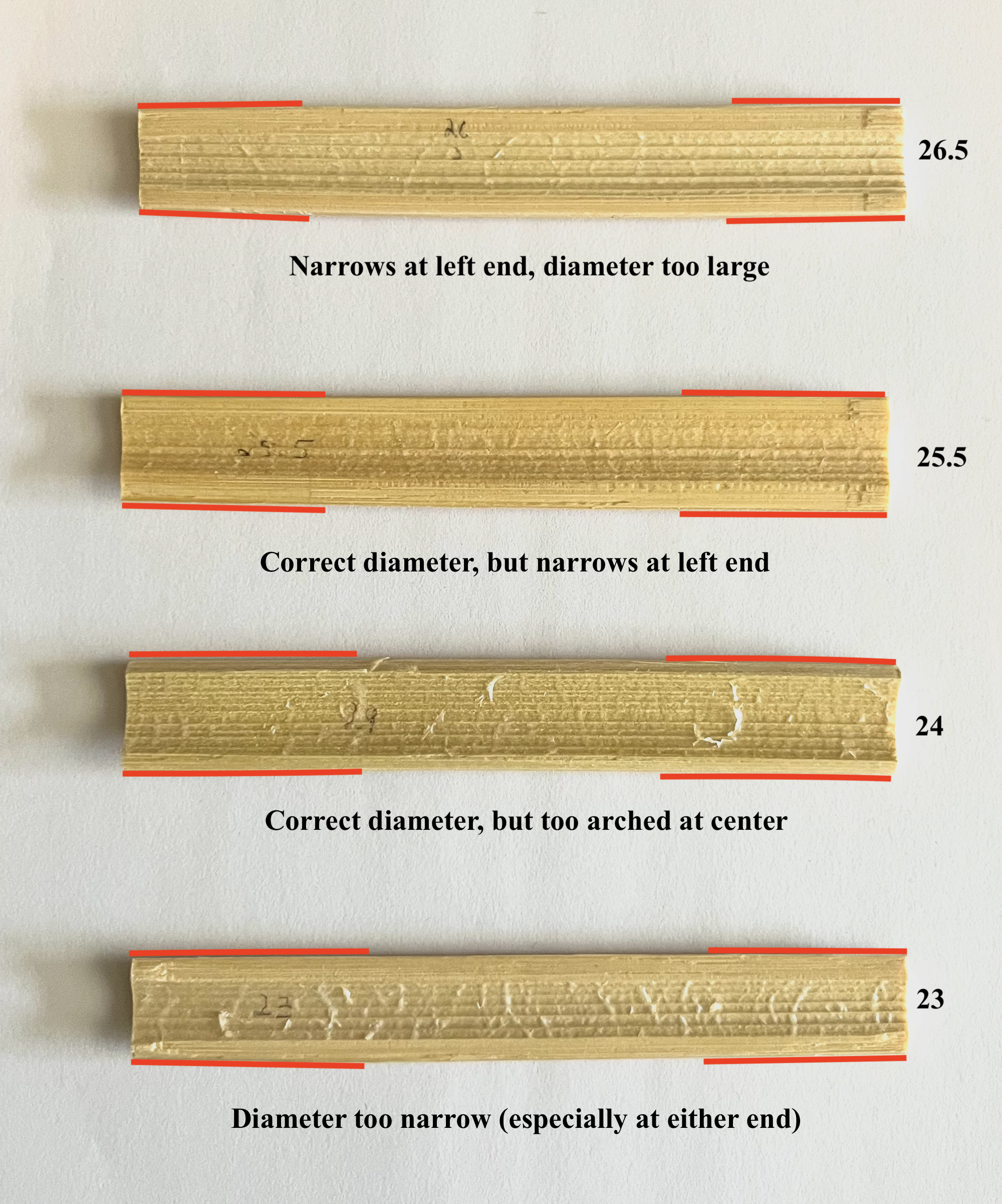
Bassoon tube cane typically has a diameter between 23-26 mm. However, the tubes may not be the same diameter for their entire length. It is common to find pieces which narrow slightly, especially near the ends. The goal is to find a section of a tube that is 120 mm long with a single consistent diameter. The ends of a piece of cane can often be trimmed off to enable this. Figure 5 shows several pieces of cane with different diameters. The red lines show inconsistencies in the diameter and warpage which makes these pieces unusable.
Impact Of Diameter On The Gouge
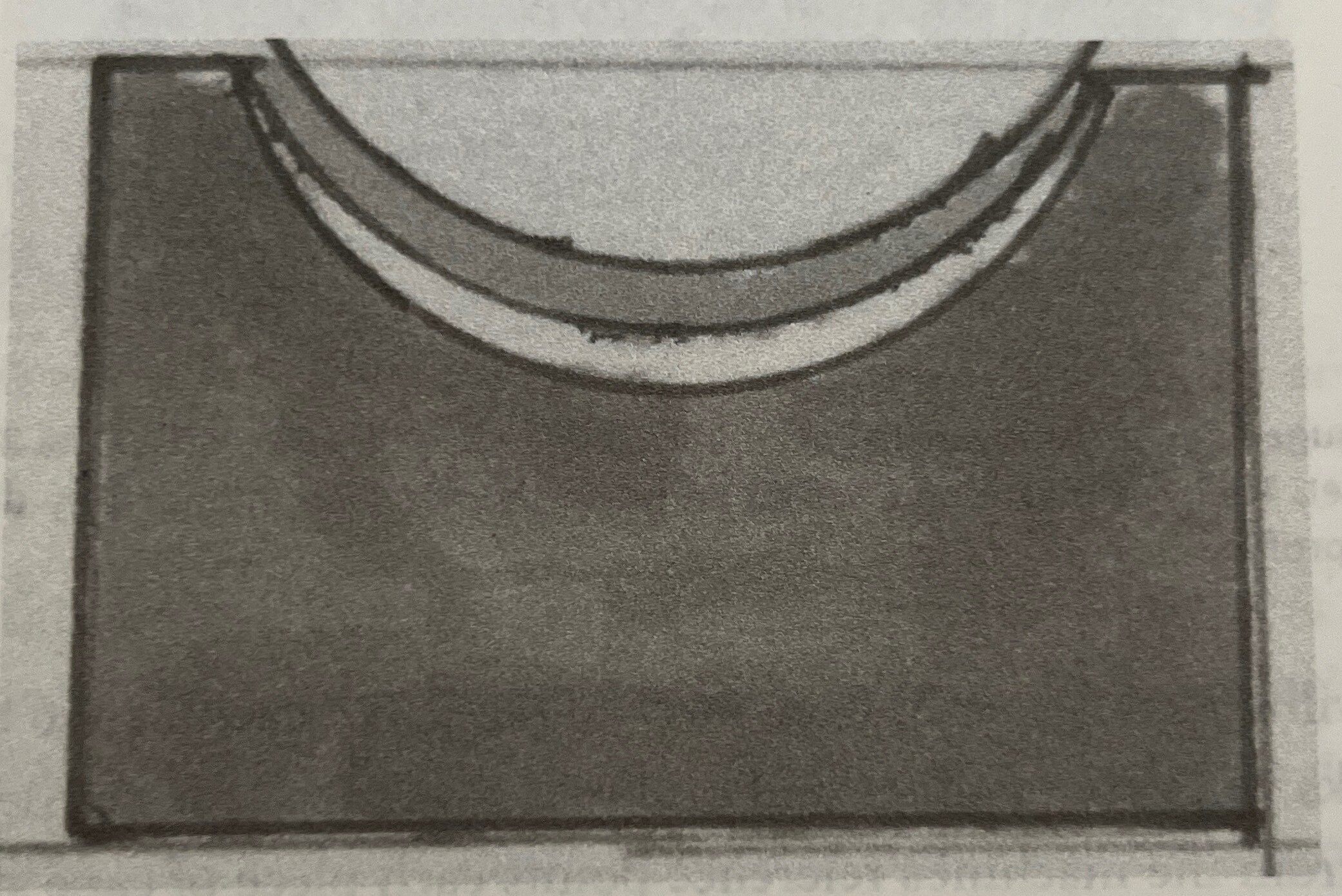
The bed of the gouger machine is built to a fixed dimension, usually 24 or 25 mm. Cane that is the correct size will sit flush in the gouger bed- just like the example in figure 4. The thickness of the gouge (or how much cane the machine will remove), is set based on the assumption that the size of the cane will match the size of the gouger bed.
the diagram in figure 6 shows that cane that is larger or smaller than the gouger bed will impact the thickness of the gouge. Cane that is too large will leave a gap between the gouger bed and the underside of the cane, resulting in a thinner gouge. Cane that is too small will curl up on the sides, resulting in a thicker gouge. (3)
Why does this matter?
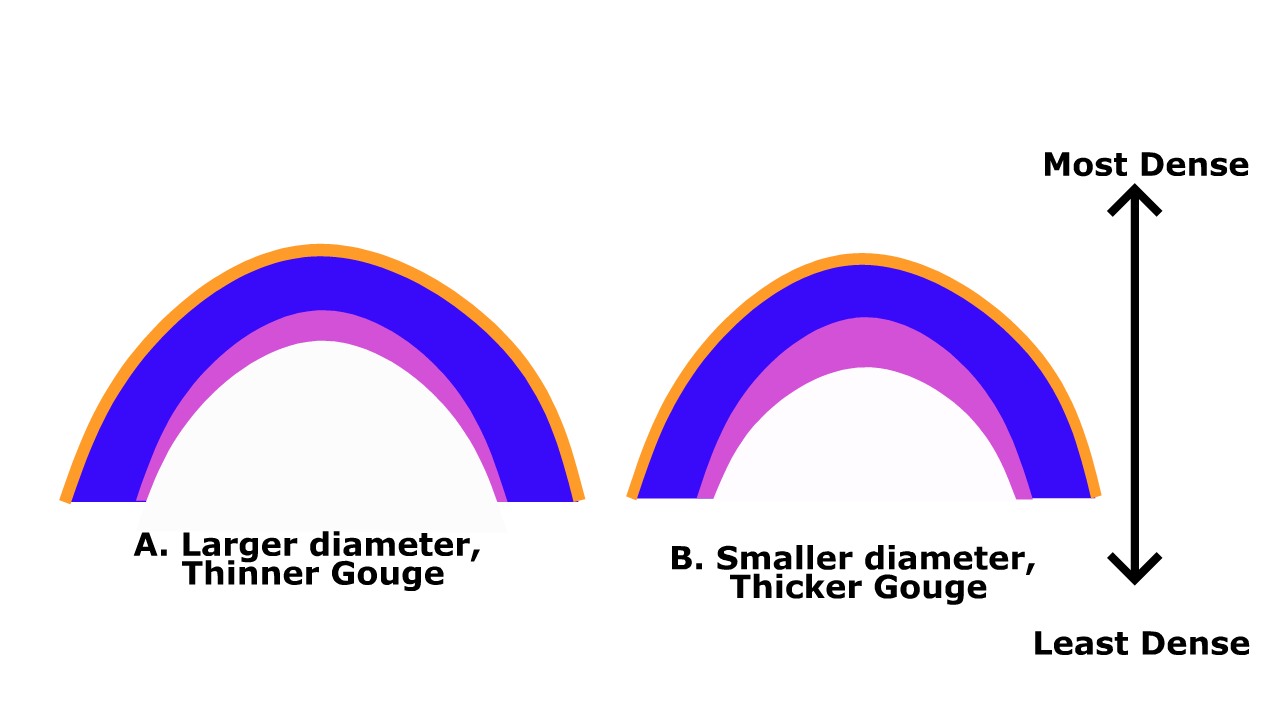
As shown in figure 7, the hardest, most dense part of a piece of cane is located closest to the bark, while the softer/ less dense cane is closer to the inside of the tube. When several pieces of cane with differing diameters are gouged using the same settings, it results in reeds which are inconsistently harder or softer than others from the same batch. This will also cause the gouge and profile measurements to differ from where you have set them on the machines. That is to say, that the best way to ensure consistent results is to use cane which is the correct size for your gouger and profiler. (4)
Conclusion
The next time you gouge cane, pay careful attention to the following:
- Finding the narrow and wide curves of the tube
- Splitting the tube to separate the narrow and wide curves
- Checking the diameter of the tube and/or of the split pieces to ensure a consistent gouge. Only use pieces which are within 1mm of the size of your gouger bed
- Finding the straightest section of the tube. Warped ends should be trimmed off
Questions? Where happy to help! Contact us through our website, or email our bassoon specialist, Dr. Clair Cangialosi at clair@hodgeproductsinc.com
Works Cited
1. “Diameter. ”Merriam- Webster Dictionary. Merriam-Webster, Inc. Accessed May 20, 2026. https://www.merriam-webster.com/dictionary/diameter
2. Arbiter, Eric. Way of Cane. New York City, NY: Oxford University Press, 2020. 48-50
3. Arbiter, Eric. Way of Cane. New York City, NY: Oxford University Press, 2020. 51
4. Arbiter, Eric. Way of Cane. New York City, NY: Oxford University Press, 2020. 51-52