
How To Fix A Flat Bassoon Reed
Posted by Clair Cangialosi, DMA on Jun 29th 2026
As many readers may know, most of the bassoon’s intonation is controlled by the pitch of the reed. Since we cannot change the length of the instrument (pushing in/ pulling out) to adjust our intonation, it is important to use a reed that is constructed to vibrate at the correct pitch level in order to play in tune. This blog will provide a quick guide on how to fix a flat bassoon reed. If you are new to adjusting your bassoon reeds, it may also be helpful to read our blog, Bassoon Reed Adjusting Basics
Table of contents
How Do You Know Your Bassoon Reed Is Too Flat?
- The sound is overly dark, or does not project well
- You have to bite to bring the pitch up
- The pitch drops when articulating
- The pitch on C3-F3 is wobbly or unstable
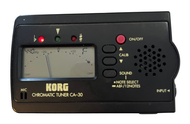
- Your tuning note is flat (check with a tuner)
If you experience any of the issues above, it may help to adjust your reed.
Suggested tools
Most of the adjustments in this post will require some standard bassoon reed making tools including:
- A holding mandrel
- A reamer
- Reed Pliers (or needlenose pliers)
- Sandpaper
- A plaque
- A ruler
- A pencil
- A tip cutter or razor blade & cutting block
- A tuner (or tuner app on your mobile device)
Check out our blog post, Bassoon Tools: Toward Making Your Own Reeds for more information about reed tools.
Adjustments
A flat bassoon reed can have several causes, including wire placement & tightness, bocal depth, and the overall dimensions (too long, too thin, too wide, etc). We recommend performing the adjustments below in the listed order. Be sure to retest the intonation in between each adjustment. Stop once the reed plays in tune.
1. Check for loose/ wiggly wires.
Tighten as needed. The second wire should be snug (but not too tight), and the first wire should be firm, but moveable.
2. Adjust wires for more blade arch
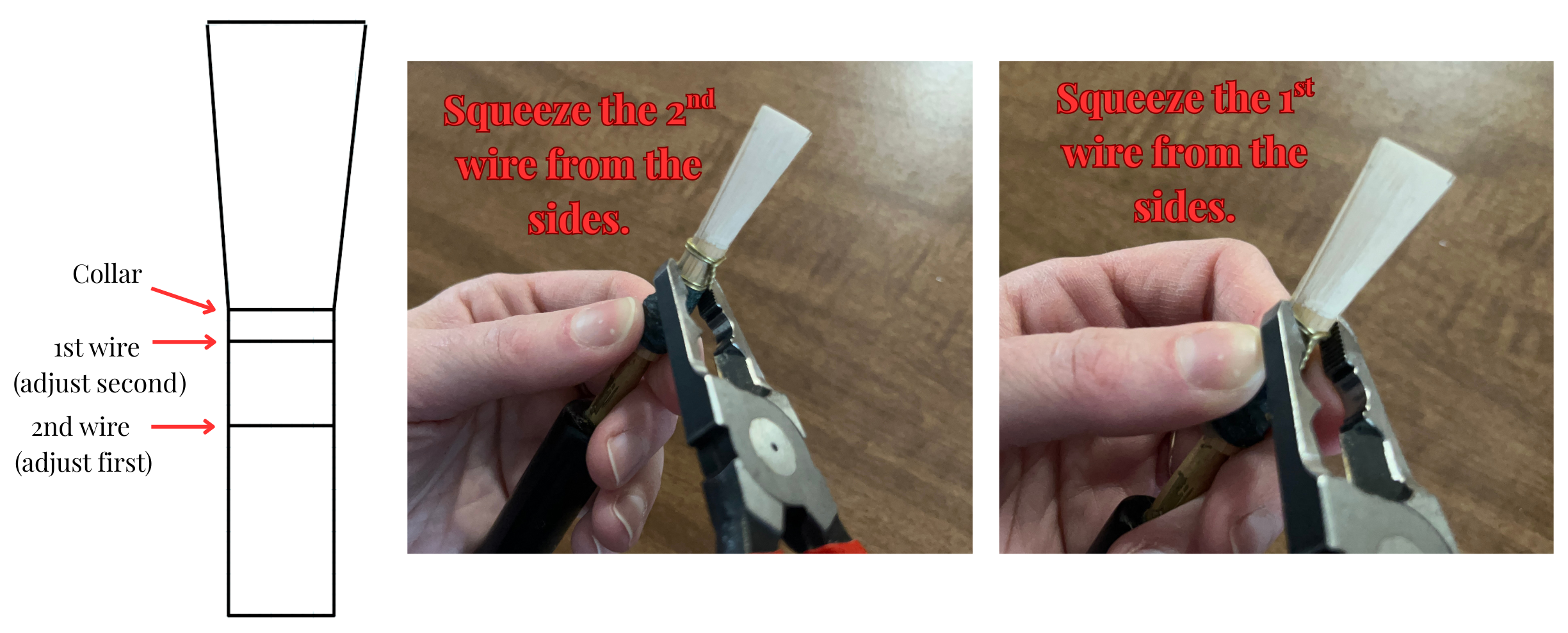
Put the reed on your mandrel. Then use your pliers to gently squeeze the 2nd wire from the sides, then the first wire from the sides.
 Tip: If this makes the tip opening bigger than 1/16 “, you may need to close the first wire (top/bottom) a little bit.
3. Check bocal depth
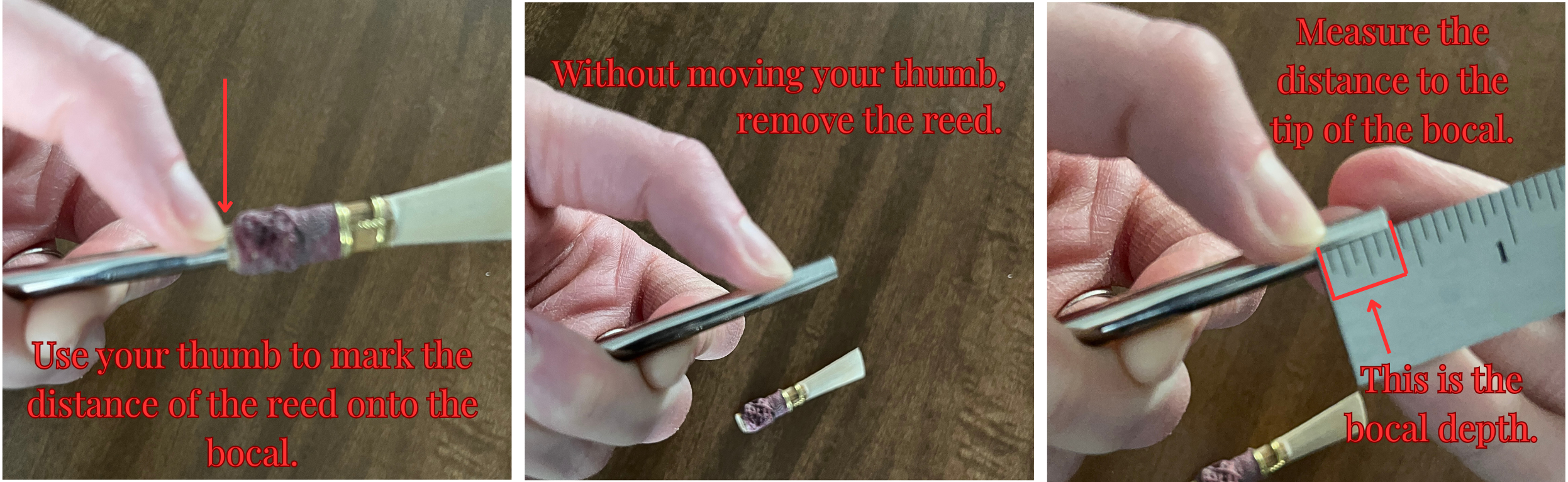
The reed should go on to the bocal between ¼-⅜”. Use your reamer to increase the bocal depth. Only remove a small amount of cane at a time. You may also need to use a rat-tail/ round file to dislodge any cane scraps from inside the tube of the reed.
Tip: Use your thumb to mark the distance of the reed on the bocal. Without moving your thumb, remove the reed, then measure the distance to the end of the bocal.
4. Decrease the vibrating length
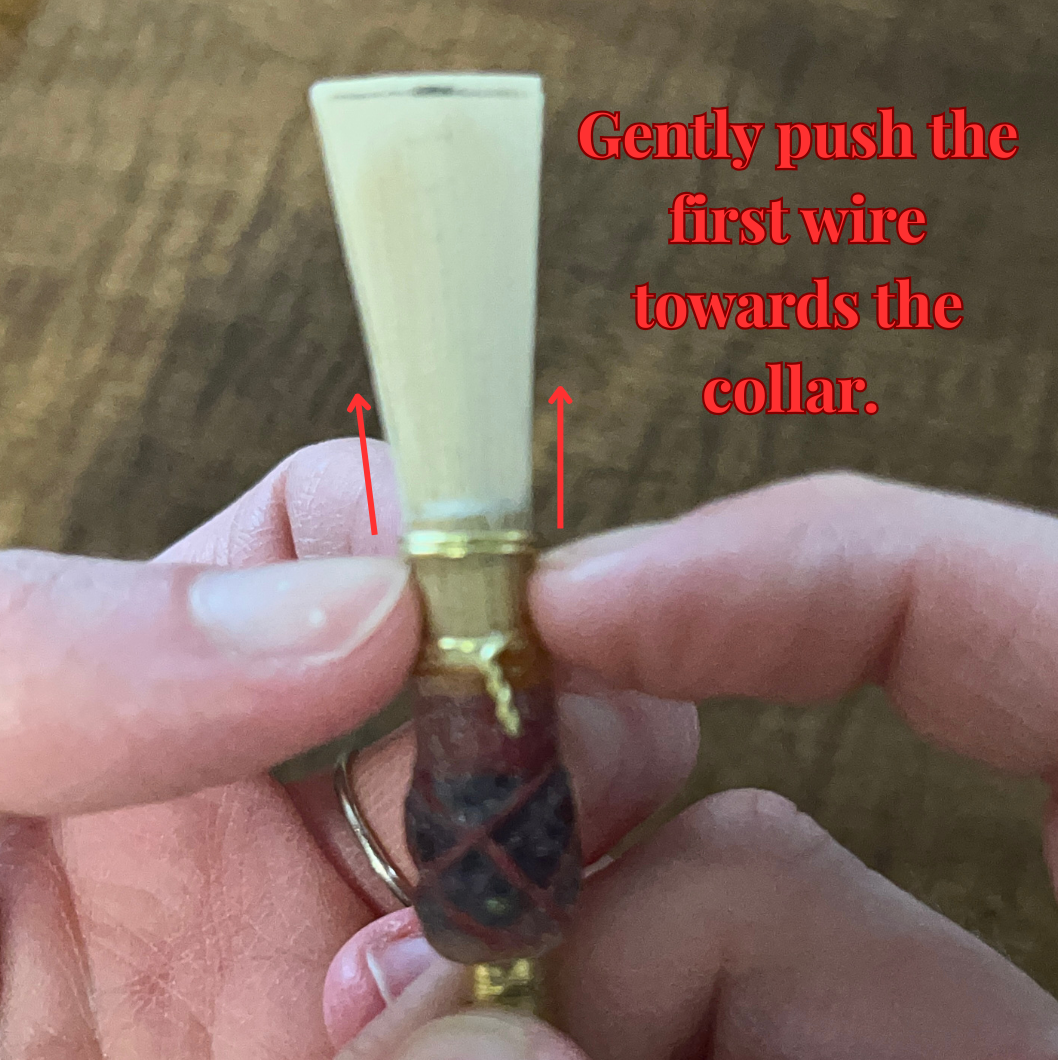
Move the first wire closer to the collar. With the reed on a mandrel, use your fingers to gently push the first wire a bit higher on the tube. Skip this step if the first wire is already at the collar.
5. Narrow the blades of the reed
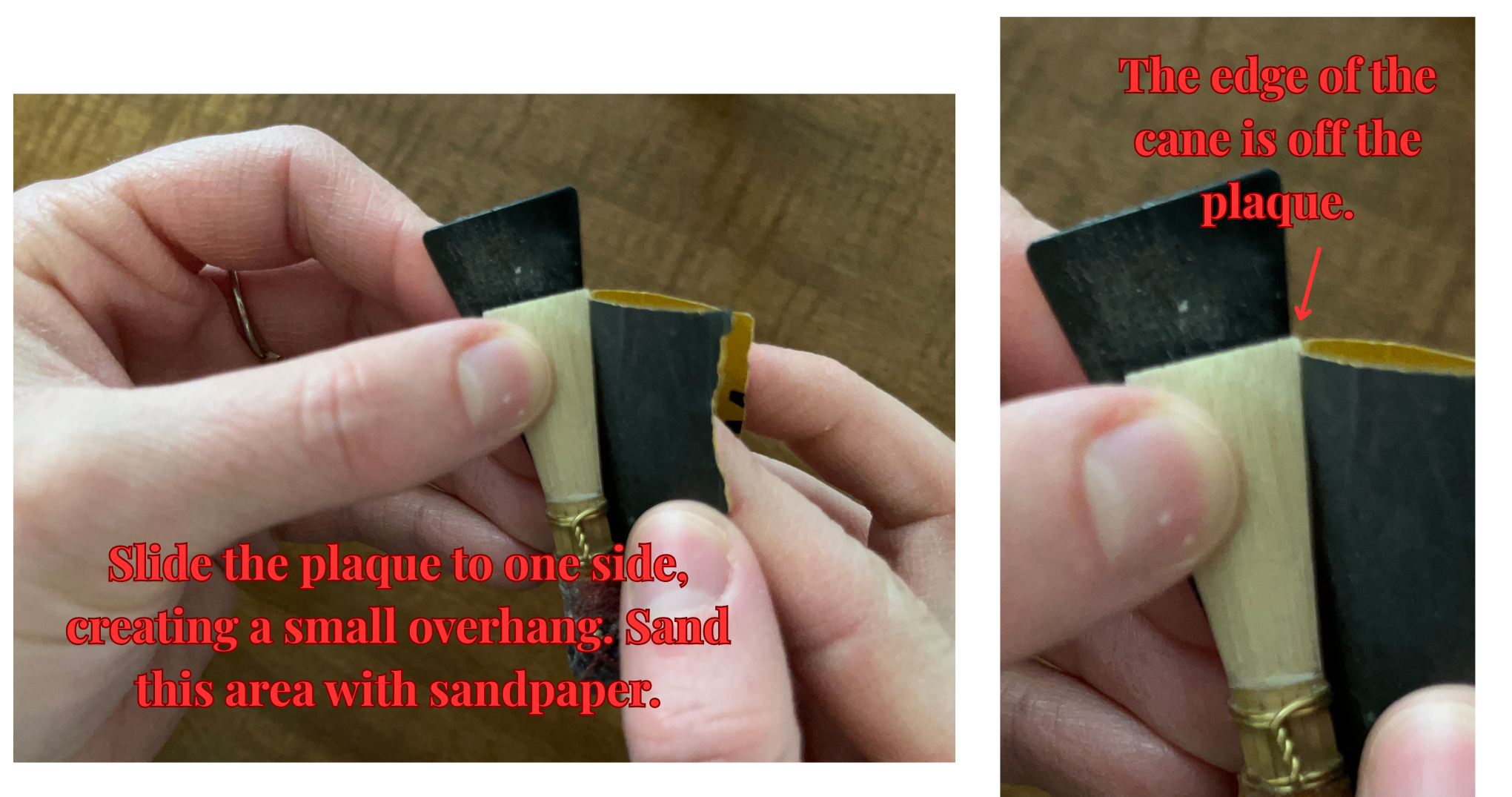
Insert a plaque into the reed. Slide the plaque to one side so that a small amount of the blade hangs off the plaque. Use sandpaper to lightly sand the sides of the blade, focusing on the top 3rd. Repeat this process on the opposite side of the reed.
6. Clip the Tip
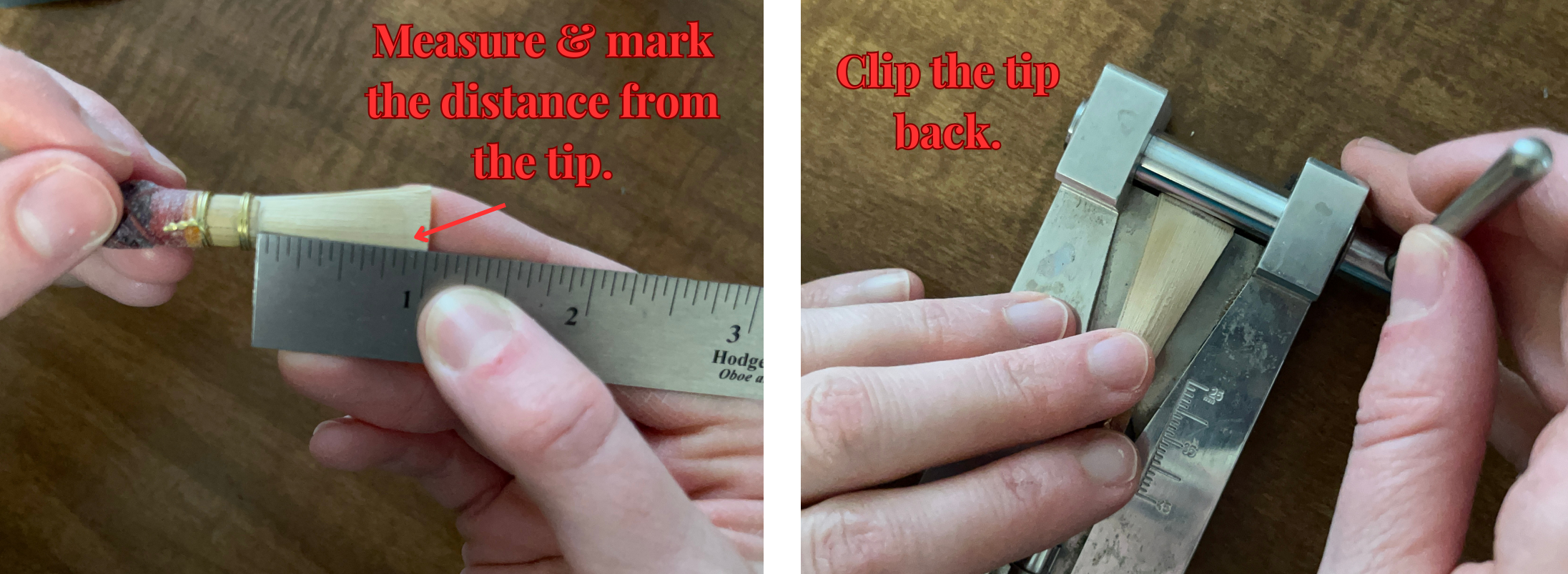
Use your ruler to measure 1/32nd “ from the tip of the blade. Use your pencil to draw a small line at this point (it may be helpful to draw a straight line all the way across the blade). Use your tip cutter, reed guillotine, or razor blade to clip the reed at the line. Only remove a small amount at a time! Retest and reclip if needed.
Tip: If using a razor blade and cutting block, place the cutting block on a flat stable surface, such as a table.
Conclusion
Retest your reed- how does it compare after making the adjustments?
If it is still flat, let it sit out to dry overnight before testing again. If the pitch does not improve, consult an experienced reed maker or bassoon teacher for a more personalized approach.
Full video tutorial available here:
Questions? Email our bassoon specialist, Dr. Clair Cangialosi at clair@hodgeproductsinc.com