
How To Fix A Sharp Bassoon Reed
Posted by Clair Cangialosi, DMA on Jun 15th 2026
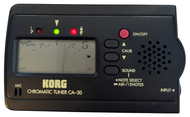
Does it sometimes feel like its nearly impossible to control your intonation on the bassoon? As many readers may know, the pitch of the reed is the driving force of our intonation on the bassoon. Since we can’t change the length of the instrument to adjust for intonation, it is important to use a reed that is constructed to vibrate in tune. This post will cover the essentials of fixing a sharp bassoon reed.
Table of contents
How to know if your reed is sharp
Your reed may be too sharp if:
- The sound is overly bright or buzzy
- It feels too resistant or hard to play
- You have to work hard to bring the pitch down with your embouchure
- Your tuning note is sharp on a tuner
Suggested tools
Most of the adjustments in this post will require some standard bassoon reed making tools including:
- A holding mandrel
- A plaque
- A reed knife
- A triangle or flat diamond file
- A lamp
- Reed pliers or needlenose pliers
- A razor blade or X-acto knife
Adjustments
A sharp reed is likely either too heavy or the vibrating length is too short. In some cases, a sharp reed can also be caused by an unbalanced scrape. We recommend performing the following adjustments in the listed order below. Be sure to retest the intonation with a tuner after each adjustment. Stop once the reed plays in tune.
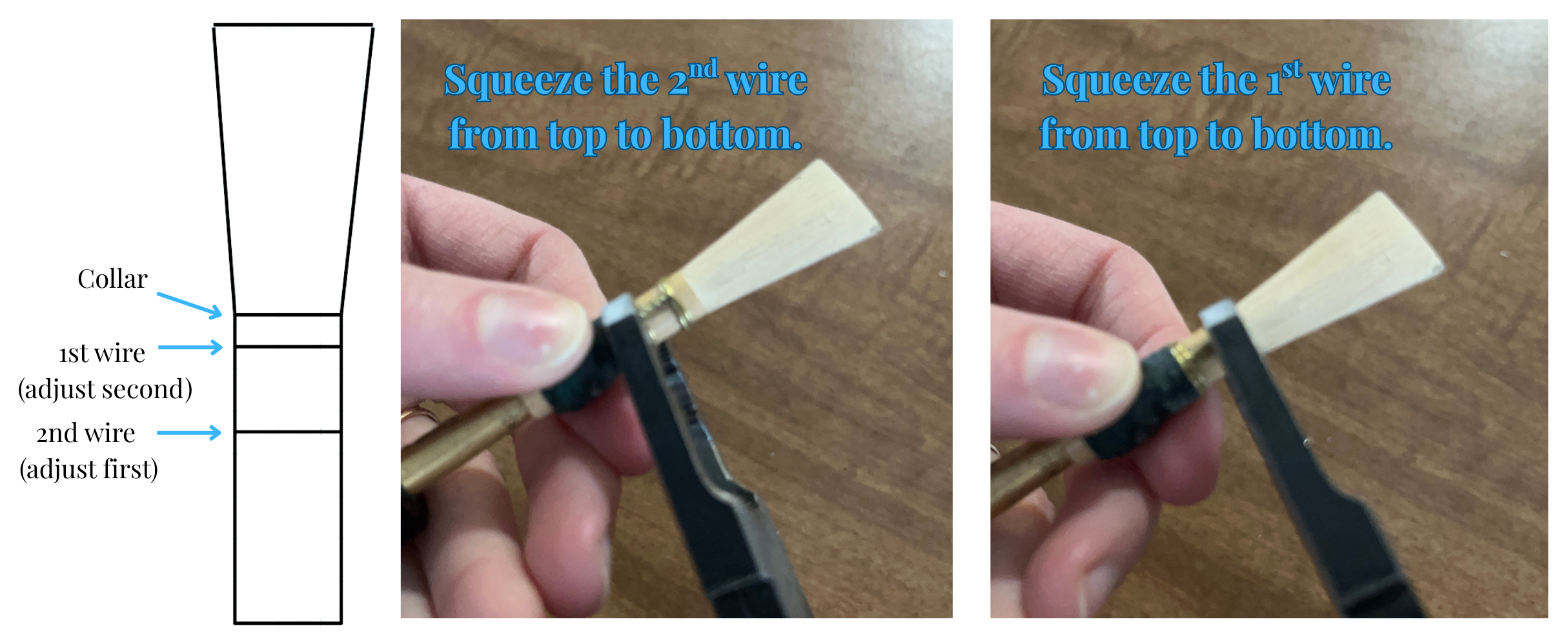
1. Adjust wires for less blade arch
Squeeze 2nd wire then 1st wire from top to bottom. If the tip becomes too closed to respond easily, you may need to open it back up a bit by squeezing the first wire from the sides.
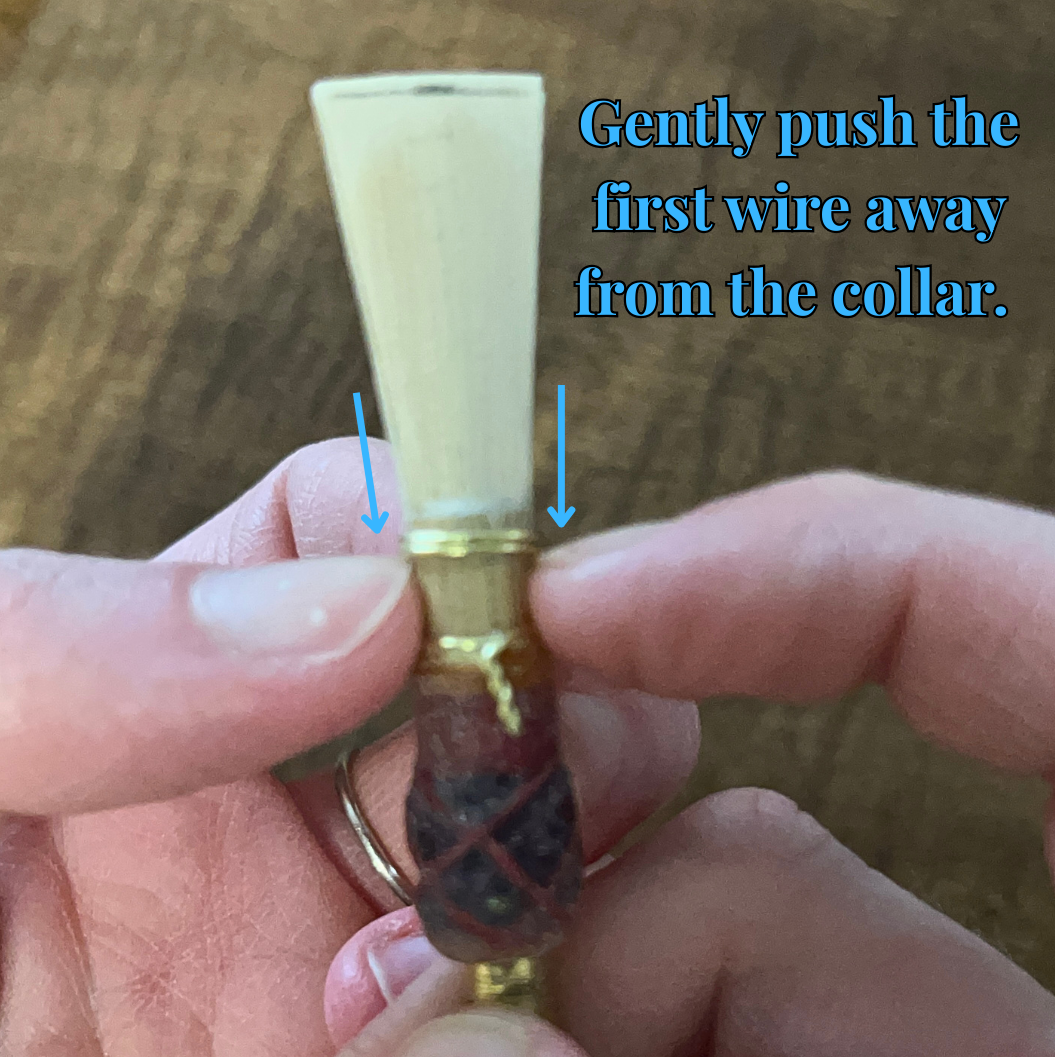
2. Increase the vibrating length
With the reed on a mandrel, use your fingers to move the first wire back, away from the collar.
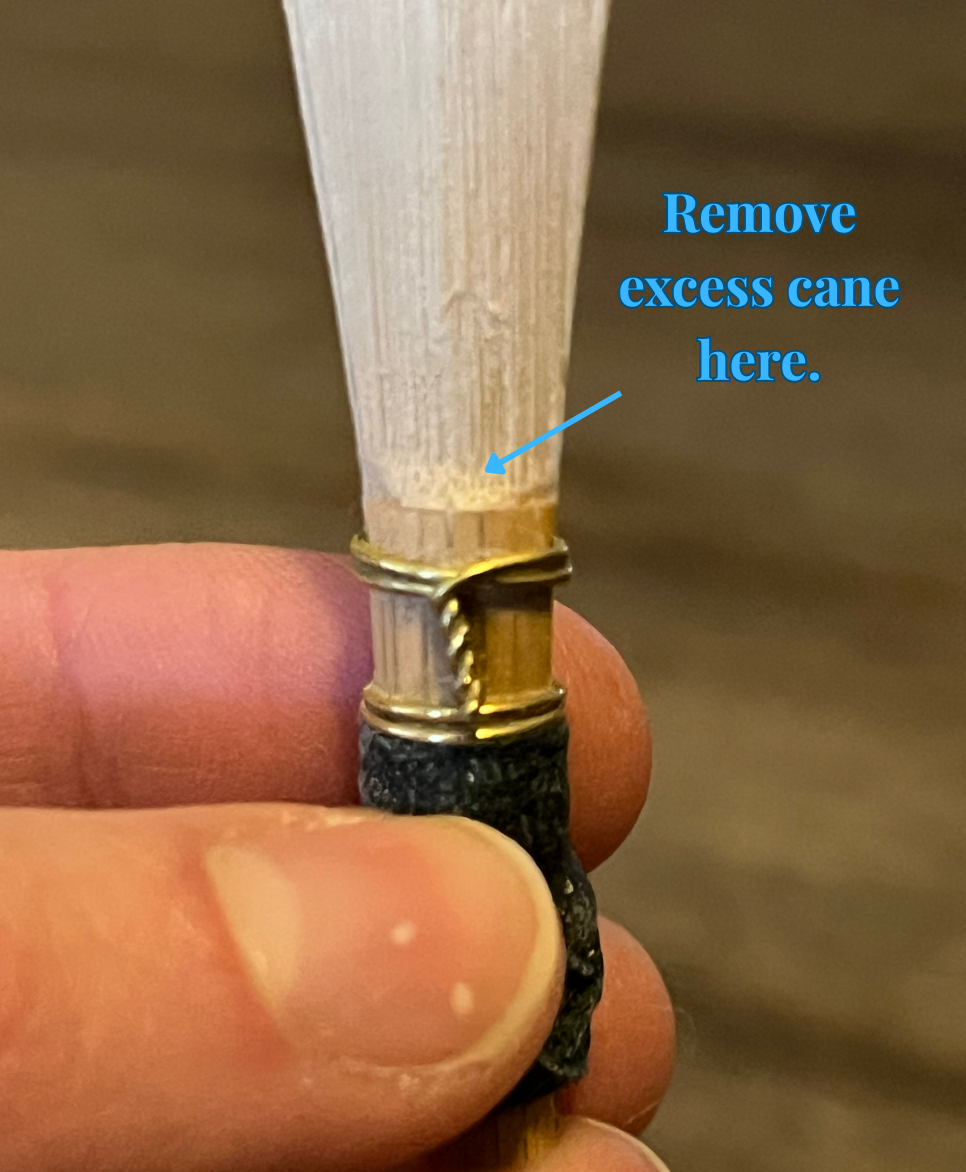
3. Remove excess cane in front of the collar
With a plaque and mandrel inserted, use a razor blade to remove a thin layer of cane immediately in front of the collar. The ledge in front of the collar should be almost a right angle.
4. Scrape the channels
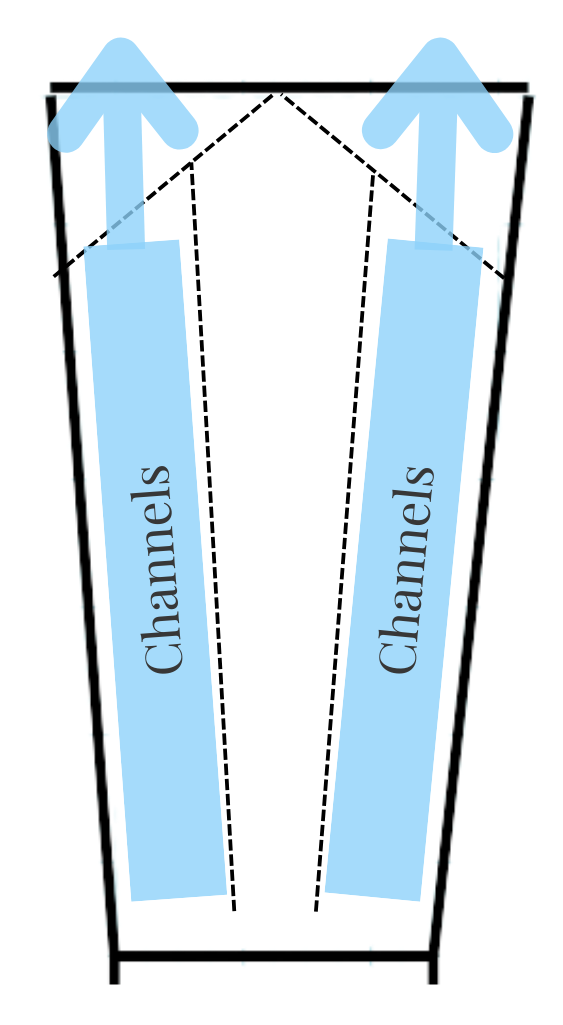
With a plaque inserted, use your fingers to feel along blades for any thick spots. With a reed knife, scrape the channels from back to front and off onto the plaque, as in the diagram to the right. Aim for symmetry between the four quadrants of the reed (counting the number of scrapes is a good place to start).
5. Rebalance the tip
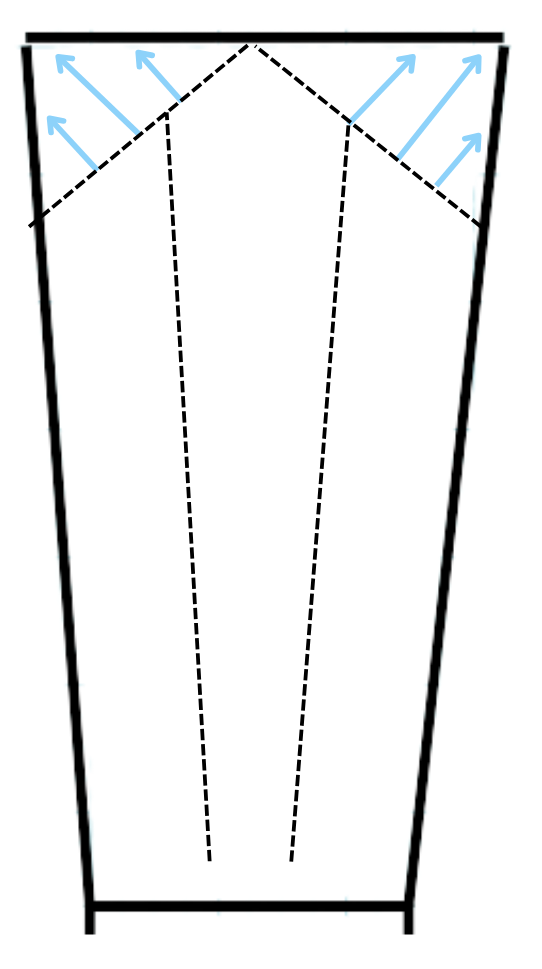
Hold the reed under a light to check for an even tip taper up and out from the critical point. With a plaque and mandrel inserted, use a knife or a file to taper towards the corners and leading edge of the reed. Avoid removing too much cane from the corners.
Conclusion
After making the adjustments, let your reed dry out overnight, then test again. If it is still sharp, we recommend consulting an experienced reedmaker or bassoon teacher for advice.
Questions? Email our bassoon specialist, Dr. Clair Cangialosi at clair@hodgeproductsinc.com