
How To Clean A Bassoon & Bocal
Posted by Clair Cangialosi, DMA on Jul 13th 2026
An essential skill that every bassoonist needs to understand is how to clean their instrument and bocal. This blog post will walk you through the steps for keeping your bassoon and bocal clean and in good working condition. Skip to each section below or read on for all the details.
Table of contents:
- Swabbing FAQ
- Recommended Supplies
- Cleaning The Bassoon
- Cleaning The Bocal
- When To Consult A Professional
- Conclusion
Swabbing FAQ
Q: Why do I need to swab out my bassoon?
A: As we play, condensation can accumulate inside the bore of the instrument. Swabbing is the only way to remove the moisture and prevent damage to the inside of the bore and the pads.
This is especially important if you play on a wooden bassoon!
Q: I have a plastic bassoon. Do I still need to swab?
A: Yes! Even though a plastic instrument is not at risk of developing bore rot, it is still important to prevent moisture from soaking into the pads. Also, learning how to swab from the beginning will make for an easier transition to a wooden instrument in the future.
Q: Can I use a saxophone/ clarinet/ flute swab?
A: No! Swabs designed for other instruments are not the correct size and shape to fit into the bassoon. Only use swabs labeled for the bassoon.
Q: My bassoon came with one of these fuzzy swab stick- things (see figure 1 below). Can I use that?
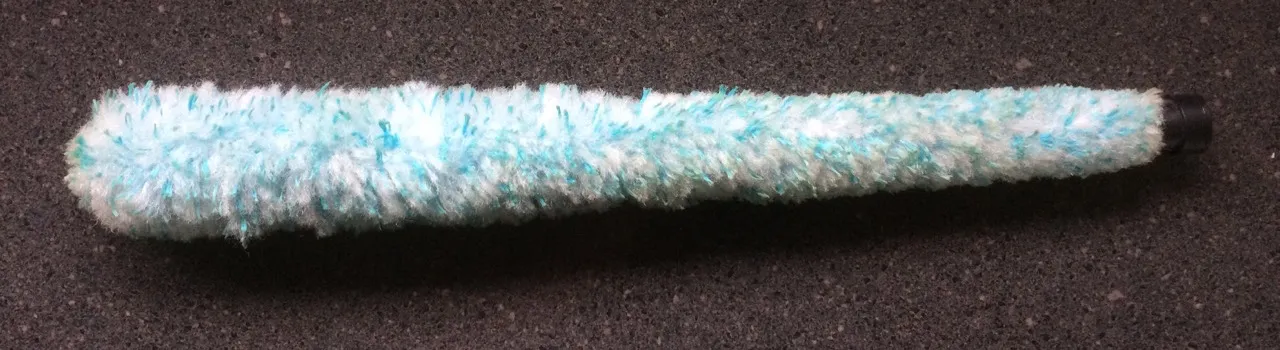
A: No! The fuzzy fibers can get stuck inside of your instrument. Also, the rigid shape of the swab can’t reach down into the U-tube, which is where most of the moisture collects for bassoon.
Recommended supplies
We recommend a silk bassoon swab. Silk is stronger and more absorbent than cotton, and will not leave lint behind in your instrument.
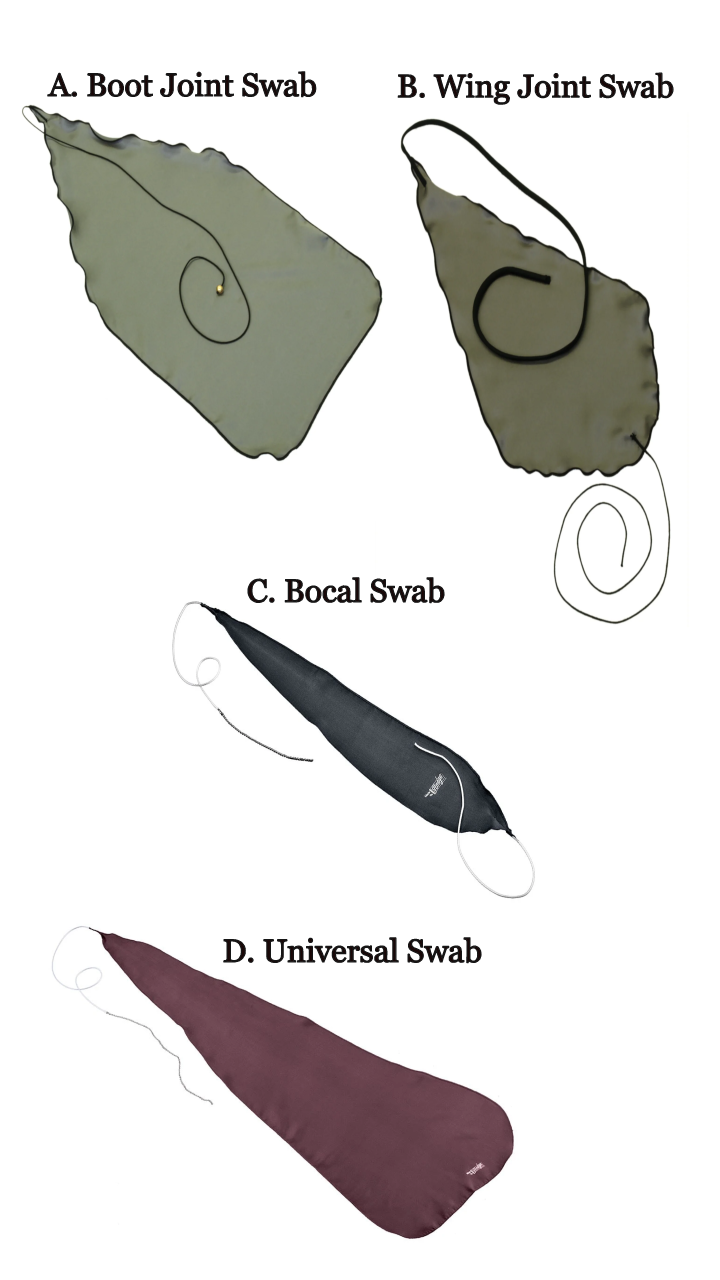
Note that there are different types of swabs, shown in figure 2, right. If your bassoon came with two different sized swabs, most likely one is for the wing joint only and one is for the boot joint only. Note that the examples in figure 2A and 2B are two different shapes. Be sure to use the correct swab in the correct joint- otherwise they can get stuck inside the instrument!
The samllest type of swab is the bocal swab. These are designed to fit through your bocal. Some bassoonists prefer to use a bocal brush which is a thin, flexible metal wire with bristles on one end. More info about cleaning the bocal can be found below.
If your bassoon only came with one swab, it is likely a “universal” swab, which can be used in both the wing joint and boot joint.
Cleaning The Bassoon
The only two parts of the bassoon that need to be swabbed are the boot joint and the wing joint. Before swabbing, be sure to do the following (in this order):
- Remove your reed and put it away in your reed case
- Remove the bocal. Carefully place it in the bassoon case.
- Unlock the body lock, remove the bell and long joint, and put them away in the bassoon case.
- Remove wing joint, set it down in the case (we'll come back to this in a minute!)
Swab The Boot Joint
 Tip: Always swab from large to small
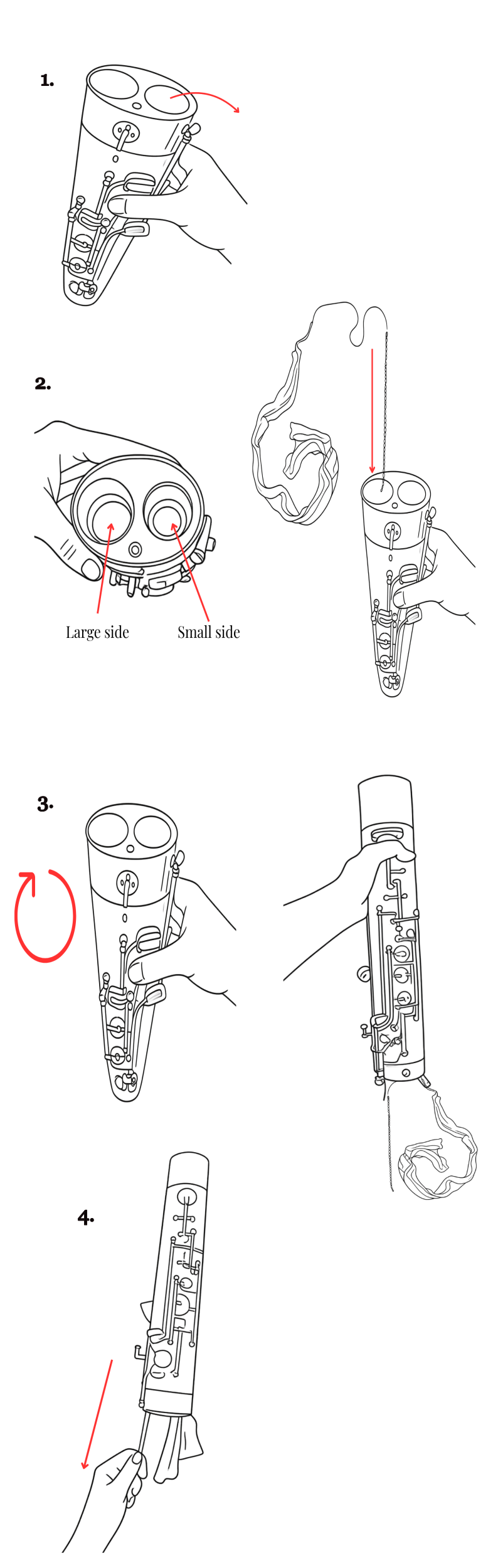
1. While fingering a low E, carefully tilt the boot joint down and away from you to remove any excess moisture that may have pooled in the sockets.
2. Position the boot joint with the low E key facing you. When looking at the bore sockets from above, the large side should be on your left, and the small side should be on your right. Insert the swab into the large side of the boot joint, letting it drop all the way down.
3. Rotate the boot joint 180 degrees in a clockwise direction. The boot cap should now be facing up, and the swab chain should fall easily through the small side of the boot joint.
4. Gently pull the swab chain through.
Moisture often collects in the small side of the boot joint and at the bottom of the U tube, so this part of the bassoon is usually lined with hard waterproof rubber. Gravity prevents moisture from traveling up into the large side of the boot joint. Placing the dry swab into the large side of the boot joint first helps move any moisture away from the unprotected wood.
Swab The Wing Joint
1. Check to make sure there are no knots or tangles in your swab. Knots can get stuck inside the wing joint and cause damage.
2. Swab from large to small- hold the wing joint upside down (whisper key pad towards the floor).
3. Insert the swab into the bottom socket. It should drop through and out the other end of the wing joint.
4. Gently pull the swab through.
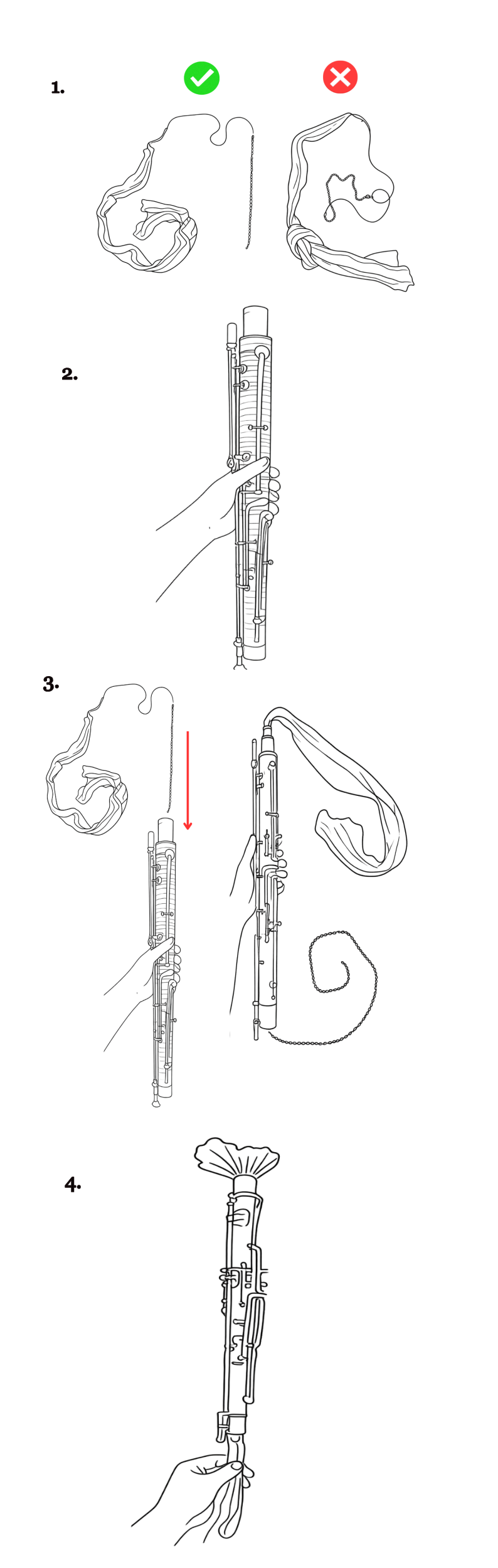
Bassoonist Eryn Oft demonstrates how to swab the boot and wing joints of a bassoon in the video below:
Cleaning the bocal
Using a swab:
- Check to make sure there are no knots or tangles in the swab.
- Starting from the wider end, thread the swab through the bocal.
- Use the cord on the end of the swab to pull it all the way through the bocal.
Bassoonist Carol Lowe demonstrates how to use a bassoon bocal swab in the video below:
Using a bocal brush:
- Run a small amount of lukewarm water through the bocal before swabbing (the kitchen sink is a great place to do this).
- Place a small drop of soap (hand soap or dish soap is fine) onto the brush end of the bocal brush. It can be helpful to use your fingers to help coat the bristles with the soap.
- Insert the wire end of bocal brush into the large end of the bocal. Push the bocal brush through the bocal until the wire comes out the other end. Continue pulling the wire out of the small end of the bocal until the brush passes all the way through. Rinse the inside of the bocal with lukewarm water to make sure there is no soap left behind. Dry the outside with a soft cloth or towel.
Eryn Oft demonstrates how to use a bocal brush in the video below:
When to consult a professional
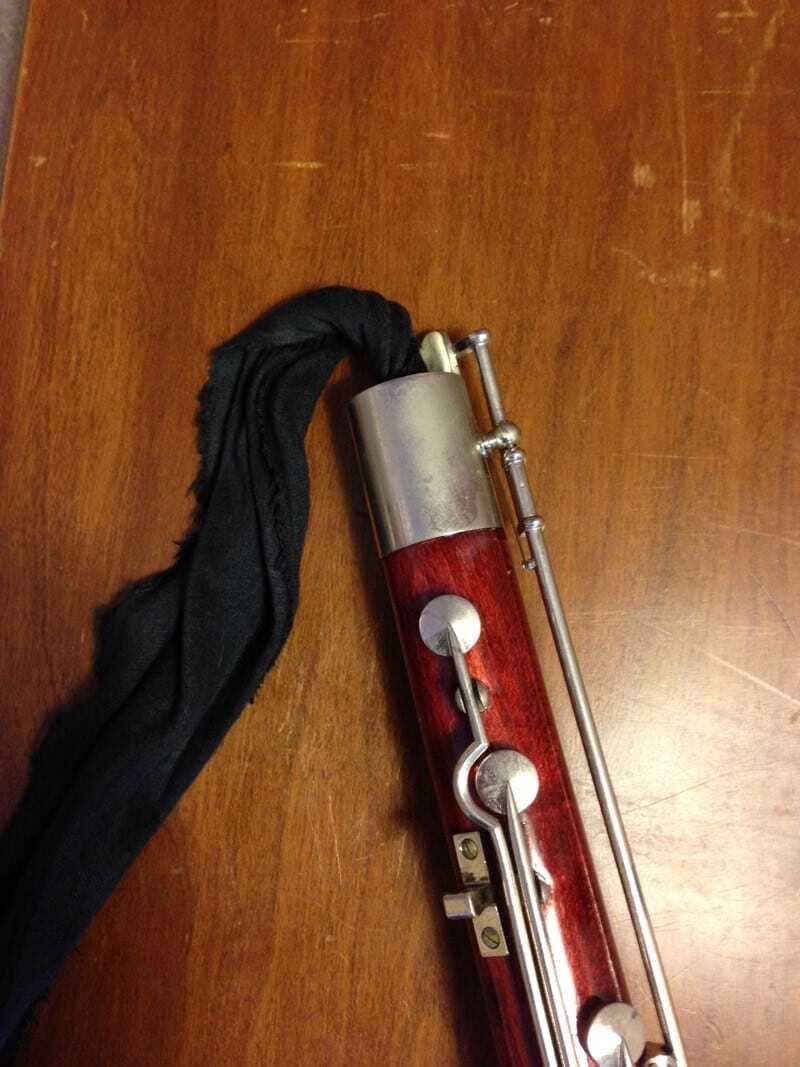
The number one reason to consult a professional when attempting to swab your bassoon, is if the swab gets stuck inside of the instrument. This can happen if the swab has any knots, tangles, or tears in the fabric, or if you accidentally use the boot swab in your wing joint. A stuck swab can cause damage to the inside of the bore, especially if attempts are made to remove it incorrectly.
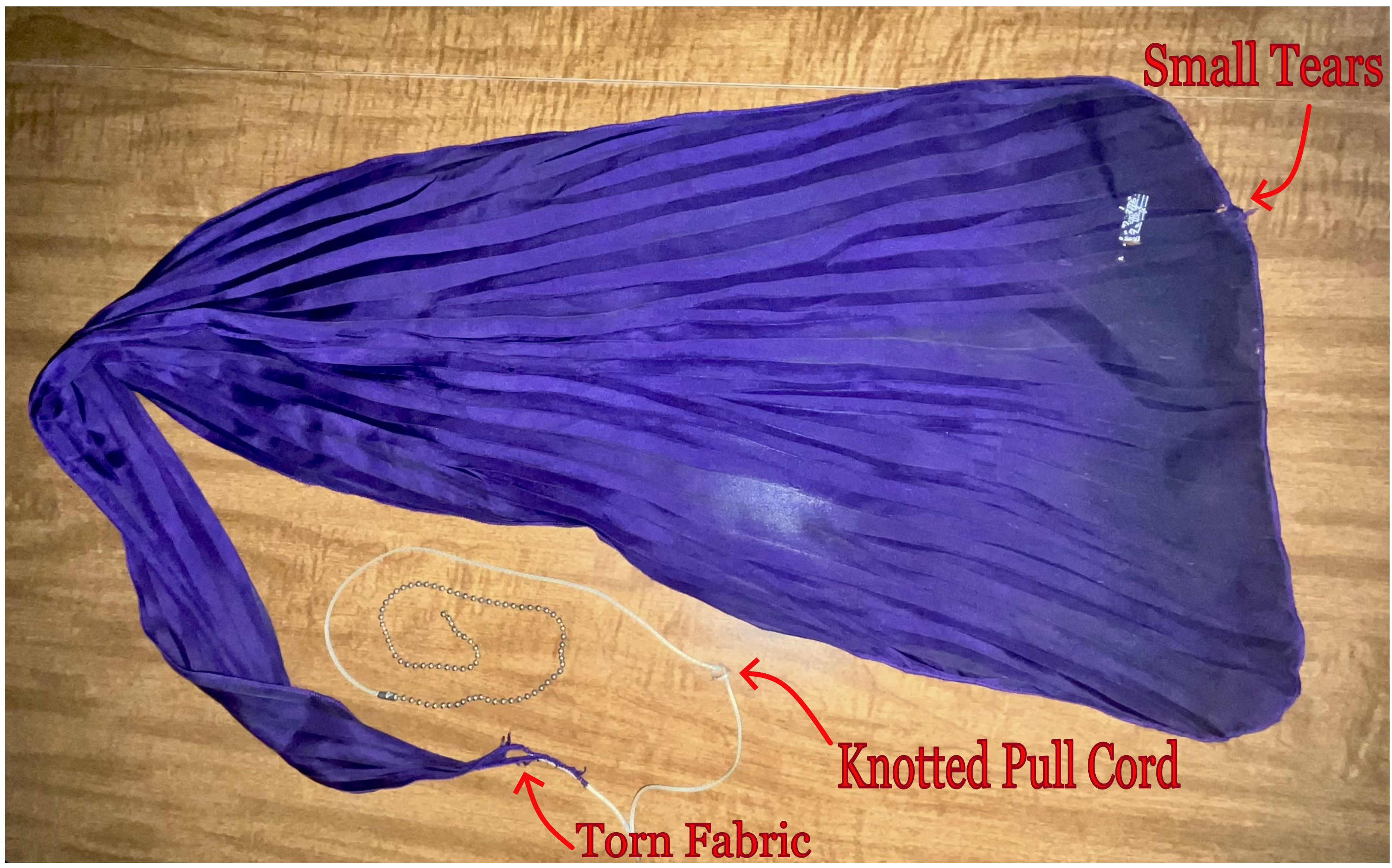
How to tell if your swab is stuck
- The swab won’t come out of the instrument easily
- You feel a “snag” or the swab catches on something inside the bore while swabbing
What to do
- Remain calm
- Do not attempt to pull or force the swab to come out
- Talk to your teacher or band director, or call a reputable repair person
- Do not attempt to use any tools (especially metal) to remove the swab. Do not insert anything into the bore of the bassoon.
A repair person can either remove the swab using a specialized tool, or in certain situations, provide guidance on how to remove it yourself. Again- call the repair person first, before making any unsupervised attempts!
Conclusion
Although it may seem daunting at first, learning how to properly swab your bassoon is an essential part of caring for your instrument. Here at Hodge Products, we’ve got everything you need to keep your bassoon in good working condition- including silk universal swabs available in five different colors!
Questions? Contact us through our website, or reach out to our bassoon specialist, Dr. Clair Cangialosi at clair@hodgeproductsinc.com. We’re happy to help!