
How Long Do Bassoon Reeds Last?
Posted by Clair Cangialosi, DMA on Jun 2nd 2026

Whether you’re a band director, the parent of a bassoonist, or a bassoonist yourself, One question that may be on your mind is, “how long do bassoon reeds last?” Understanding when it is time to get a new bassoon reed is crucial to one’s success on the instrument. This post will walk you through everything you need to know about the longevity of bassoon reeds. Skip to specific topics below or read on for the full story.
- Life cycle of the bassoon reed
- How often to replace bassoon reeds
- How to improve the lifespan of a bassoon reed
- How to tell when you need a new bassoon reed
- Conclusion
Life cycle of the bassoon reed
One way to think about how long a bassoon reed will last is to consider a life cycle. Every reed goes through four stages: making the reed, breaking in the reed, the “golden period”, and deterioration. This is shown in Figure 1 below.
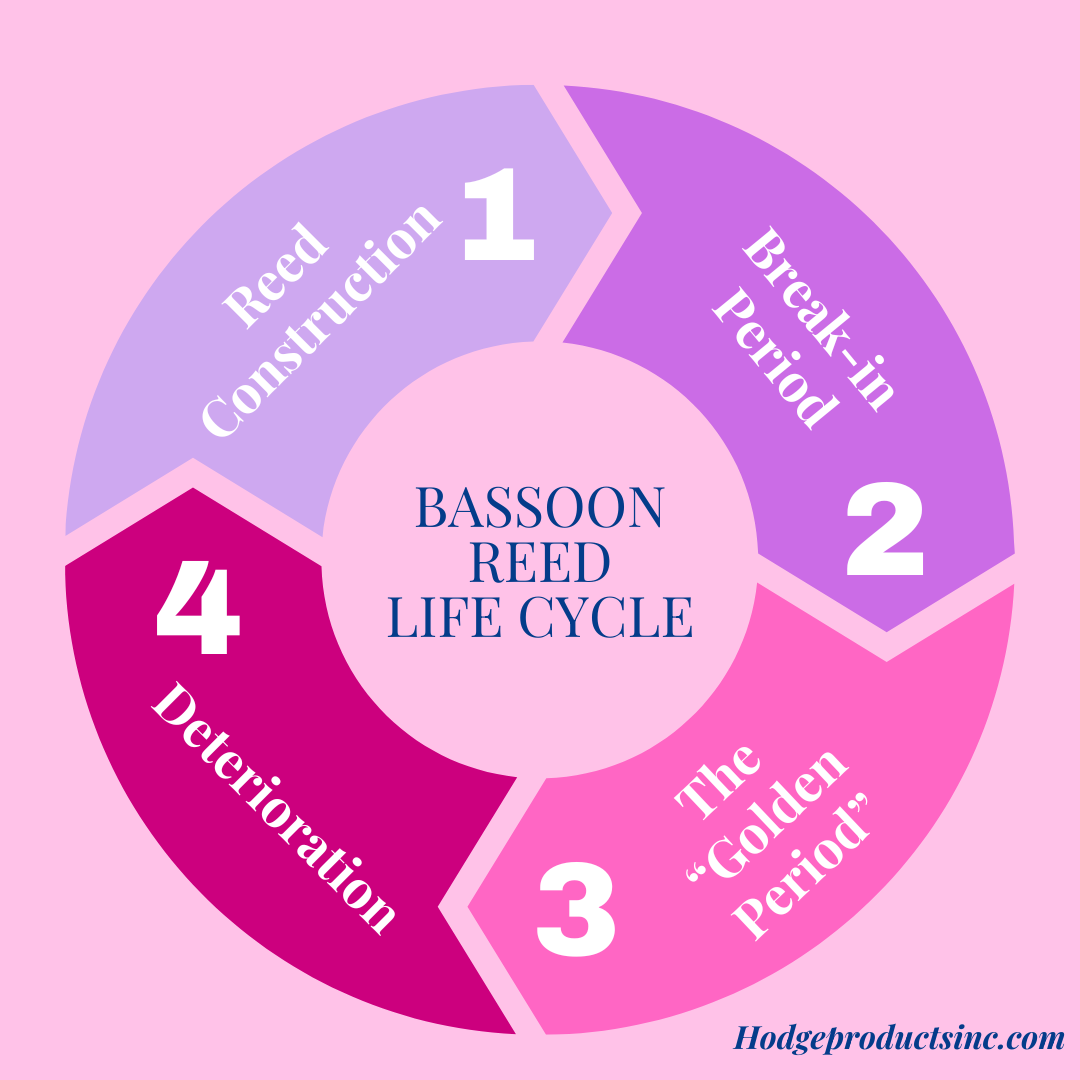
- Making the Reed: Experienced bassoonists will typically make reeds for themselves and for students. The process to make bassoon reeds takes several hours that may span over a few days. The bassoon reed is tested and refined until it is ready to be played on.
- Breaking In the Reed: Reeds for any woodwind instrument, like a good pair of shoes, must be broken in. This process allows the reed to adjust to the environment and the player; this process takes about one to three days. When initially obtaining a reed, it may feel resistant and hard to play for extended periods of time.
- The Golden Period: Once the reed is successfully broken in, it enters what is called the “Golden Period.” This stage reflects peak performance of the reed’s response, intonation, and tone. This period usually lasts from a few days to a few weeks, depending on the reed and how well the reed is cared for!
- Deterioration: All good things must come to an end, as every bassoon reed inevitably enters the final stage, “Deterioration.” As the reed ages and is played on for an extended period, the reed opening will become smaller, the pitch of the reed will rise, and the reed will produce a small and closed-off sound. Throughout the “Golden Period,” a natural bacterial growth will form on the inside of the reed that sits on top of the cane. When the reed enters “Deterioration,” the biofilm hinders the vibrations of the bassoon reed, and the bacteria begins to weaken cane fibers. It is important to note that the bacteria, not saliva, cause the cane fibers to break down and cause the reed to deteriorate. At this point, it is time to start the process over again with a new reed.
Steps For Breaking In The Reed:
- Soak the reed for approximately 1-2 minutes
- Play for a short practice session (warm-ups in band class, individual scale practice, long tones, etc.)
- Let the reed dry in a ventilated reed case (at least 30 min.)
- Soak the reed again and play on the reed for longer periods (band class, rehearsals, practice sessions, etc.)
- Repeat this process over 2-3 days until the reed plays comfortably
How often to replace bassoon reeds?
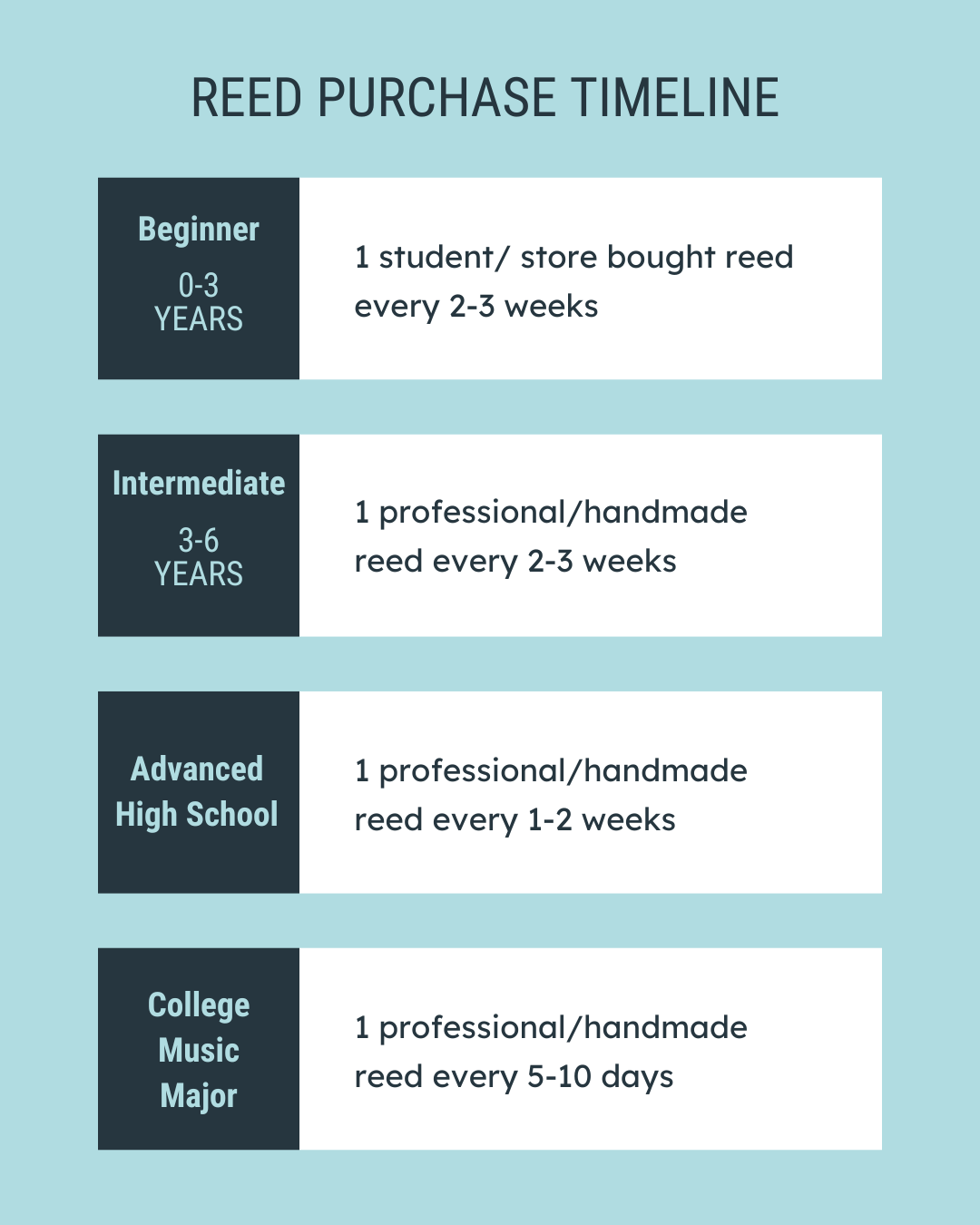
The answer to this question depends on the level of the player, how frequently they are playing, and how well the reed is taken care of. On average, bassoon reeds will last about 15-20 hours of playing.
Although it seems like a small amount of time, the playing time for beginning oboists will span across a few weeks.
If a band class is an hour long, the student may only be playing for about half of the class time, as the band director will talk, provide instruction, and work with other students. Therefore, if the beginning student is playing a minimum of 30 minutes a day, 5 days a week, one bassoon reed should last approximately three weeks if also taken care of properly. Refer to figure 2 (right) for an approximate reed purchasing timeline.
How to improve the lifespan of a bassoon reed
It’s no secret that bassoon reeds can be expensive as well as fragile. However, proper care can result in longer lasting reeds. While they won’t last forever, the following tips can help keep your reeds in good playing condition for longer.
- Brush your teeth before you play, and do not eat or drink anything other than water while playing.
- Rotate between multiple bassoon reeds. Rotating between reeds will give them a chance to readjust, dry out, and help keep the reeds from degrading quickly!
- Store your reeds securely in a hard reed case with ventilation.
- Soak your reeds in a small cup of water, not your mouth!
- Be sure to change the water that you soak your reeds in every day!
- Handle your reed with care! Try not to bump it or chip it on any objects (chair, music stand, clothes, teeth, etc.).
- Clean the inside of the bassoon reed extremely carefully by running a small brush from the bottom through the top of the reed. Remove the brush slowly to avoid damaging the tip of the reed.
- Clean the bassoon reed with an ultrasonic reed cleaner.
How to tell when you need a new bassoon reed
There are a few things that definitely indicate that it is time for a new reed. Being able to identify specific characteristics of your reeds is crucial in determining if the reeds are considered healthy or unhealthy. Grab your reed case, open it up, and compare each of your reeds to the lists below!

Healthy bassoon reed checklist:
- The reed crows between an F and a G
- The tip opening is about ⅛” tall, and the reed closes evenly from the sides inward
- The top edge of the reed is a straight line
- Producing a sound on the instrument feels relatively easy

Tip: to crow the reed, after soaking, put the reed in your mouth up to the first wire and blow. Check with a tuner to see what pitch it produces.

Red flags for unhealthy bassoon reeds
- The color of the cane is tinted black or has black spots (mold)
- The reed has small or large cracks
- The tip opening is not an oval, or is too closed to see all the way through the reed
- The top of the reed is jagged, frayed, or chipped
- The reed has a foul smell when you open the reed case
- Producing a sound on the bassoon has become increasingly more difficult
- The reed is difficult to articulate on, plays out of tune, or has a reduced dynamic range
- The reed crows any pitch besides an F or G
- Talk to your teacher- this may be able to be adjusted
- The thread becomes loose and begins to unravel
Other Considerations
There are certain situations which may appear to be a reed problem, but are actually an issue with an incorrect fingering, incorrect embouchure, or with the instrument itself. If your reed seems to produce wrong notes, or notes frequently come out in the wrong octave, it's best to consult your teacher or an experienced bassoonist to rule out the problem.
Conclusion
Let’s recap: bassoon reeds have a natural lifespan that lasts between a few weeks to a few days. Although they do change from day to day as they are soaked and dried, healthy functioning bassoon reeds should play comfortably in tune and respond without undue embouchure effort. Compare your reeds to the photos below.
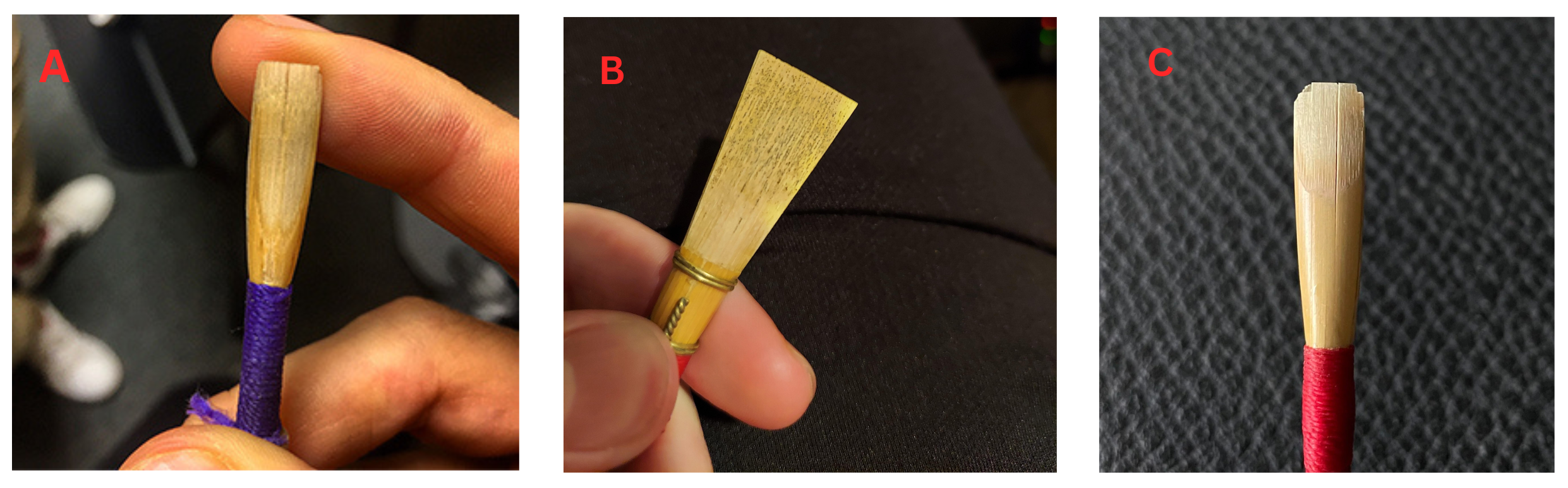
If you see any cracks, chips, or black spots, it's time to get a fresh reed! The good news is that we stock a variety of bassoon reeds, including synthetic reeds to fit the needs of players at all levels.