
What Bassoon Reed Should I Buy? (Updated 2026)
Posted by Clair Cangialosi, DMA on Apr 20th 2026
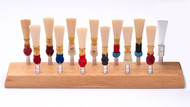
One of the questions that we get asked most often here at Hodge Products is, “What bassoon reed should I buy?”
The answer depends on your instrument, your physiology, where and what type of music you play, and your preferences for how a reed feels and sounds. If you’re relying on reeds made by someone else, the best thing to do is to try a few different brands to find what suits you best.
All of our bassoon reeds are constructed from high quality cane by reputable makers. They have been tested and evaluated for consistency by our bassoon specialist. This post will provide information about each of the bassoon reeds that we carry so that you can make an informed decision about your equipment. Read on for the details, or skip to each reed brand below.
Table of Contents
- Helpful Definitions
- Reed Descriptions
- Bassoon.ch Herzberg Style
- Brundage Professional
- Cody Hunter
- Danzi Professional (Red)
- Danzi Standard (Blue)
- Legere Synthetic Pro Reed
- Reed Tests
- Conclusion
- Works Cited
Helpful Definitions
There are many variables at play when it comes to constructing a bassoon reed. The most influential variables are the shape type, the profile type, the length, and the wire placements. Each of these factors work together to determine the tone quality, intonation, response, and resistance level of a reed.
Shape type:
The shape of a bassoon reed refers to the lateral dimensions of the reed’s tube and blade. Different combinations of straight and curved lines are used to create specific shapes. Imagine a cookie cutter removing the excess dough to create a cookie in a particular shape- a cane shaper works in a similar way by removing excess cane to create the contours of the reed.
These days, there are many different shapes available for bassoon reeds, but they can generally be sorted into one of three categories (figure 1, below). (1)
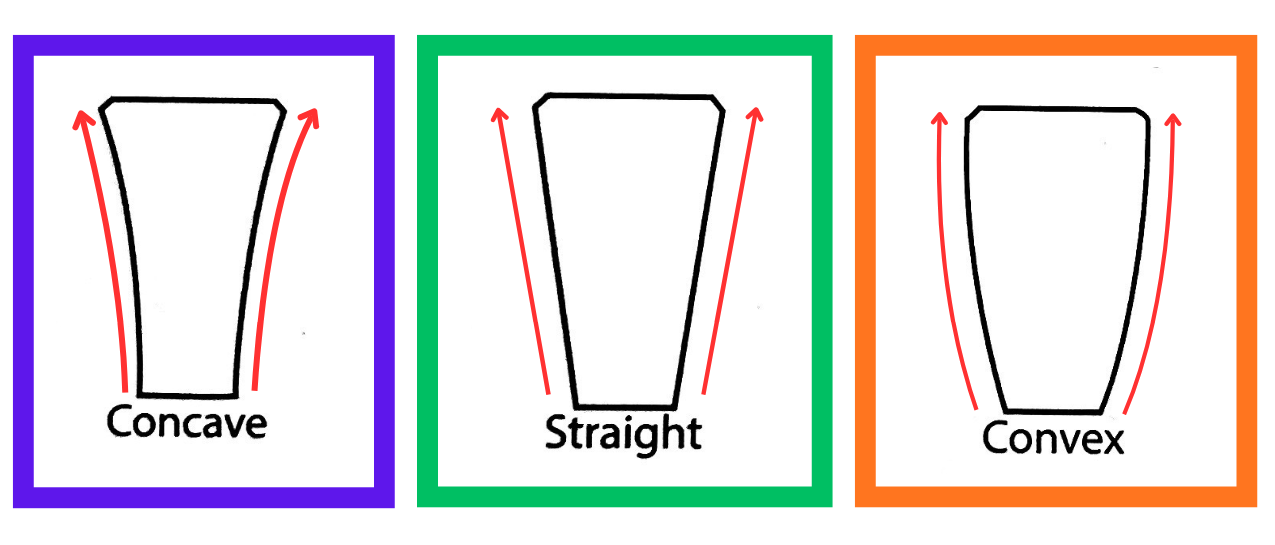
Concave: Also called a “flared” or “Knochenhauer” shape. This shape type is made from concave curves, creating a proportionally wider tip and narrower throat. Concave shapes tend to be narrower overall with less blowing resistance, a brighter sound, and higher pitch.
Straight: This shape is made of straight (or slightly curved) lines from collar to tip. These are a variation on the convex type, sometimes referred to as “almost Knochenhauer.” Straight shapes offer a happy medium in terms of tone and resistance between the convex and concave types. (2)
Convex: Also known as a “wine bottle” or “Mechler” shape. This shape type is made of convex curves, placing the widest part of the blade about halfway up the length. Concave shapes tend to have more blowing resistance, a darker sound, and flatter pitch.
Profile types:
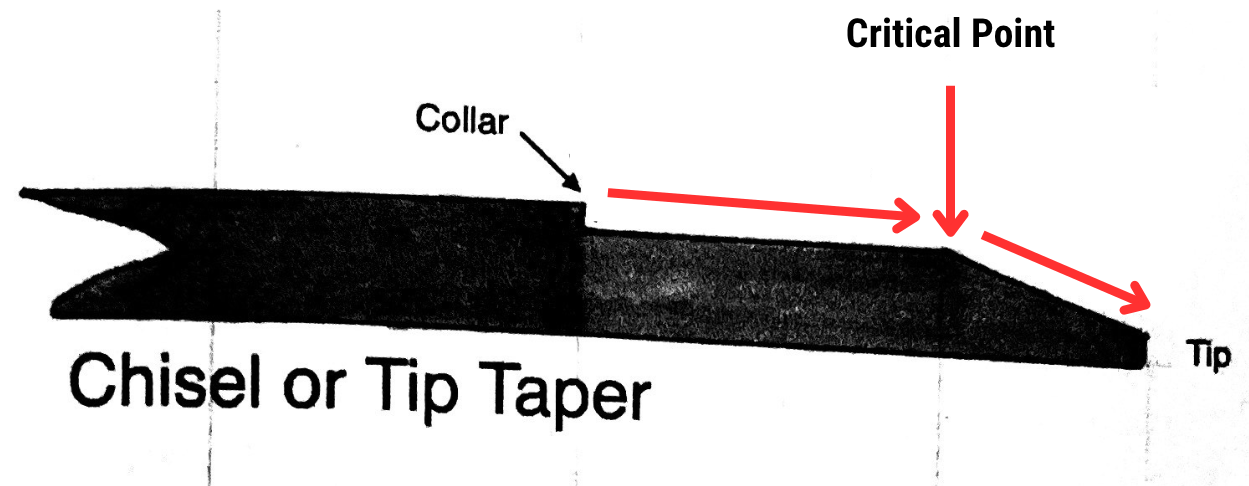
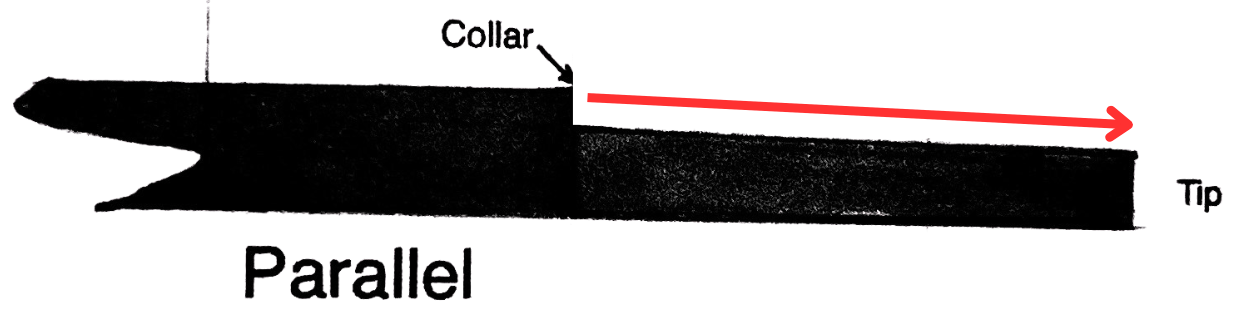
The profile of a bassoon reed refers to its “topographical map,” or the thickness of the blade at various points. In his book, Way of Cane, Eric Arbiter lists three basic profile types (see figure 2, right). (3)
Wedge Taper: The profile tapers evenly from the collar to the tip. This is a steeper taper than the parallel profile.
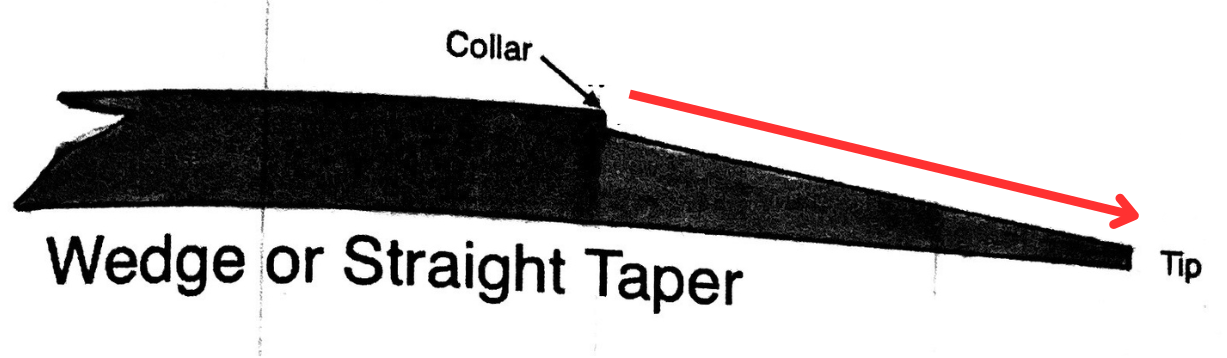
Tip Taper: The profile tapers very slightly to a “critical point,” about ⅔ up the blade. It tapers more steeply from the critical point to the tip.
Parallel: The profile tapers very slightly from the collar to the tip. As a result, this type of profile is usually thinner in the back and heavier at the tip than the Wedge or Chisel types.
Length & Wire Placements
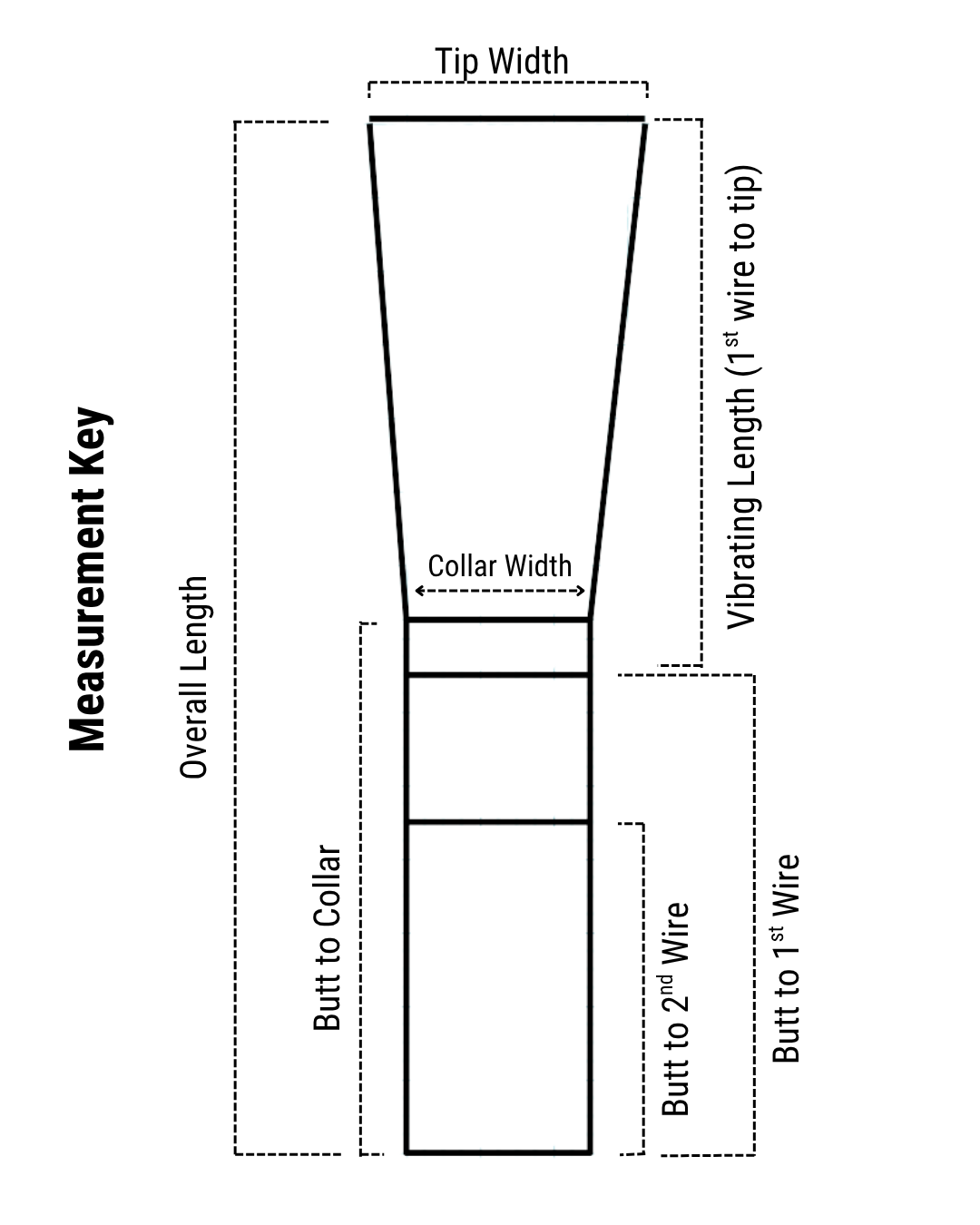
When we measure the length of a bassoon reed, we are actually looking at a few different measurements which primarily impact intonation:
- Overall length
- The vibrating length (measured from the tip to the first wire)
The overall length of a reed has a proportional relationship to the shape and profile. A longer and wider reed needs to be thick enough to vibrate at the correct pitch level. A shorter narrower reed can have a thinner profile and still play in tune. Another way to think about this is that a reed that is too long or too wide in proportion to its thickness will play flat. There is more information about this in the Reed Tests section of this post.
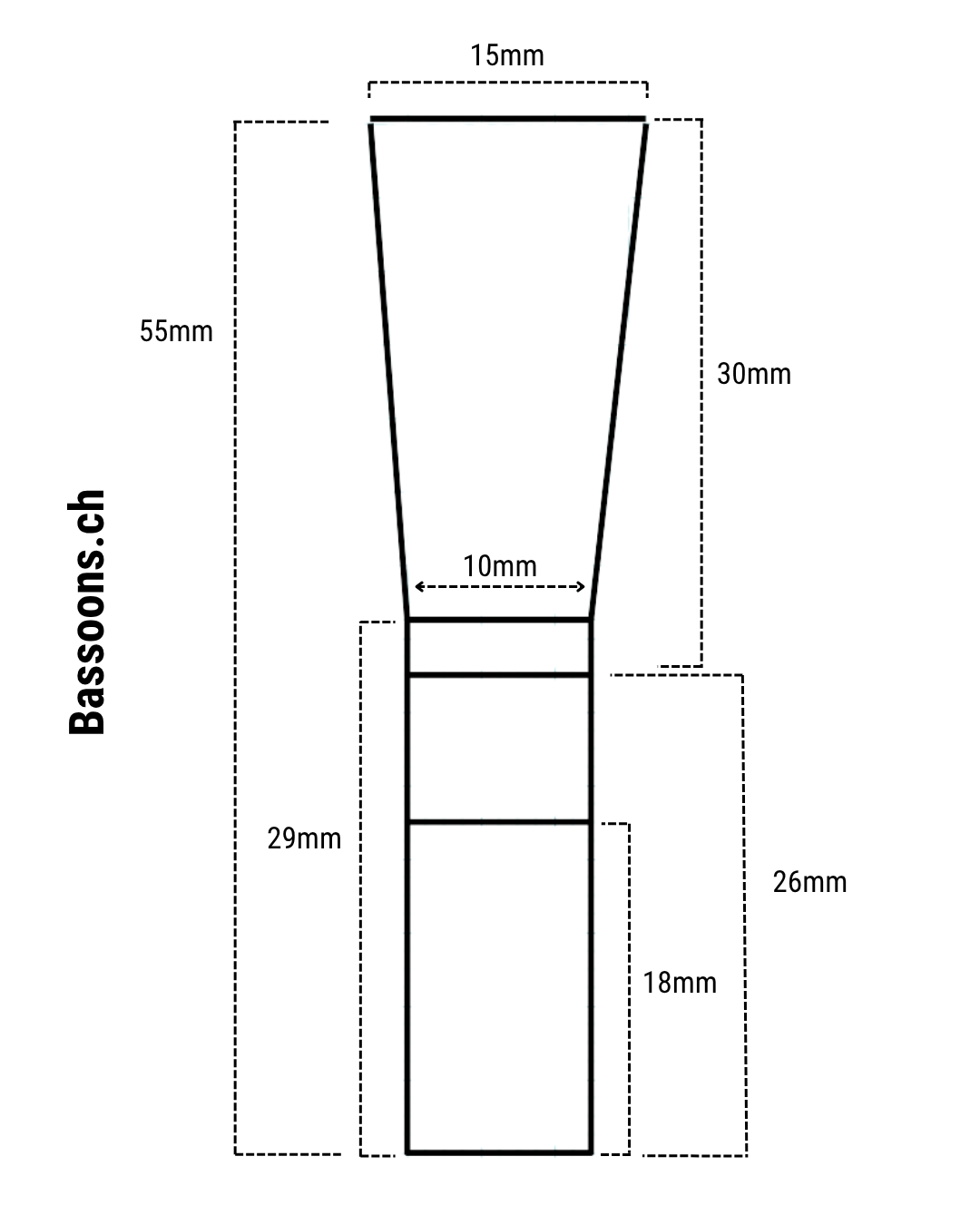
The vibrating length is the distance from the first wire to the tip. This can vary dramatically depending on how close to the collar the first wire is placed. Placing the first wire lower (further from the collar) elongates the vibrating length, lowering the pitch of the reed. Conversely, placing the first wire closer to the collar shortens the vibrating length, which raises the pitch of the reed. An example of these dimensions can be found in figure three.
Reed Descriptions
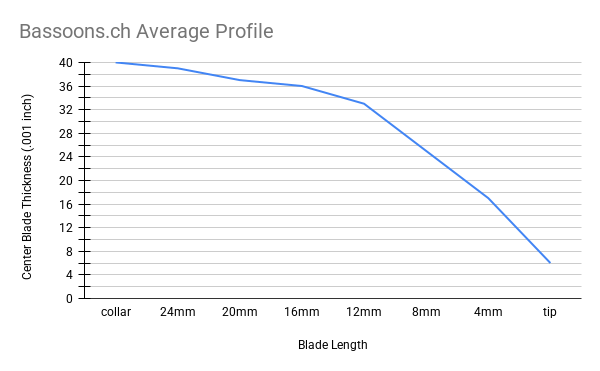
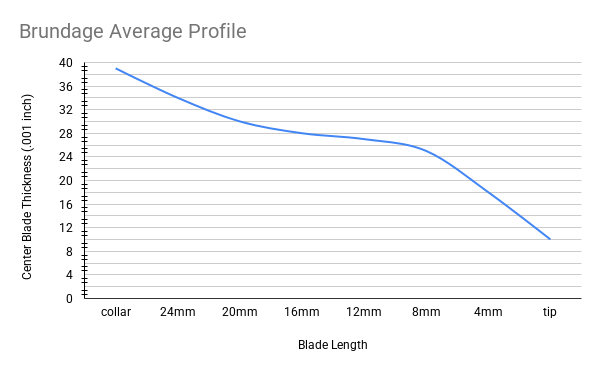
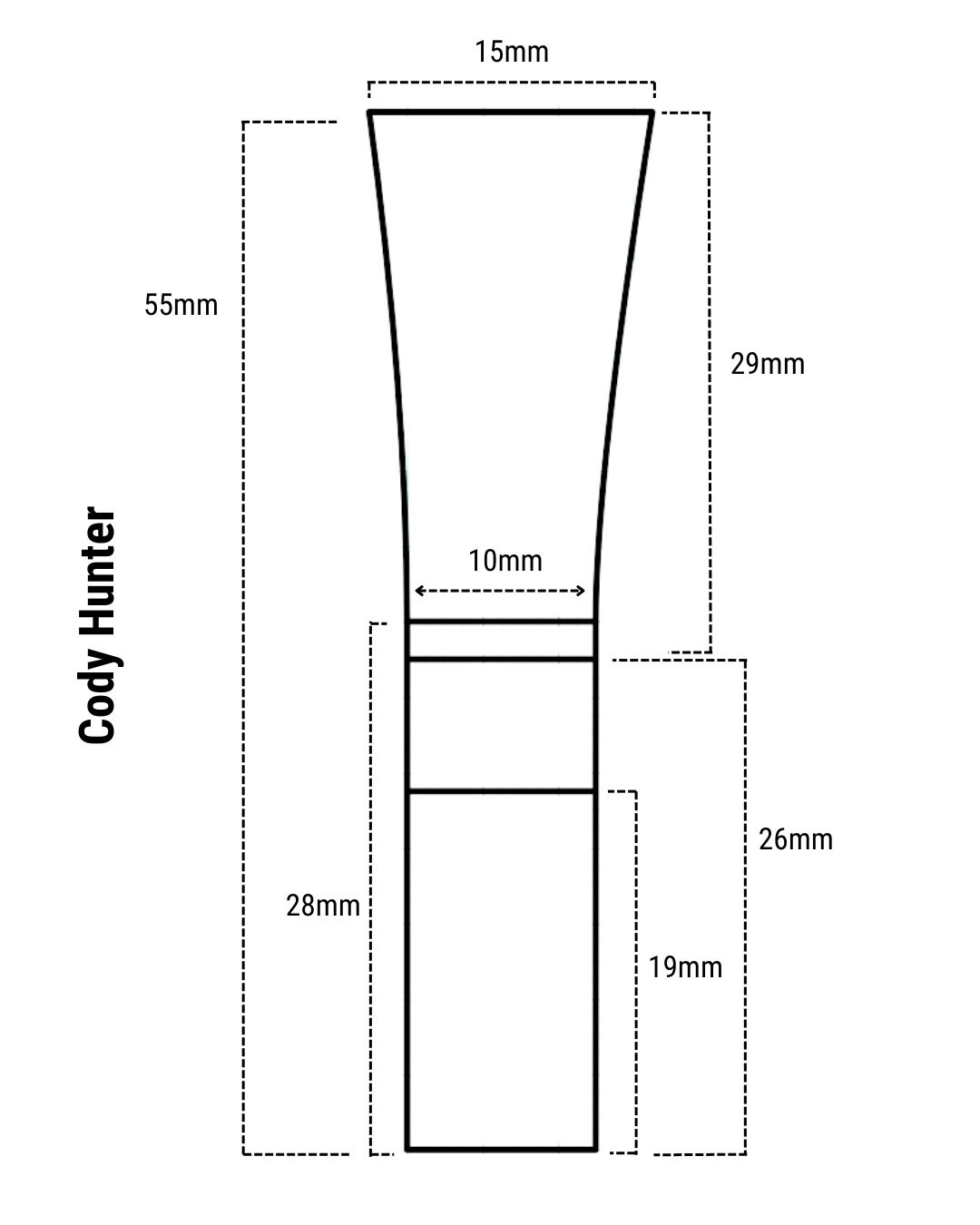
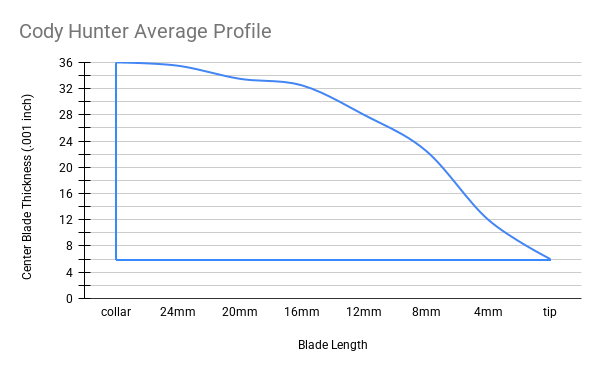
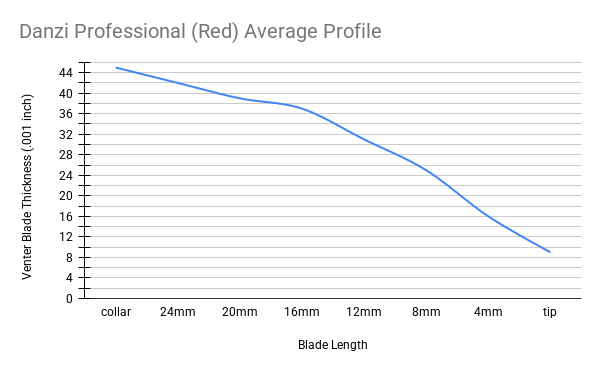
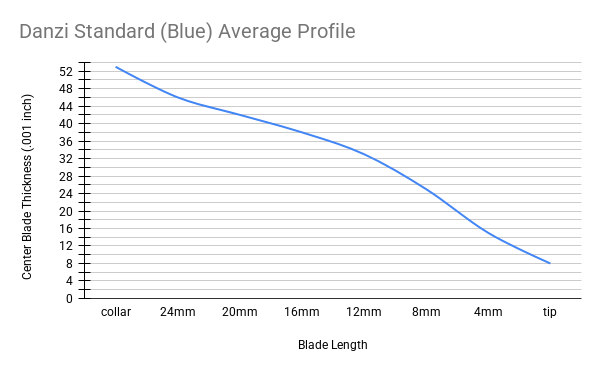
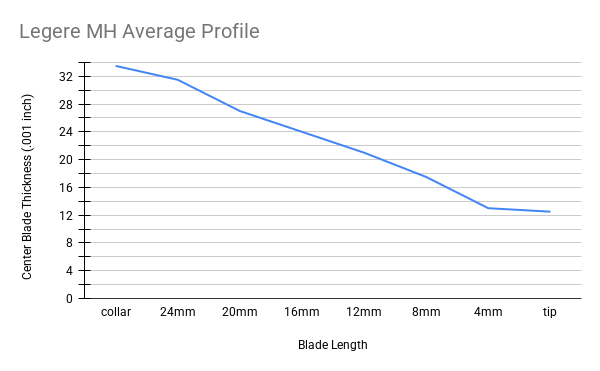
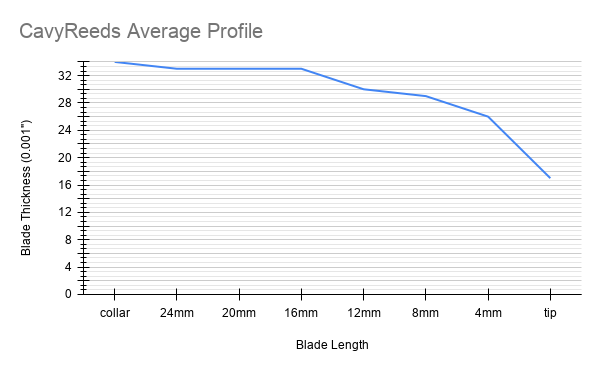
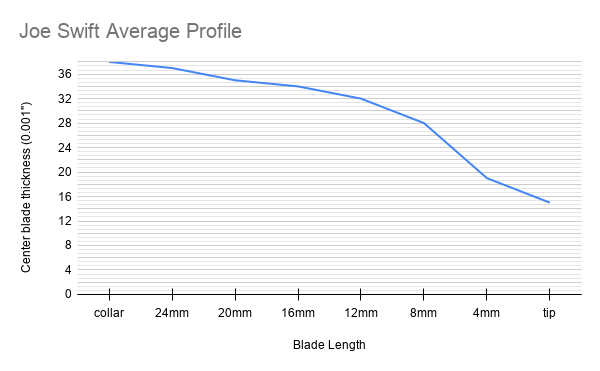
Each of our reed brands have been play-tested for quality and measured for consistency by our bassoon specialist. The profile diagrams were constructed using average dial indicator measurements from 8-10 reeds by the same maker. If there is a specific shape listed by the manufacturer, that has been included with the shape type. While we have tried to remain as objective as possible with the descriptions, please bear in mind that your experience with each reed may vary depending on your instrument and personal preferences.
It is important to note that we do not label our reeds with a specific resistance level (hard, medium, soft, etc). All of our reeds are designed for players who have a developed embouchure- typically at least two to three years of playing at an intermediate level or above. Unfortunately, we do not carry “beginner” reeds at this time.
Please note that our reeds may need to be adjusted slightly after soaking for the first time. Skip to the Reed Tests section of this post for more details.
Bassoons.ch Herzberg Style
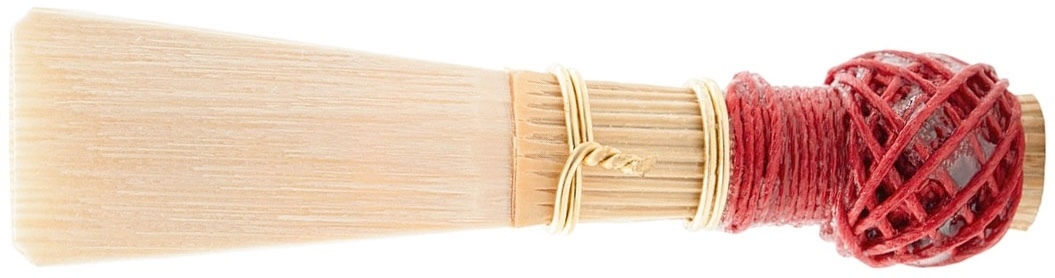
Bassoons.ch reeds are made by Switzerland-based bassoonist, Andrew Burn, based on the methods espoused by the prominent American bassoonist Norman Herzberg. They have stable intonation with a balance of high and low overtones in the sound. They are heavier at the back than our other “American style” reeds, which offers more resistance. A great “all around” option, Bassoons.ch Herzberg reeds are versatile enough to be used in both chamber music and large ensembles.
- Shape type: Straight (Herzberg shape)
- Profile type: Tip Taper
- Overall length: 56 mm (2 13/64")
Brundage Professional
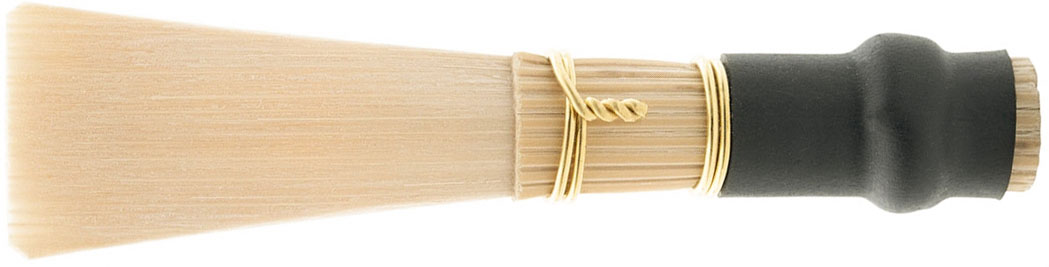
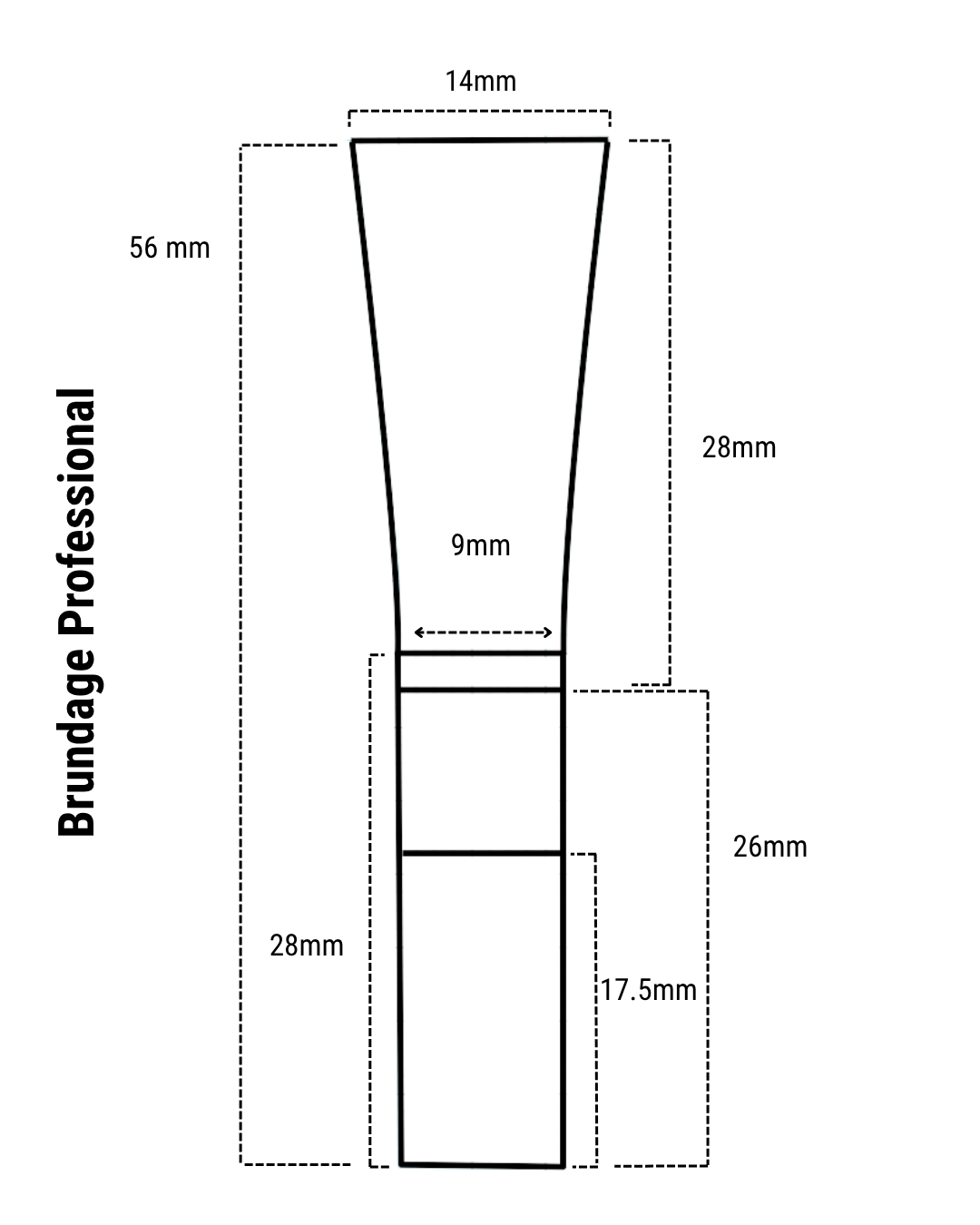
Brundage Professional reeds are made by retired American military bassoonist, David Brundage. They have a dark, full sound, with a balance of flexibility and stability. These reeds are slightly thicker in the front, but have a less steep taper towards the back, which keeps them fairly freeblowing. One of our most popular reed brands, Brundage Pro reeds work for a variety of playing styles.
- Shape: Straight
- Profile type: Tip Taper
- Overall length: 56mm (2 13/64")
Cody Hunter
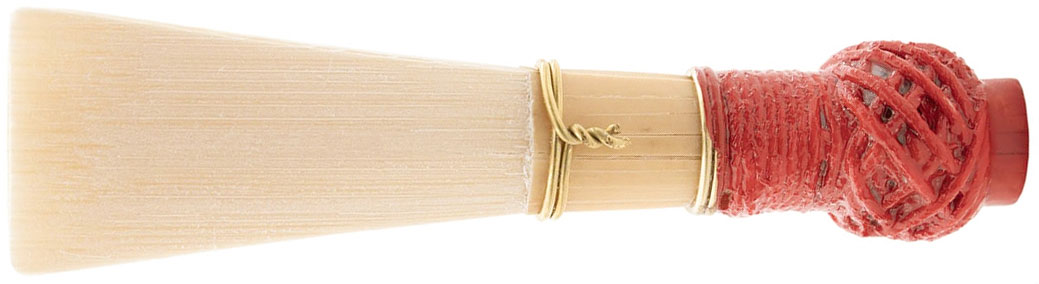
Cody Hunter Reeds are made by Cody Hunter, professor of bassoon at Stephen F. Austin University. These reeds are the most flexible option in our current lineup. While similar to the Brundage Pro reeds, when play-tested in our shop they produced a brighter sound which favored the higher overtones. The profile is also a little thinner in general, making them require less embouchure pressure. These reeds would be suitable for playing first bassoon or other repertoire which uses the upper register of the instrument.
- Shape: Concave (Fox 2)
- Profile type: Tip Taper
- Overall length: 55mm (2 11/64")
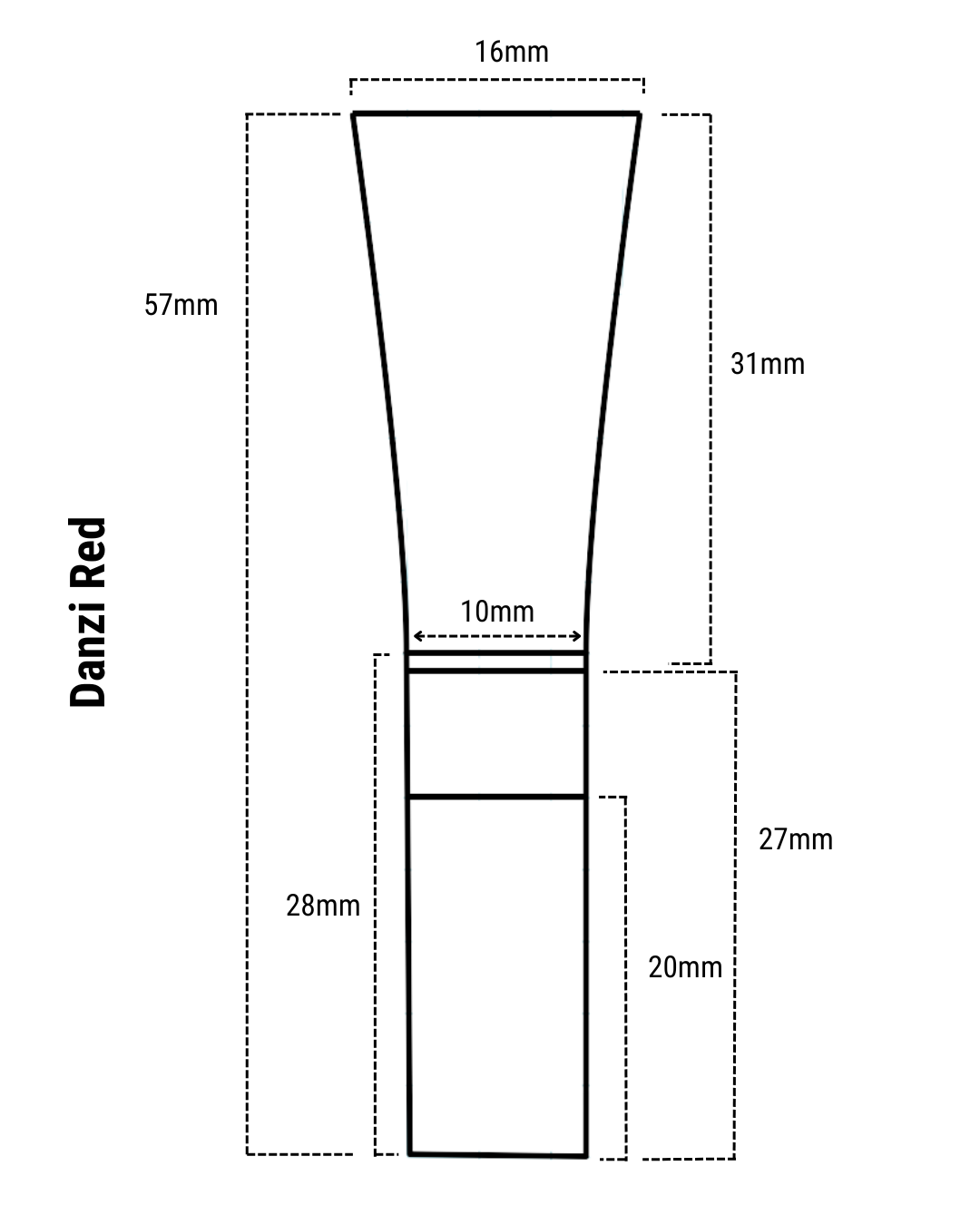
Danzi Professional (Red)
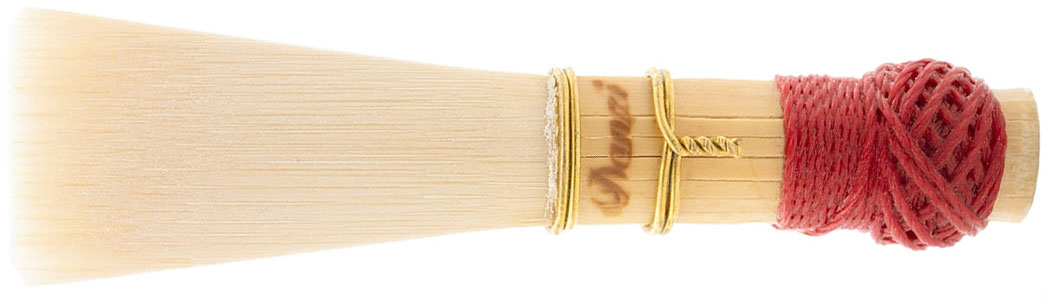
The Danzi Professional reeds are made in Italy at the Danzi headquarters. These are a “European style,” with the first wire placed right at the collar. The profile is thicker than most “American style” reeds (such as Brundage or Cody Hunter), but this is balanced by a wider shape which flares towards the tip. Danzi recommends these reeds for principal players in orchestra or wind band.
- Shape: Concave
- Profile type: Wedge
- Overall length: 58mm (2 9/32")
Danzi Standard (Blue)
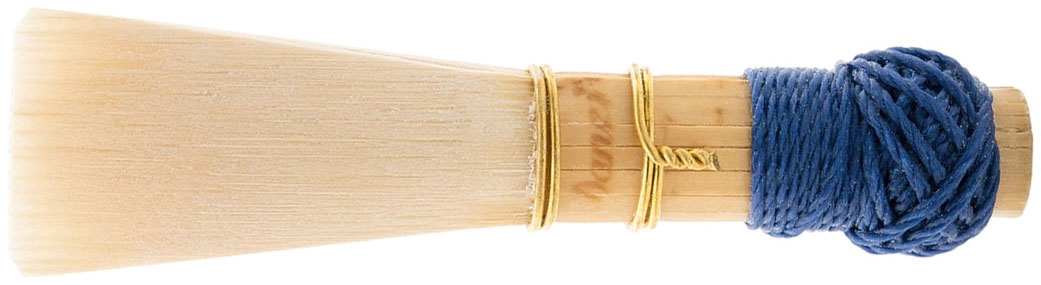
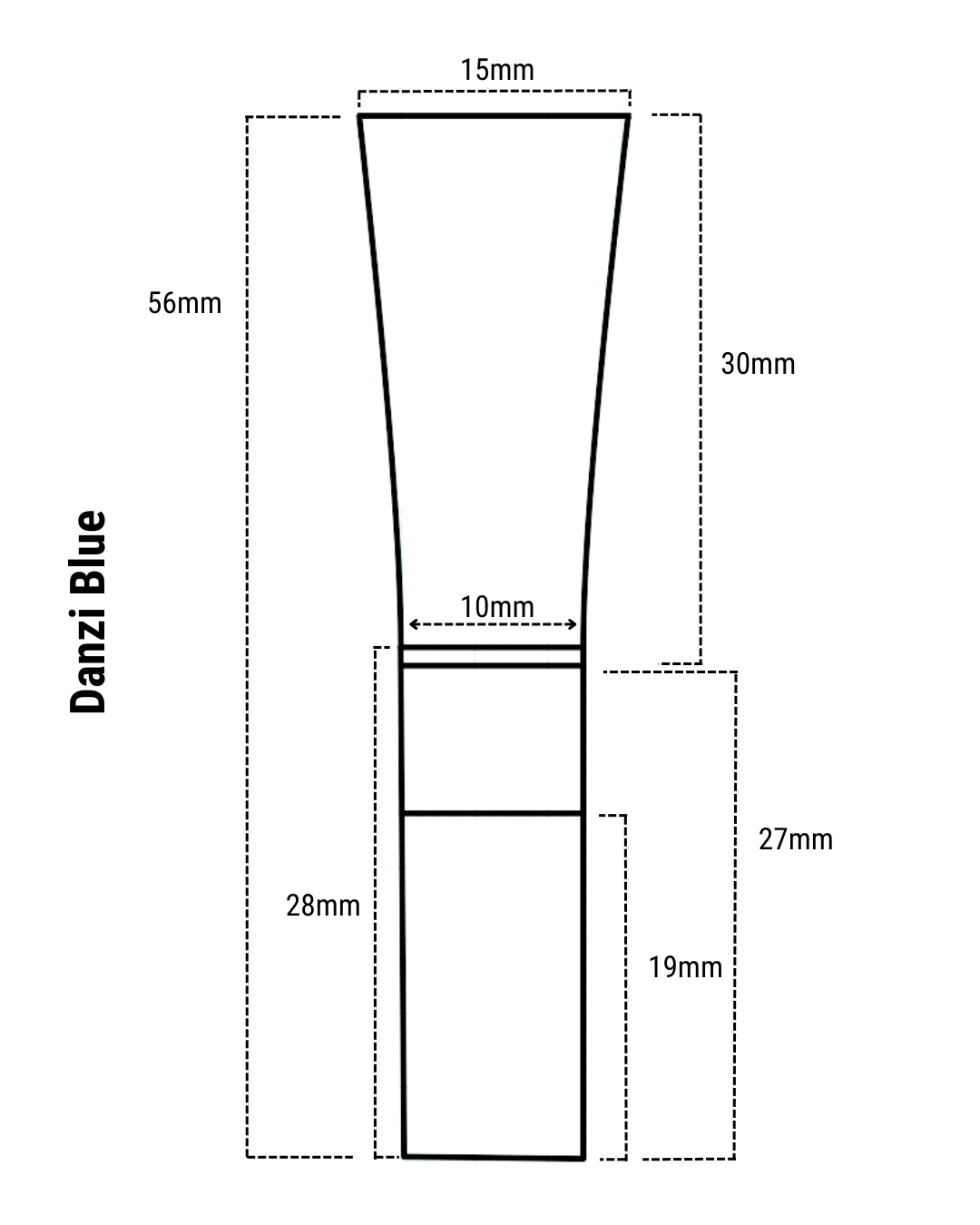
The Danzi Standard reeds differ slightly from the Danzi Pro reeds in that the profile slopes more gradually from the collar to the tip, and the shape is slightly shorter and wider. However, the profile on the Standard reeds is also slightly thicker, which allows them to retain many similar playing characteristics to the Pro reeds. When tested in our shop, the Danzi Standard reeds were found to be slightly more free blowing than the Pro reeds, but they definitely still do require a well developed embouchure (i.e. these are not for beginners).
- Shape: Concave
- Profile type: Tip Taper
- Overall length: 56mm (2 13/64")
Legere Synthetic Pro Reed
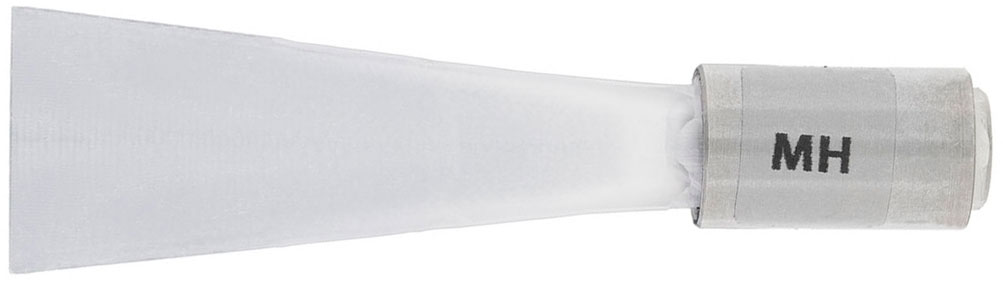
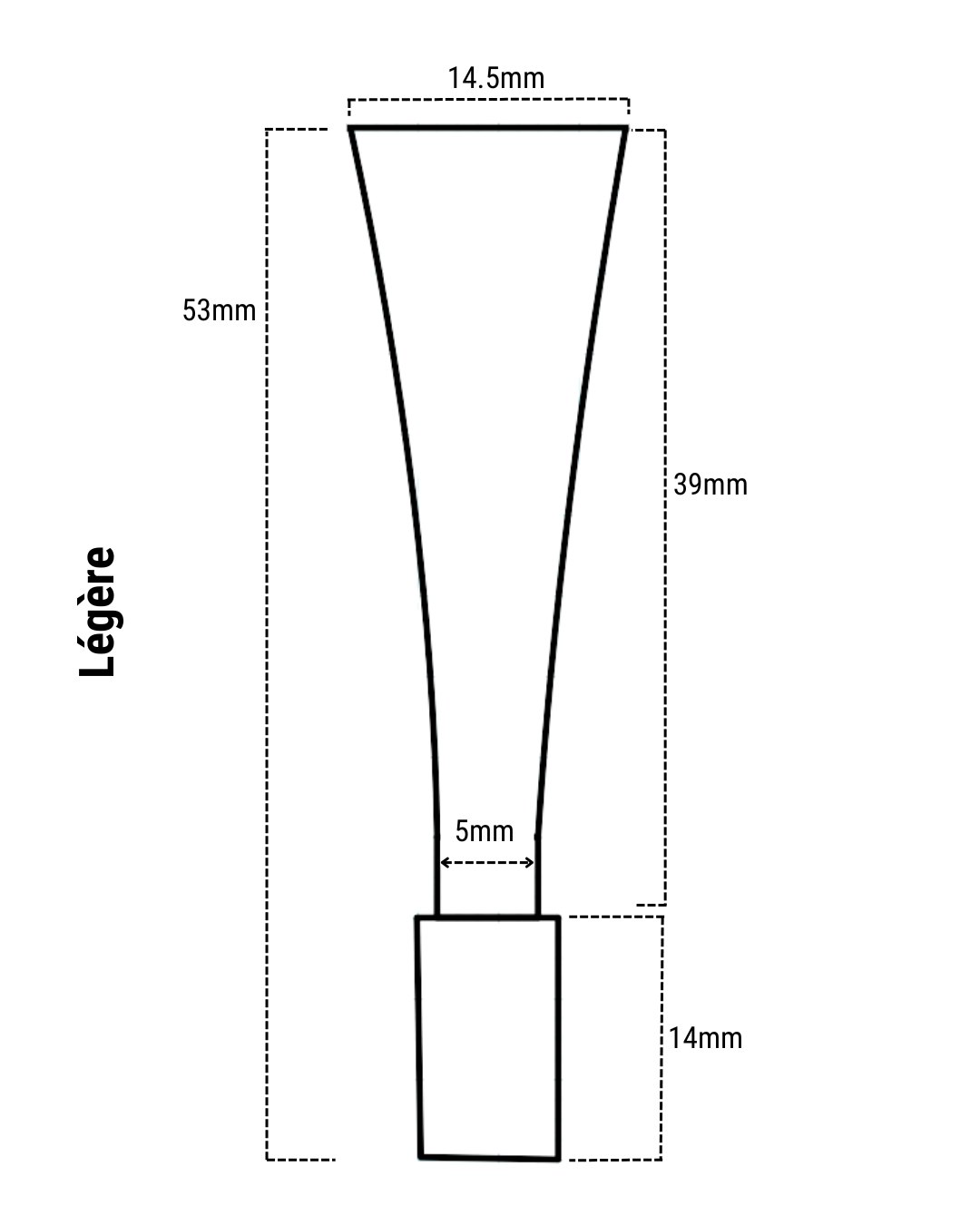
Legere Synthetic Pro Reeds are made from a specially produced plastic which is designed to vibrate readily without needing to be soaked. They are a similar length to most American style cane reeds, but they do not have wires or a collar. We carry two varieties, Medium Hard, and Medium. When tested in our shop, we found that both types responded easily and with stable pitch, especially in the low and middle registers. The medium is designed to be slightly softer than the medium hard. These reeds are great for doublers, occasional players, and those who often play outside or under changing weather conditions.
- Shape: Concave
- Profile type: Wedge
- Overall length: 53mm (2 3/32")
Cavy Reeds
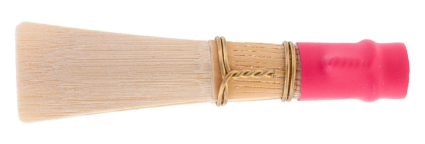
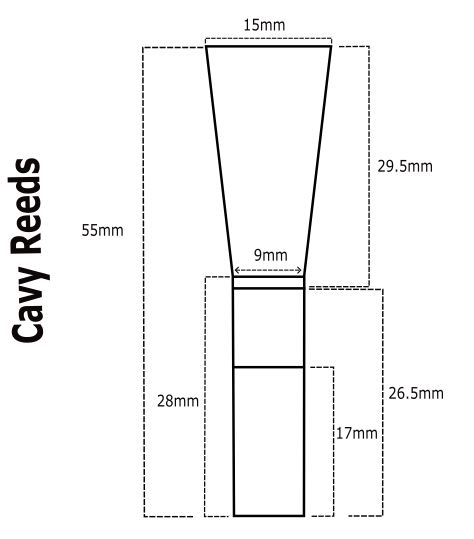
Cavy Reeds are made by reedmaker Christopher Allpress. The variety we stock uses Bondcane, in a Sharrow shape with Allpress's standard profile. These reeds offer stability and a strong core to the sound without being overly resistant. The shape is similar to to the Fox 2 used for the Cody Hunter reeds, but is slightly narrower at the throat.
- Shape: Straight (Sharrow)
- Profile: Tip Taper
- Overall Length: 55mm
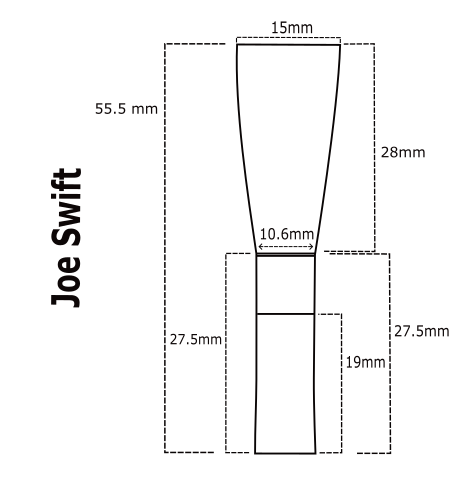
Joe Swift
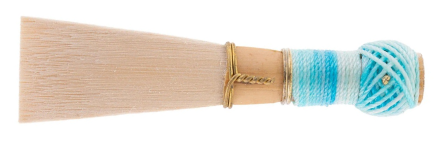
Swift Bassoon reeds are made by Dr. Joseph Swift using Medir cane and a Rieger 13 shape. They exhibit a full and vibrant sound across all registers. Whereas most bassoon reeds carry one dominant overtone frequency, Swift reeds have multiple strong frequencies which translates to a sound rich in tonal color and clarity.
- Shape: Convex (Rieger 13)
- Profile: Tip Taper
- Overall Length: 55.5mm
Reed Tests
Now that we’ve covered the details of each reed brand in our inventory, let’s explore some strategies for determining what reed is right for you. There are three factors to consider (in this order):
- Response: How easy is it to make a sound on the reed? Can you articulate on it clearly at all dynamics and at a range of tempos?
- Intonation: Does the reed play in tune without excessive embouchure adjustment? Do any notes stick out of the scale?
- Tone: Do you like the way the reed sounds? Can you blend with other players?
Soak your new reed in warm water for 2-3 minutes, or until the wires become snug. Then, use the following tests to help answer the questions above.
Crow Test: (adapted from the Eubanks Quick Guide to Bassoon Reed Tuning)
- Place lips over the wires and blow gently. Increase air speed until a single pitch sounds.
- Check a tuner. For most reeds on most bassoons, the crow should be between an F and a G.
- If blown harder, does the reed produce a rattling “crow” sound or remain a single pitch?
If it is difficult to produce a sound on the reed by crowing, check for a normal tip opening (1-1.5 mm or ⅙’’ or less) and adjust the wires before continuing. The chart in figure three shows the necessary wire adjustments. (4)
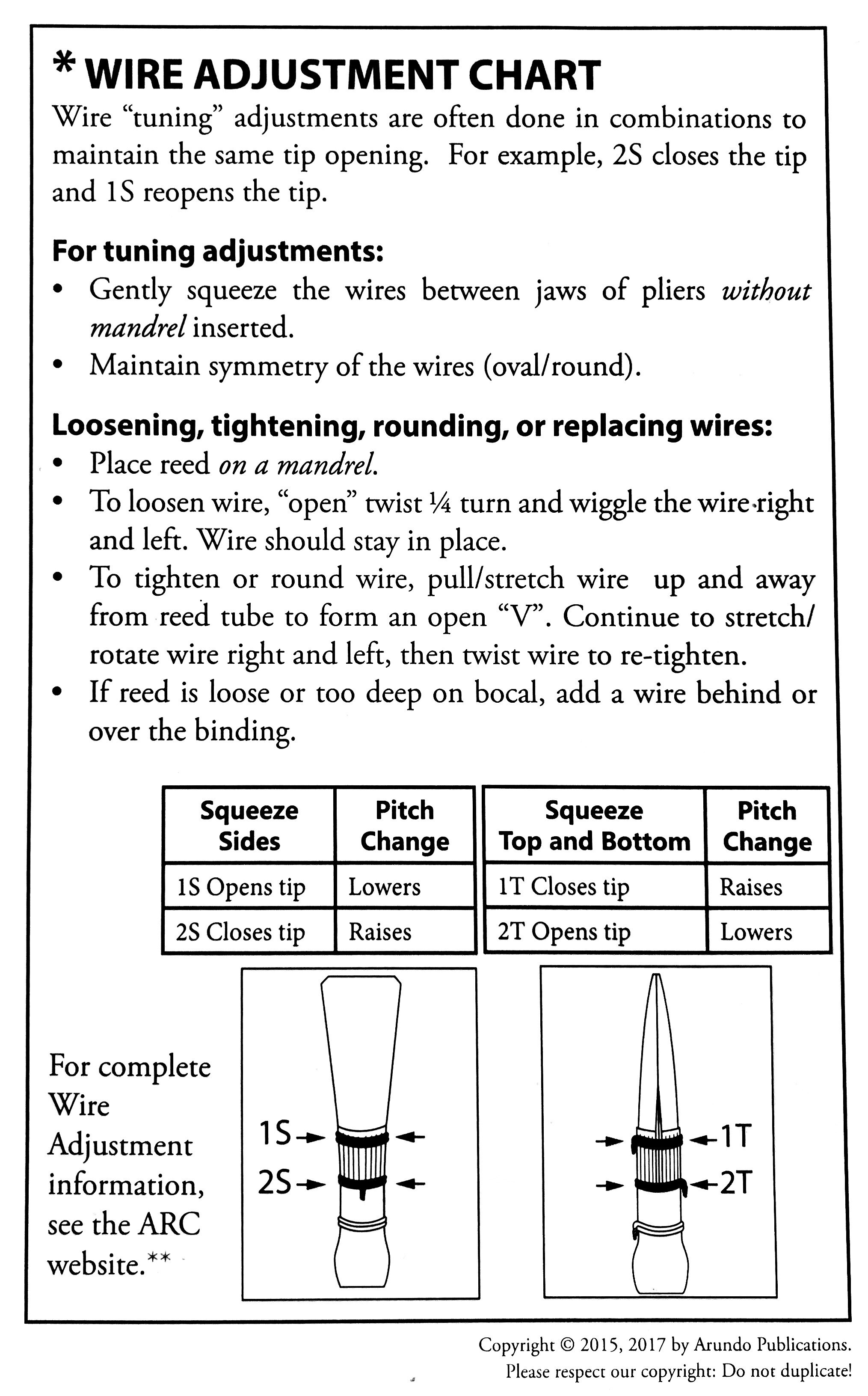
After adjusting the wires, repeat the crow test above. Once the reed crows comfortably (i.e. without straining the throat, embouchure, or breathing muscles), proceed to the playing tests below.
Playing Tests:
- Play E, F, C# (see figure 4 below) with full tone. Check the pitch with a tuner. Do not adjust to the reed! Make a note of whether these pitches are sharp, flat, or right on.
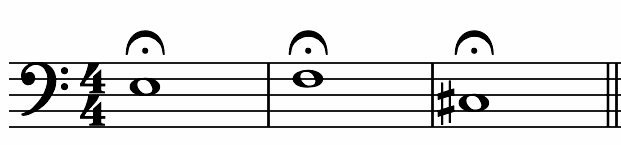
Figure 4. Suggested test notes for new reeds. - Play one of the three test scales below (play staccato, then slurred)
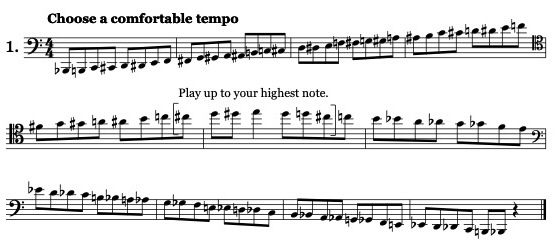
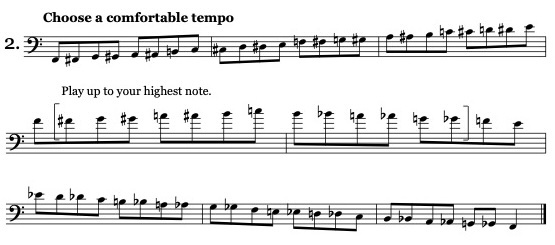

Figure 5. Suggested scales for reed tests: full range chromatic, chromatic from low F, and F major. - Play a familiar song or piece of repertoire. How does the new reed compare to your current favorite? How is the pitch, generally? How easy does it feel to play?
Keep in mind that a new reed will take some time to break in. It’s ok if it feels slightly more resistant to play on at first than an older reed.
Conclusion
After testing your new reed and evaluating the response, intonation, and tone, it's time to make a decision.

A reed brand is likely a good fit for you if:
- It crows at an F or G with a loud, rattling sound (before or after wire adjustments)
- It responds readily throughout the range of the instrument
- It feels comfortable to play on without biting or tensing the throat/ breathing muscles
- It plays in tune (or close to in tune) throughout the range of the instrument
- You like the sound quality

A reed brand is likely not a good fit for you if:
- It won’t crow, or is difficult to crow and wire adjustments don’t help
- You have to bite to control the pitch
- It is very sharp or very flat
- It feels difficult to make sound, or to control the sound for expressive purposes
- You do not like the sound quality
Recommendations from a teacher or friend can be a great place to start. However, everyone is different- what matters most is how a reed feels and sounds for you on your instrument.
Still have questions? Contact us on our website or email our bassoon specialist at bassoon.hodgeproductsinc@gmail.com
Works Cited
- Eubanks, Mark G. Quick Guide to Bassoon Reed Tuning. Enterprise, OR: Arundo Research Company, 2015. 3.
- Eubanks, Mark G. Quick Guide to Bassoon Reed Tuning. Enterprise, OR: Arundo Research Company, 2015. 3.
- Arbiter, Eric. Way of Cane. New York City, NY: Oxford University Press, 2020. 105.
- Eubanks, Mark G. Quick Guide to Bassoon Reed Tuning. Enterprise, OR: Arundo Research Company, 2015. 4,9.