
Book Review: Sound In Motion: A Performer's Guide To Greater Musical Expression By David McGill
Posted by Clair Cangialosi, DMA on May 4th 2026
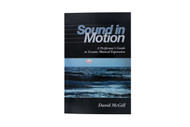
In Sound In Motion: A Performer’s Guide to Greater Musical Expression, author David McGill deals with several large and interrelated topics concerning musical expression. McGill’s perspective is influenced by French-American Oboist, Marcel Tabuteau, and other prolific pedagogues at the Curtis Institute of Music. Although written by a bassoonist, Sound In Motion is intended to be a resource for all musicians within the classical realm.
About the Author
David McGill is a Grammy-award- winning American bassoonist, currently on faculty at Northwestern University. He has held principal positions in the Chicago Symphony, the Cleveland Orchestra, and the Tulsa Philharmonic, among others. He has made numerous solo and orchestral recordings, including Orchestral Excerpts For the Bassoon (a teaching CD with spoken commentary). McGill has taught at the University of Toronto, the Cleveland Institute of Music, Indiana University, DePaul University, and Roosevelt University. He has given master classes in Canada, Finland, Hungary, and throughout the United States. A native of Tulsa, Oklahoma, he holds a Bachelor of Music degree from the Curtis Institute of Music where he studied bassoon with Sol Schoenbach, and woodwind phrasing with oboist John de Lancie and English hornist John Minsker. (1)

Summary
Sound In Motion is broken into eight parts, which each have several subsections. There are also three appendices. The first two contain lists of suggested recordings and suggested reading. The third is a short essay in which McGill recounts a phrasing disagreement between himself and a colleague, and his reasoning behind making a certain phrasing choice.
Part 1: A Style is Born
Part 1 provides background information on Tabuteau’s legacy as one of the most influential American woodwind players of the twentieth century. McGill recounts Tabuteau’s numerous career highlights as a forefather of the “American Style” of woodwind playing, who developed a “universally applicable, systematic approach to musical phrasing.”
Part 2: What is Music?
In part 2, McGill discusses the work that goes into musical performance, debunking the misconception that a performance is always a reflection of what the performer feels in the moment. He insists that a thorough understanding of the structure of a piece of music is what allows great musicians to create a convincing performance.
Part 3: Note Grouping
Part 3 discusses the details of Tabuteau’s aforementioned phrasing system, including how note grouping can clarify phrase structure by creating forward motion within a musical idea. The phrasing system can be applied to melodic ideas, rhythmic ideas, or harmonic progressions.
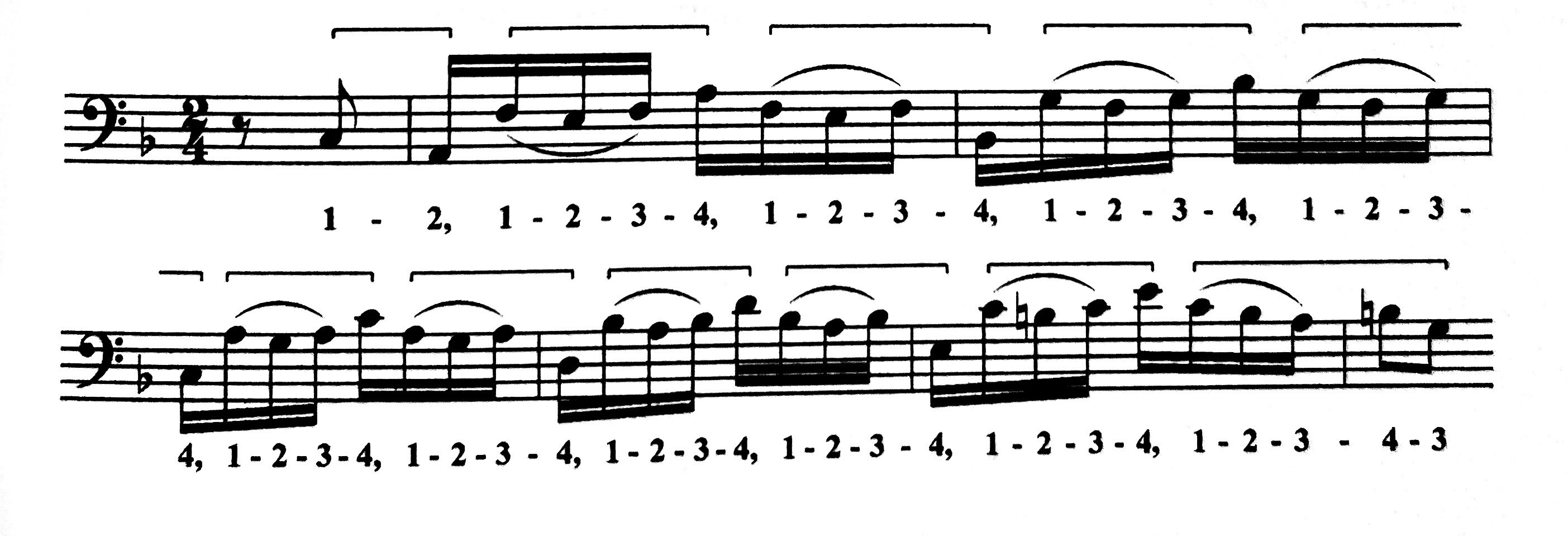
Part 4: The Larger Picture
In part 4, McGill notes the discrepancy between how printed music looks on the page and how it sounds. Each section delves into examples in different musical contexts, comparing how the music looks on the page vs how it should be interpreted by the performer. McGill encourages the reader to synthesize earlier information about Tabuteau’s phrasing system with their own knowledge of musical structure and form.
Part 5: Wind Techniques
Part five illustrates three fundamental aspects of playing a wind instrument: control of the airstream, fingers, and tongue. McGill encourages the reader to work to hone their technique so that expression, rather than technical execution, can become the top priority. He provides methods of practicing fundamental techniques such as scales and long tones, as well as broader concepts, such as the development of legato and musical line.
Part 6: Controversy
In part 6, McGill discusses aspects of music which are often debated, including tone quality, intonation, ornamentation, and historically-informed performance of Baroque music. He also discusses strategies for creating inflection in music and the ways in which technique and
musicality are inextricably intertwined.
Part 7: The Profession
This section deals with activities such as practicing, taking auditions, etiquette for getting along with colleagues and conductors in professional orchestras, performance habits, and thoughts on passing musical knowledge on to the next generation. McGill notes that interpersonal skills are of equal importance as musical skills.
Part 8: The Search
In the final section of the book, McGill reminds the reader of his core philosophy: By using logic to unearth the structure of the music, we can bring forth the composer’s true intentions. This process, while not driven by our own personal emotional state, is what gives music meaning and evokes emotions from the listener.
Commentary
Although Sound In Motion deals with complex questions about music, musicianship, and life as a performer, McGill’s writing is straightforward and approachable. He intersperses his own witty explanations with practical musical examples and quotes from other notable figures in the field of classical music. By drawing upon (and sometimes challenging) common long-held beliefs about classical music, McGill invites the reader to consider the broader musical context beyond one’s own experiences.
The book is intended for “musicians of every stripe,” although it will likely be the most useful to those who have a strong understanding of musical notation and are already familiar with the conventions of classical music. (2) McGill insists that both talent and drive are necessary elements of success. Those who find success must be willing to put in the work to improve their technique and to understand their craft deeply. His approach centers on the idea that humanity and musicianship are intertwined. Our emotions and personal experiences contribute to our ability to create music in a meaningful way, but our own emotions do not provide the rationale for how to play a musical phrase. Instead, we must use logic and our musical knowledge to realize the composer’s intentions. This process is what touches the hearts and minds of the audience.
Conclusion
Considering adding Sound In Motion to your book collection? Here’s a short breakdown:
- Sound In Motion is about developing musical phrasing, based on elements of the music’s structure, rather than the raw emotions of the performer
- The book is intended for advanced musicians (high school aged or above)
- David McGill discusses the various musical and interpersonal skills that contribute to a successful career in music.
Works Cited
- “David McGill, Bassoon Professor,” Northwestern University Bienen School of Music, Northwestern University, accessed April 3rd, 2026, https://www.music.northwestern.edu/faculty/profile/david-mcgill
- David McGill, Sound In Motion: A Performer’s Guide to Greater Musical Expression (Bloomington, Indiana: Indiana University Press), 2007, preface