
Tips For Selecting Bassoon Cane
Posted by Clair Cangialosi, DMA on Apr 6th 2026
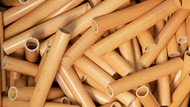
In the more advanced stages of reedmaking, learning how to select high quality cane becomes imperative for saving time and effort later down the line. By taking the time to eliminate bad cane as early in the process as possible, it increases the likelihood of finished reeds being consistently usable for performance. This post will outline the key points to consider when selecting cane. Read on for more information, or skip to each stage of the reedmaking process below.
Table of contents:
Selecting Tube Cane:
Careful cane selection is most important when workng with tube cane. Proportionally, the most bad cane can be eliminated at this stage.
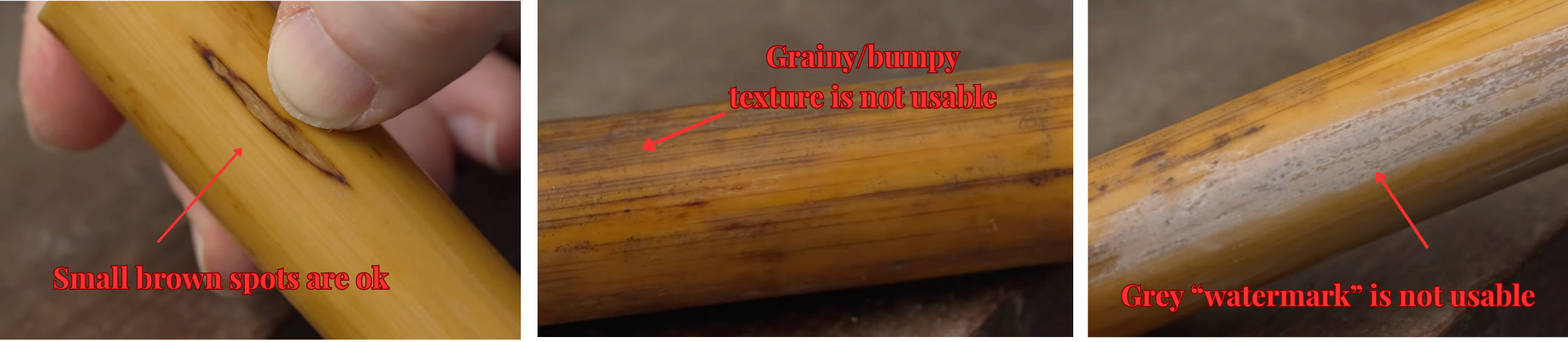
In his video, “Selecting the Right Cane To Make Your Reeds Better,” Andrew Burn recommends checking the tube for discoloration and texturization of the bark. Avoid any areas that are green or grey. Brown spots are usually fine. The bark should also feel smooth. Any rough or bumpy areas should be avoided. Figure 1 shows examples of usable and unusable cane.
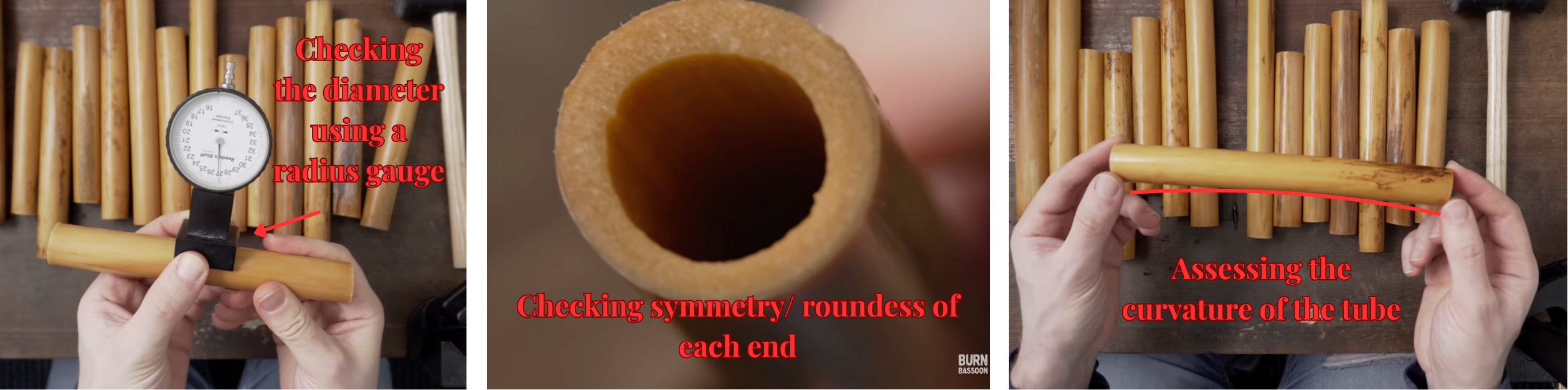
Next, he assesses the straightness of the tube from end to end, as well as the symmetry and roundness of each opening of the tube, as shown in figure 2. Burn also uses a radius gauge to measure the diameter of the tube along its length. These factors help determine how to split the tube to yield the most usable pieces. Strategically splitting the tube can help ensure that each piece is symmetrical and of an appropriate diameter to fit into the gouging machine.
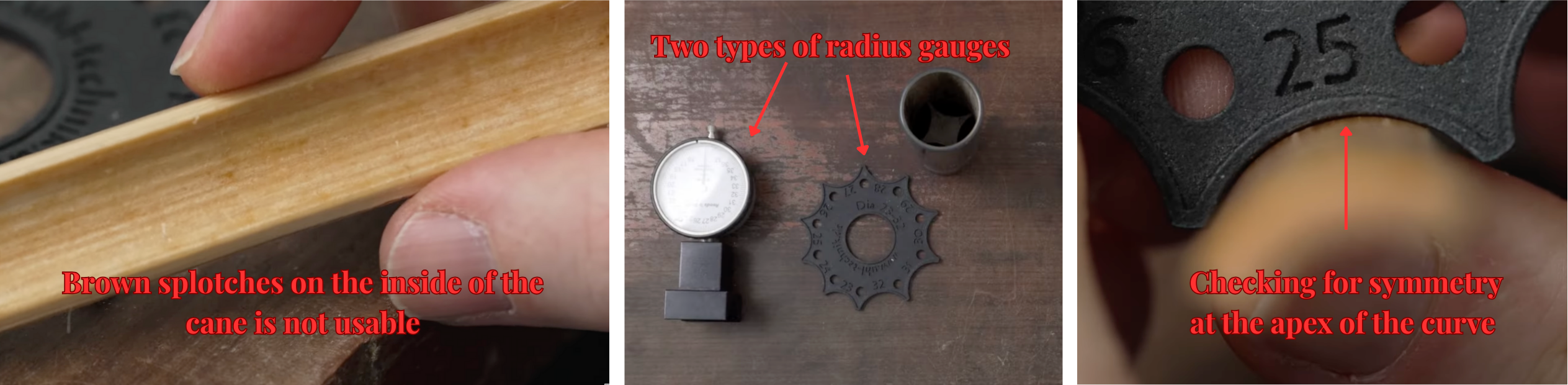
After splitting, Burn checks the diameter of each piece more precisely to ensure that the apex of the arc of the cane is centered. He also checks the inside of the cane for any discoloration. Even though the innermost wood will be removed when gouging, it can still impact the cane closer to the bark, rendering it unusable (figure 3).
Finally, Burn checks each split piece for warping. Cane usually does not grow completely straight, but as shown in figure 4, any uneven curves, especially on the ends of a piece, can often be avoided when the cane is cut down to the proper length. Any pieces that are too warped are discarded.
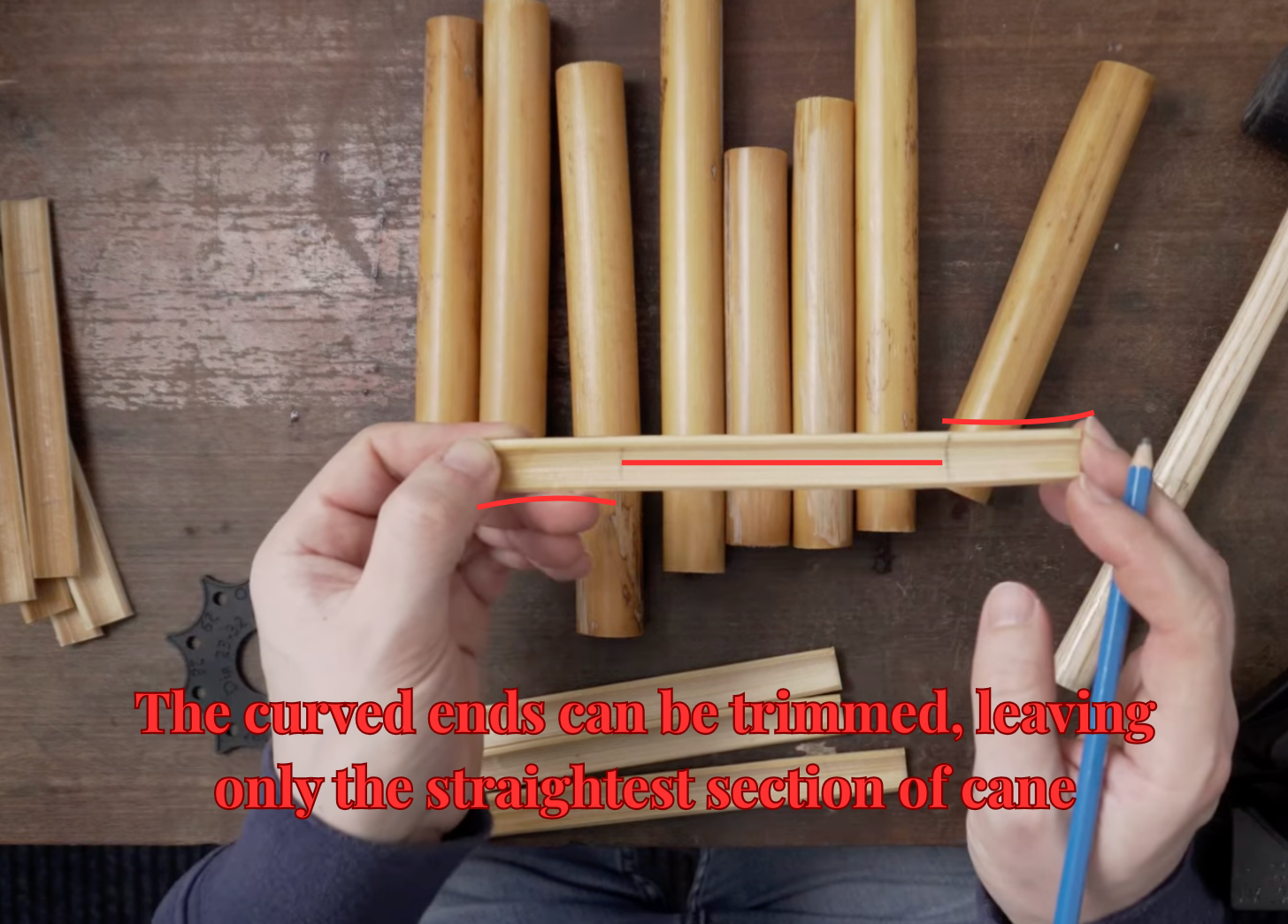
Andrew Burn’s full video is available on Youtube, and is linked in the conclusion of this post. More information about working with tube cane can be found in our Bassoon Reedmaking Blog Series (coming soon!).
Selecting Gouged Cane
There is slightly less work to do when starting with couged cane, but it is still important to sort the cane for quality. When working with gouged cane, Rian Craypo recommends checking the curve of the end of each piece while the cane is dry. The size of this arc translates into the curve of the tip opening of a reed. Pieces which are too curved are likely too soft and will yield problematic tip openings. She recommends soaking gouged cane overnight. Any cane that is still floating the next day is likely not dense enough to be usable. (figure 6)
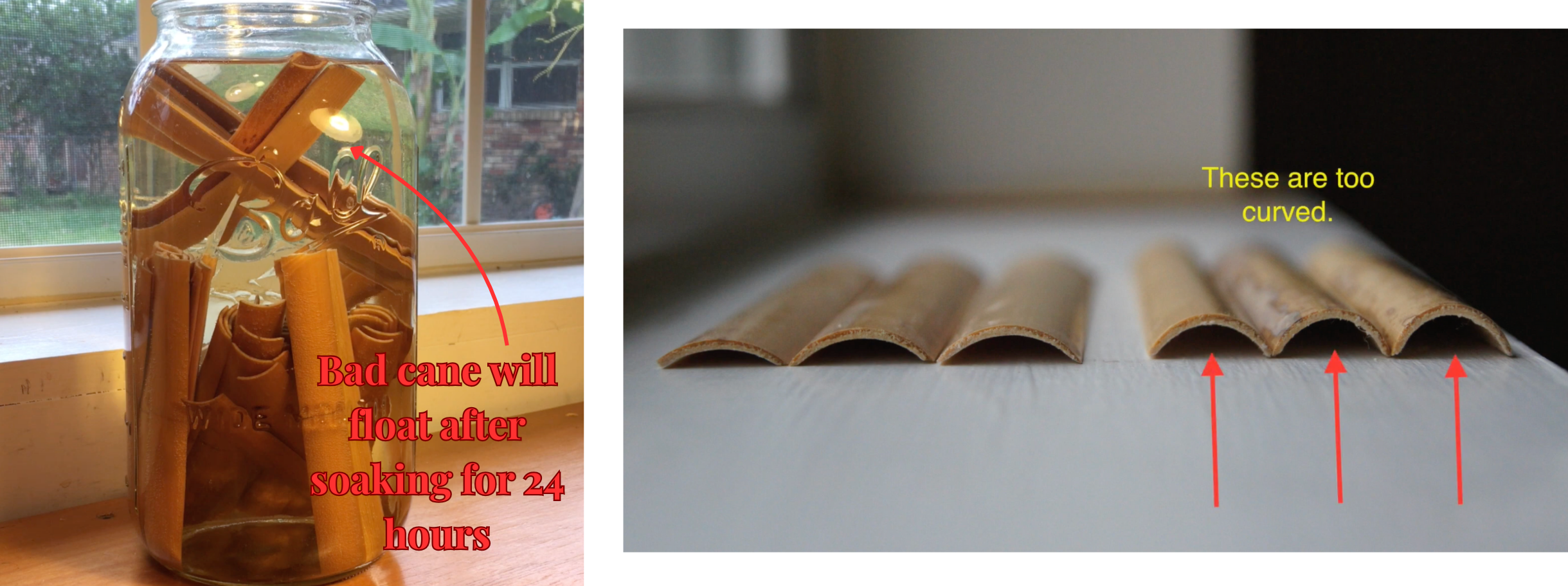
If you gouge your own cane, it is also possible to discern cane quality from the shavings (figure 6). In her video on gouging & pregouging, Rian Craypo demonstrates this by holding a piece of a cane shaving up to a light. She notes that good quality cane will appear smooth, intact (no holes), with consistently shaped vascular bundles (wood grain). The shaving from a bad piece of cane might appear uneven or have holes.
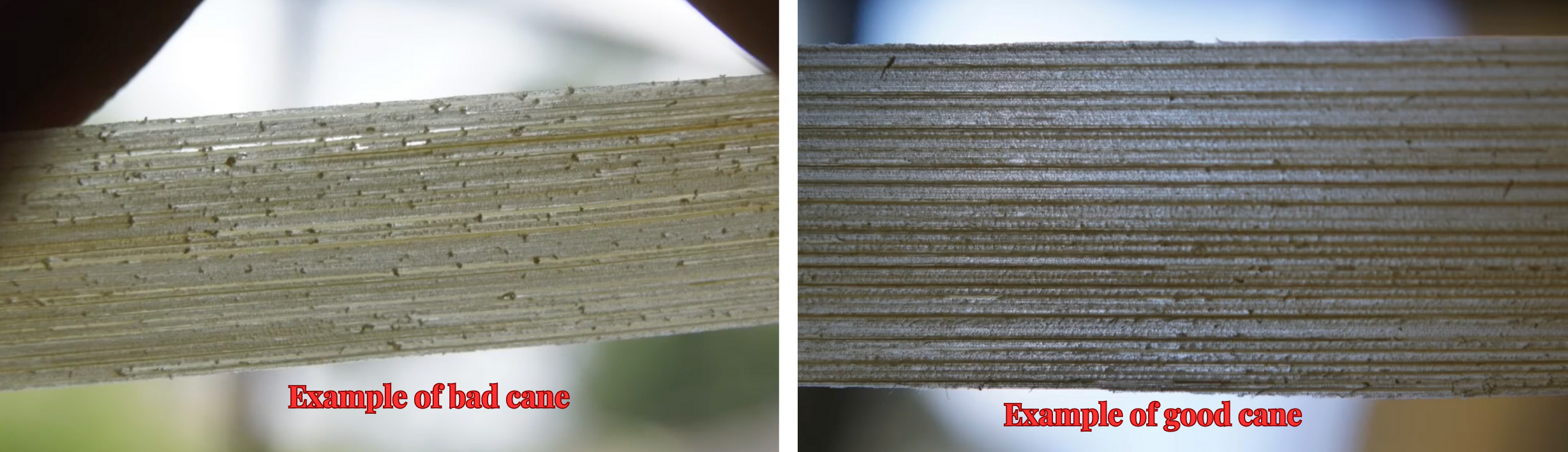
Both of Rian’s videos are available on youtube, and are linked in the conclusion of this post. More information about the gouged cane options that we carry can be found in our Gouged Cane Comparison blog post (coming soon!).
Selecting GSP Cane
When buying gouged, shaped and profiled cane, most of the work of cane selection has already been done for us. Although each piece can still vary (especially in density), we may assume that the cane processor has done the work of sorting and removing many pieces which will not be viable earlier in the process.
When buying gsp cane, it is important to consider the shape and profile dimensions, as these will impact how the reed performs and feels. If you are experiencing a consistent problem with your reeds (which is not related to their construction), a good first step is to try a different shape, ideally with the same profile. More information about choosing a shape can be found in our Bassoon Reedmaking Blog Series. It may also be helpful to read our GSP bassoon cane comparison blog post (coming soon!).
Conclusion
Sorting cane may not be everyone’s favorite part of reedmaking, but it is an essential step to increasing the quality and consistency of one’s reeds. Cane should be discarded if:
- It has grey, green, or black discoloration
- It has a bumpy, rough, or grainy texture (on the inside or the bark)
- It is not the correct diameter for your gouger machine (~25 mm)
- It is too curved or twisted
- It is not dense enough
- After gouging, it is overly arched
The videos referenced in this post can be found below:
Questions? Email our Bassoon Specialist, Dr. Clair Cangialosi at clair@hodgeproductsinc.com
Works Cited
Andrew Burn, “Selecting the Right Cane To Make Your Reeds Better,” 2024, Youtube, https://www.youtube.com/watch?v=Q8e4AXQZmgU
Kristen Wolfe Jensen, “Sorting Cane For Quality With Rian Craypo,” 2017, Youtube, https://www.youtube.com/watch?v=2yWiU0XOcmU&t=161s
Kristen Wolfe Jensen, “Pre-gouging and Gouging with Rian Craypo,” 2017, Youtube
https://www.youtube.com/watch?v=nuOJ2k-vog8