
Bassoon Reed Adjustment Basics- With Examples
Posted by Clair Cangialosi, DMA on Feb 9th 2026
One of the most important skills for any bassoonist is the ability to adjust their reeds. Whether you’re making your own reeds or purchasing commercially made or handmade bassoon reeds, adjusting ensures that you can customize your reeds to your needs. This blog will cover the basics of bassoon reed adjustment, aimed to assist students who do not have a private bassoon teacher, school band and orchestra directors, woodwind doublers, and those who are new to reedmaking. The adjustments in this post can be done with only needle nose pliers and sandpaper. Those looking to make more complex adjustments should consult the advanced reed adjustments post (coming soon!).
Feel free to skip to each section for specific issues, or read in order for more details.
Table of Contents:
Before You Begin
A bad reed can cause a slew of problems. However, reeds are not the only cause of performance-related issues. Before adjusting a bassoon reed, be sure to check the following:
- That the instrument and bocal are in good working condition
- That the bocal does not have any cracks (run lukewarm water through it, and plug up both ends. It should not leak.)
- Nothing is preventing the keys on the boot joint from closing (loose pants/ skirts or fabric seat straps) and no foreign objects are stuck inside of the instrument
- The bocal is pushed all the way in
- The whisper key pad completely closes the bocal tone hole
- That the player is using the correct fingerings
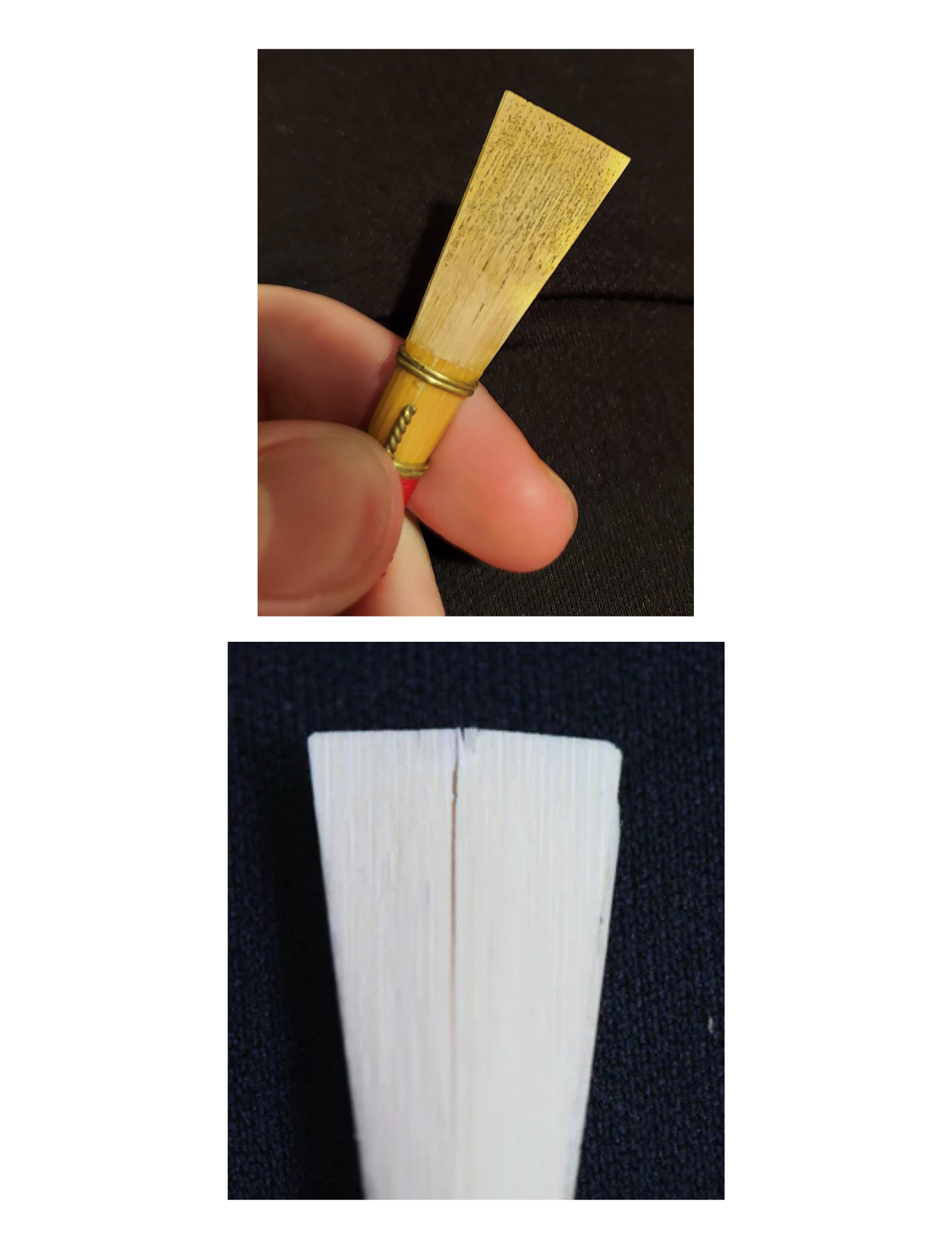
Once any mechanical issues have been ruled out, we can work to determine the cause of any reed- related issues. Check to make sure that your reed does not have any cracks or chips in the blade, and that there are no dark mold spots on the reed, as in figure 1, left.
Your bassoon reed may need to be adjusted if:
- It does not respond easily (is difficult to produce a sound)
- The crow is only high sounds or only low sounds
- It plays very flat or very sharp in general
- The sound is too buzzy, bright, dark or muffled
Adjustments & Tests:
When adjusting a reed, the primary concerns are the response, intonation, and tone- in that order. Readers should beware that overprioritizing a “pretty” tone quality can make it harder to play in tune or to maintain a comfortable embouchure while playing. (1)
A reed that responds well and plays in tune has the best chance of producing a rich, beautiful tone. That being said, the tone of a reed can help determine if it needs to be adjusted. If the sound is overly bright or buzzy, it is likely too soft. If the sound is overly muffled or dark, it is likely too hard. (2)
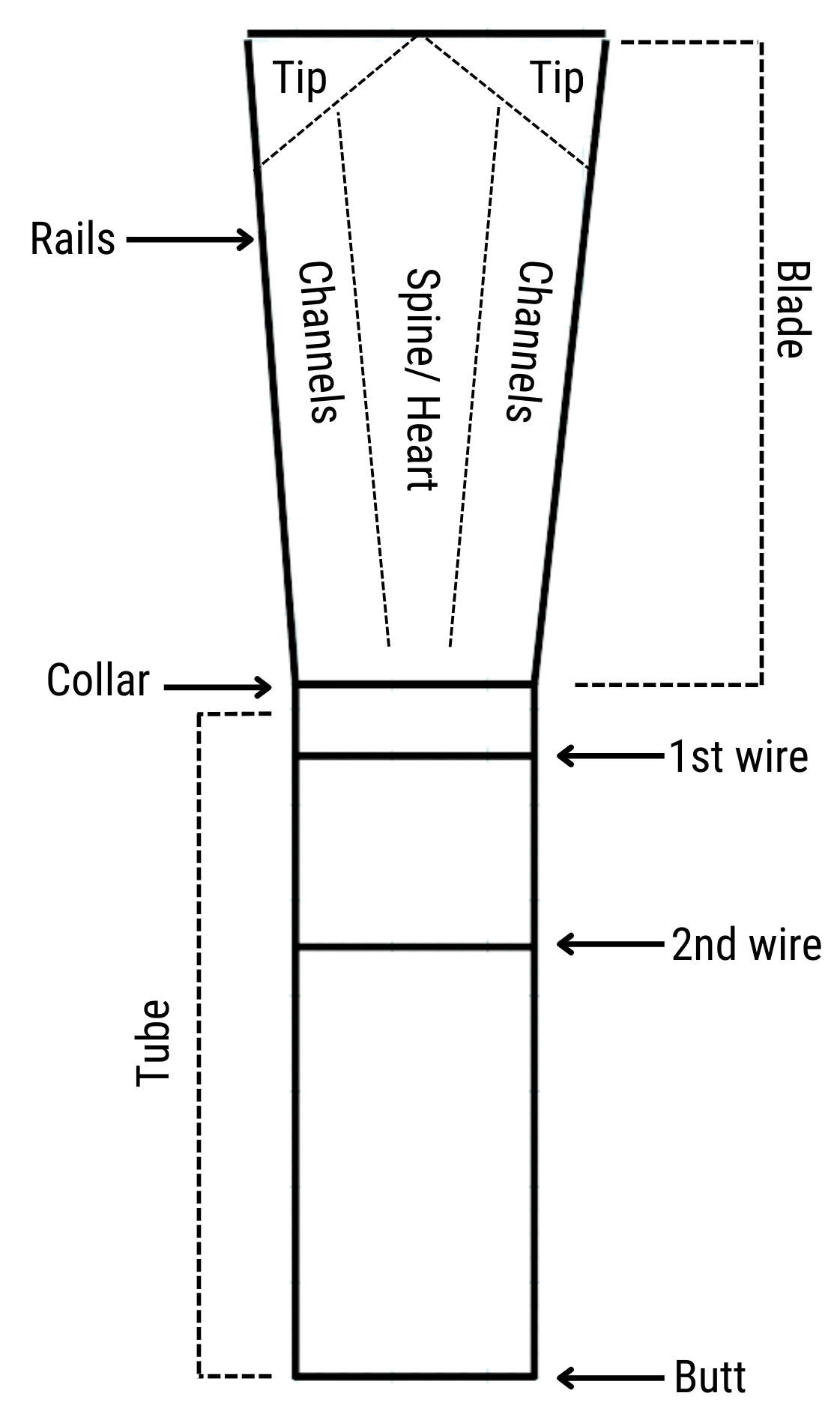
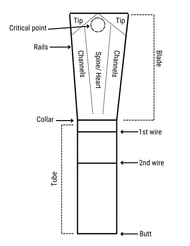
The tests below are designed to help determine the necessary adjustments. Go back and forth between the tests and associated adjustments several times, working incrementally. You can always remove cane from a reed, but you can’t put it back on! Remember that reeds will change from day to day, and may need time to settle after adjusting. Reeds that change back quickly or do not hold the adjustments may not be worth your time. Refer to the reed diagram in figure 2, left. These terms wil be used throughout this post.

Tip: fully submerge reeds in warm water for 1-2 minutes before testing or adjusting.
Test #1: Reed Crow
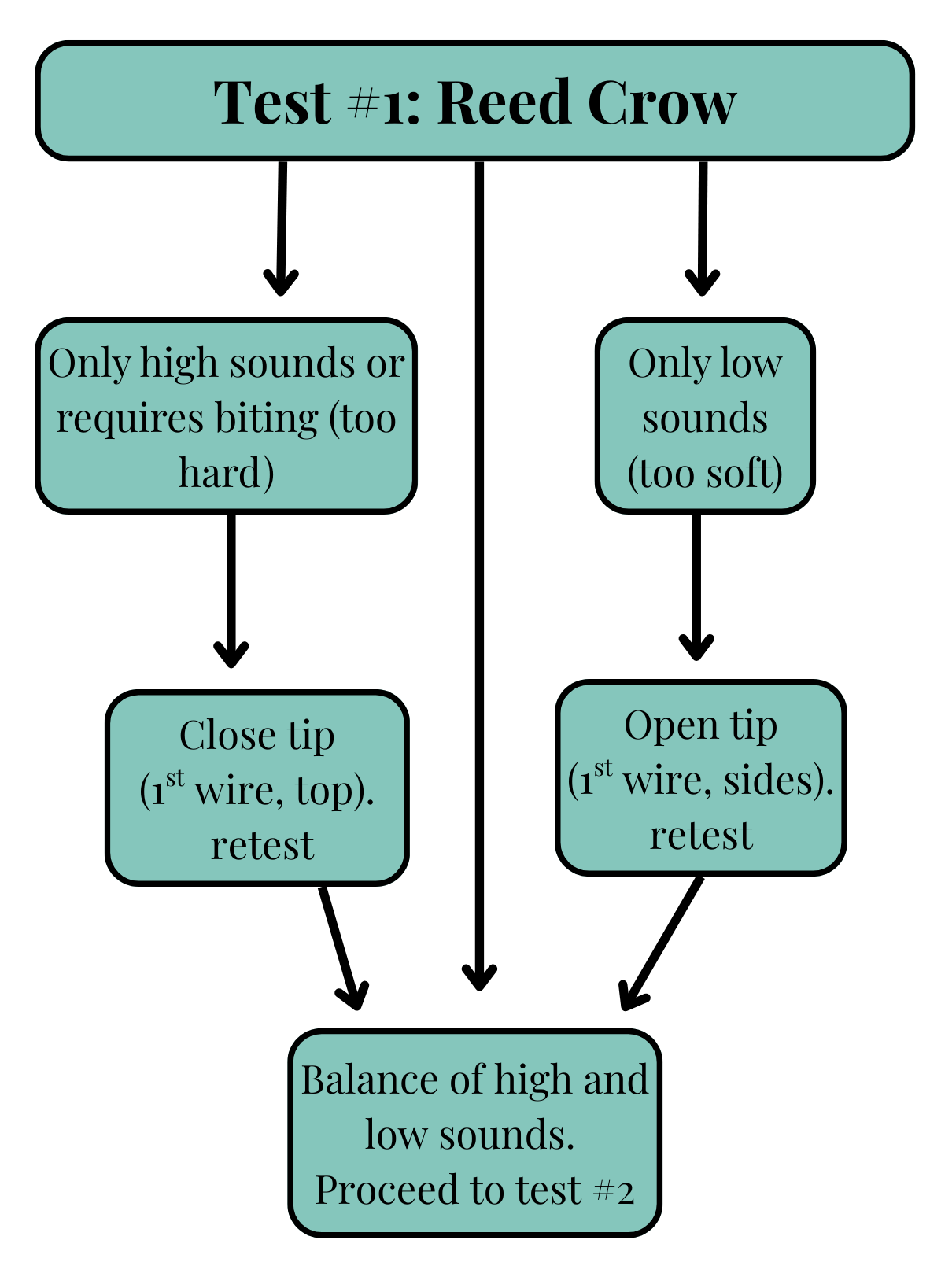
The crow is a good indication of how the reed will play. If it is difficult to crow, the crow is only high sounds, or it won’t make a sound at all, the reed is likely too hard. If the reed crows very easily, but only produces low sounds, it is likely too soft.
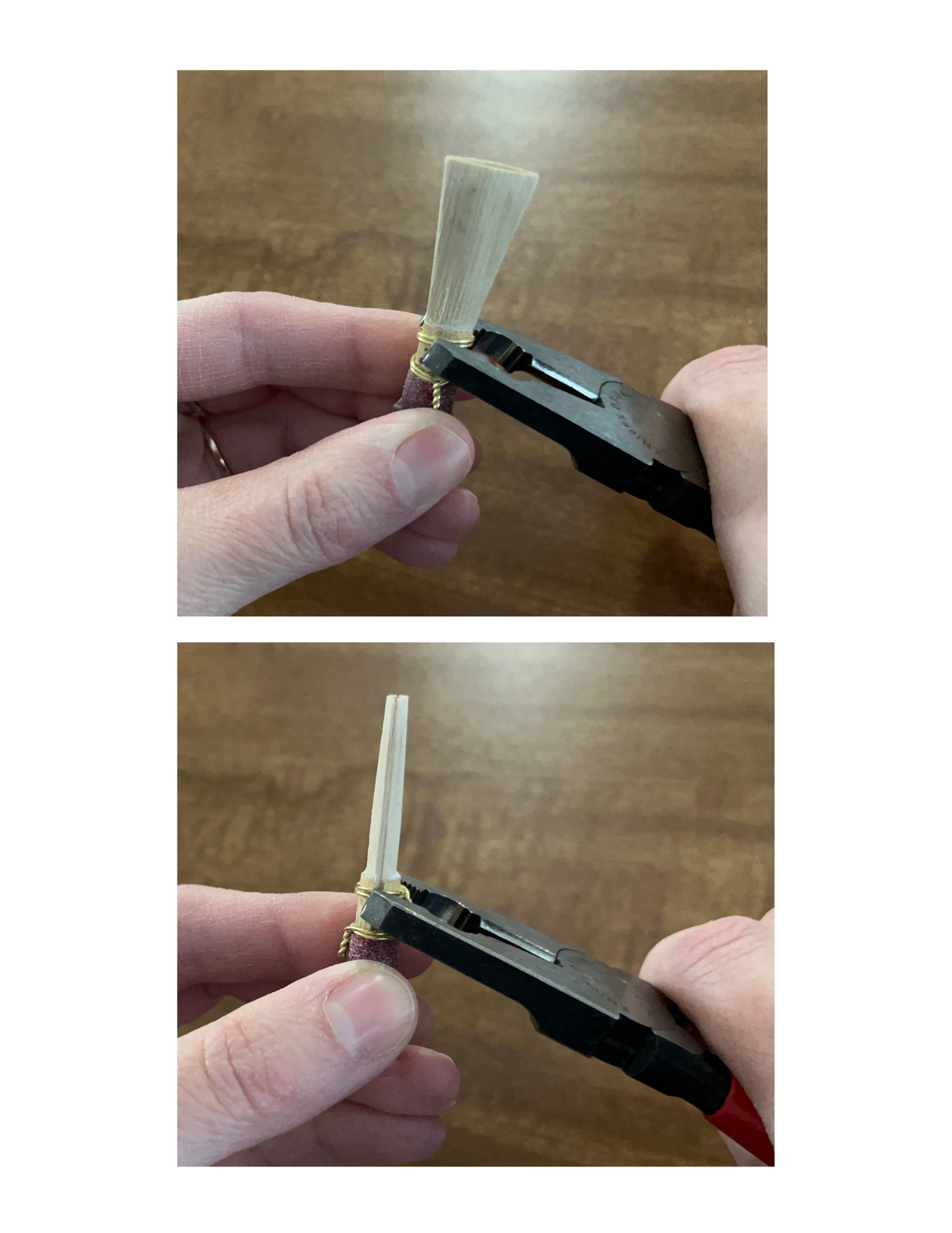
To test the crow, put the reed in your mouth up to the first wire, and blow air through it. Avoid biting down on the reed or straining the jaw, throat, or breathing muscles. Use the flowchart in figure 3 to adjust the wires until a loud rattling crow sound with both high and low notes can be produced fairly easily. Figure 4 below shows how to use pliers to adjust the first and second wires on a reed.
Test #2: F major scale
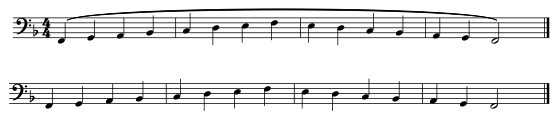
This test helps determine the response and intonation in the bassoon’s fundamental register (within the bass clef staff). Play the F major scale slurred, then again tongued, as in figure 5. Repeat the scale after each adjustment. Take note of:
- Do all the notes speak clearly?
- How is the intonation, generally? (check with a tuner)
- Is the tone very buzzy/bright or very muffled/dark?
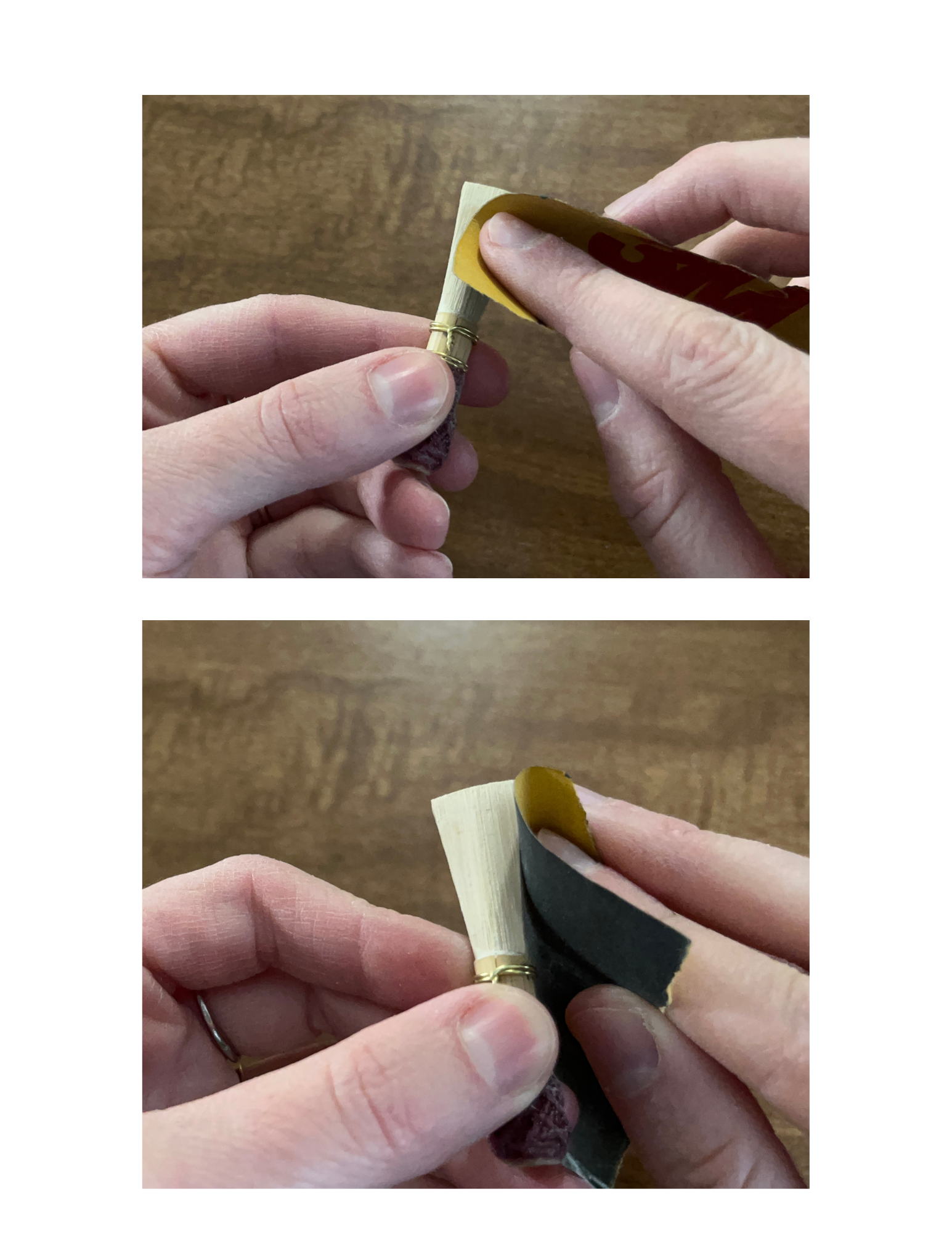
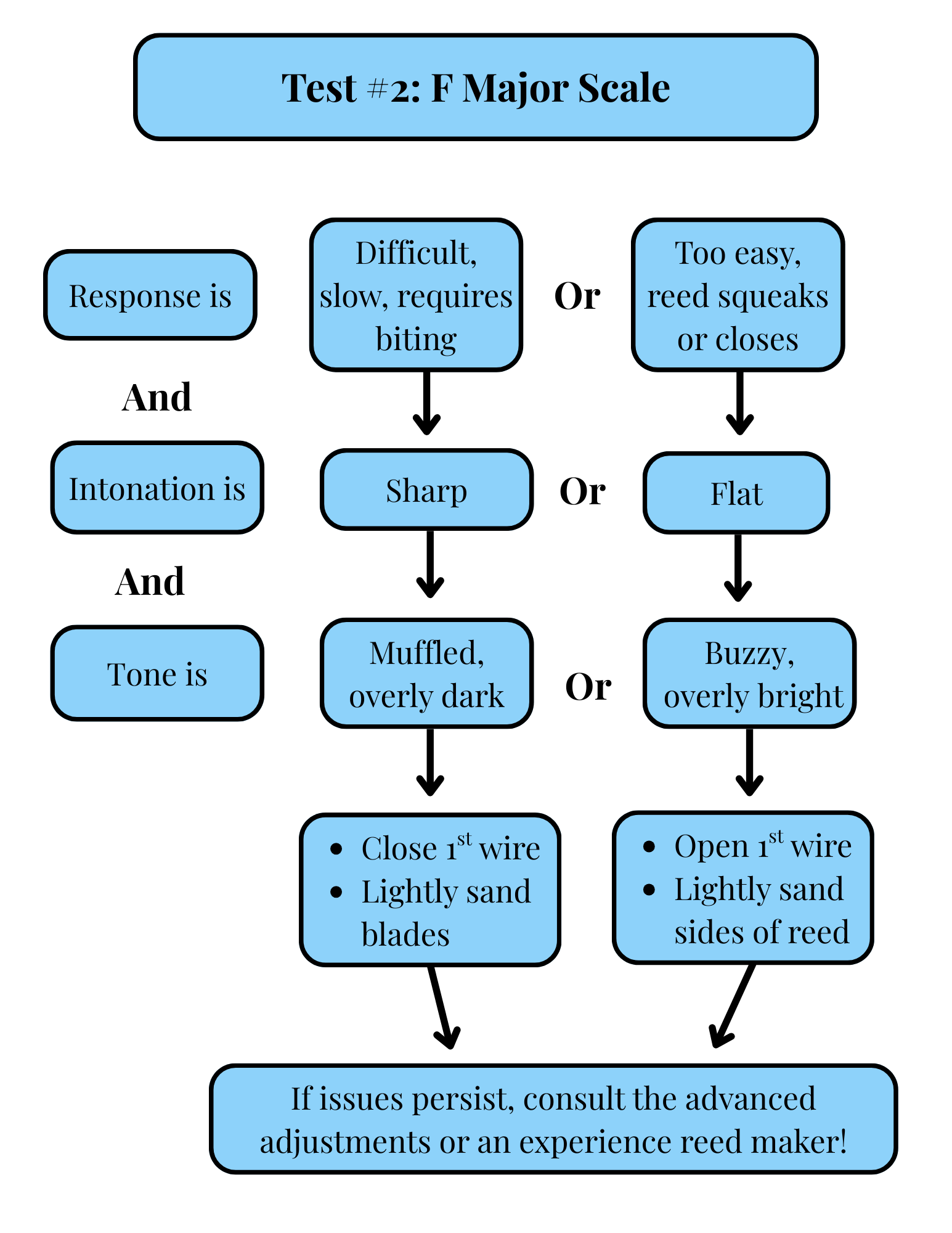
Use the flowchart in figure 6 to make adjustments. You should be able to execute a clean slur throughout the scale and clear, easy articulation on every note. Be sure to retest the reed in between each adjustment. Figure 7 below demonstrates how to sand the sides (rails) of a reed and how to sand the blades.
Conclusion
If after making the above adjustments, you are still experiencing issues with response, intonation, or tone, your reed may need to be scraped with a knife or clipped to a shorter length. It may be helpful to consult our advanced bassoon reed adjustment post (or an experienced reedmaker) for more information.
Questions? Contact us through our website or email our bassoon specialist at bassoon.hodgeproductsinc@gmail.com
Works Cited
- Bellamy, Cayla. “Reed Adjustments” Cayla Bellamy, Bassoon, Accessed December 4th 2025, https://www.caylabellamy.com/adjustments.html
- Bellamy, Cayla. “Reed Diagnostics” Cayla Bellamy, Bassoon, Accessed December 4th 2025, https://www.caylabellamy.com/diagnostics.html